Hanoi lawmakers propose solutions to boost technology use in insurance businesses
Lawmakers in Hanoi proposed adding insurtech and digital insurance frameworks to the amended Law on Insurance Business to boost transparency, safety and innovation in Vietnam’s insurance market.
THE HANOI TIMES — The revised Law on Insurance Business should promote the application of science, technology and innovation to increase transparency, safety, fairness and protect the interests of all participants, said Ta Dinh Thi, National Assembly deputy from Hanoi.
Speaking at a group discussion of Hanoi’s National Assembly delegation on November 3 about the draft amendment to the Law on Insurance Business, Thi said the insurance industry cannot stay outside the sweeping wave of the Fourth Industrial Revolution.
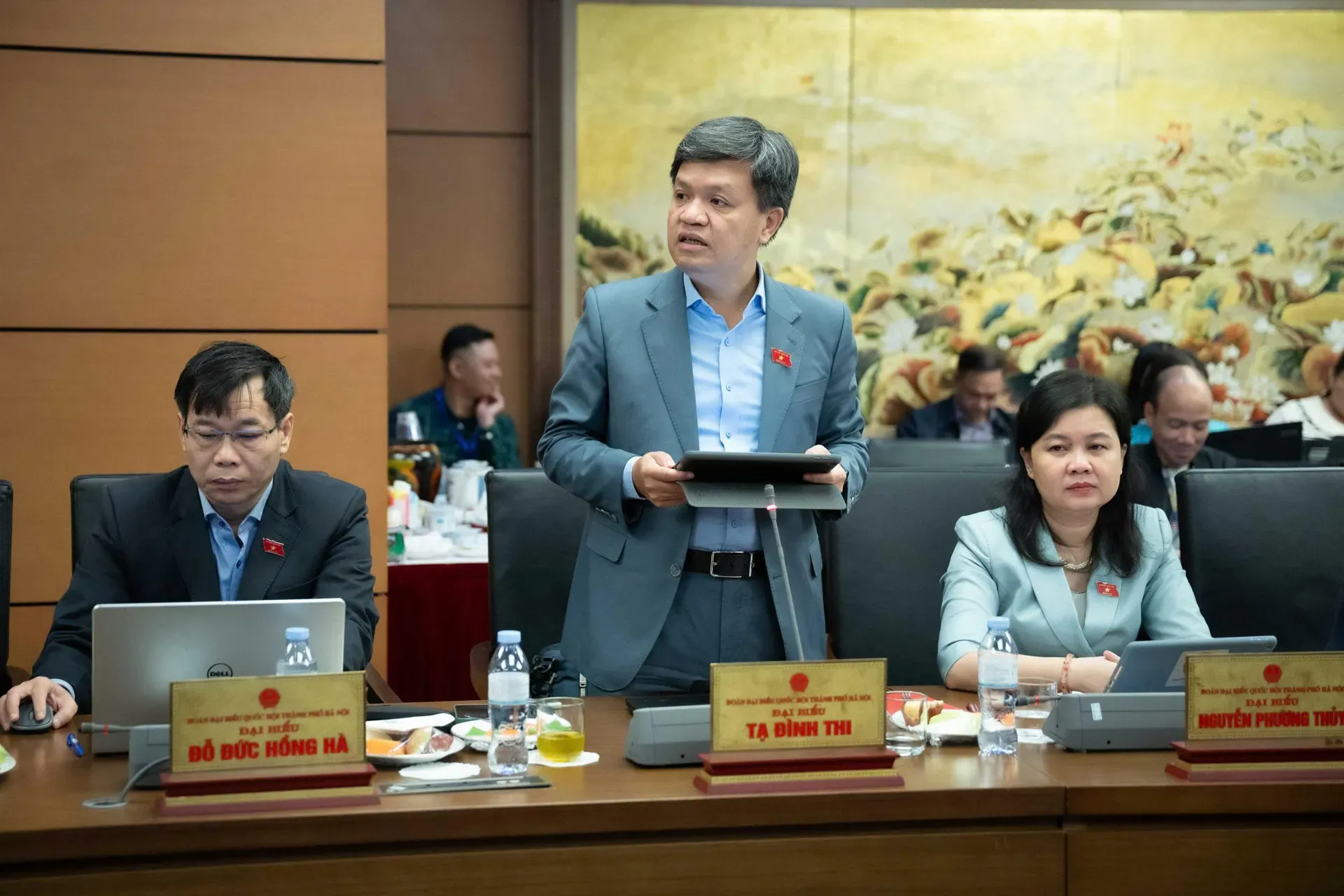
National Assembly deputy Ta Dinh Thi from Hanoi delegation. Photo: quochoi.vn
“Digital transformation helps insurance companies improve efficiency, optimize costs, develop new products, enhance customer experience and ensure system transparency and safety,” he said.
The deputy proposed that lawmakers study and include provisions on “insurtech” and “digital insurance business” along with clear definitions and legal frameworks for new technology-based insurance models such as on-demand insurance, behavior-based insurance and peer-to-peer insurance.
He also suggested clear regulations on the use and protection of big data and artificial intelligence in insurance to comply with the Law on Personal Data Protection, prevent discrimination in AI-based pricing and ensure algorithmic transparency.
Thi encouraged insurers to use digital platforms to manage contracts and settle claims quickly and transparently through tools like blockchain and smart contracts, while ensuring cybersecurity standards.
He also urged regulators to adopt technology-based monitoring to enhance real-time financial supervision and management efficiency.
The deputy proposed establishing a pilot regulatory framework for new technology-based insurance models to help companies test products within controlled environments, allowing regulators to refine suitable legal frameworks.
“Improving the legal framework for digital transformation will be the key to building a sustainable, transparent and globally-integrated insurance industry in Vietnam,” the deputy said.
Contributing to the draft, deputy Do Duc Hong Ha called for clearer standards for company leaders and conditions for insurance businesses to ensure feasibility, transparency and legal consistency.
According to Ha, the director and general director are critical managerial roles as they have direct impacts on financial safety and customer interests.
The draft law requires these executives to hold a university degree in insurance. If not, they must have a degree in another field with “insurance-related courses” or an “insurance certificate.”
Ha argued that the clause “with insurance-related courses” is too vague and unmeasurable, noting that “a single course cannot provide the foundation needed to manage a complex financial institution.”

National Assembly deputy Do Duc Hong Ha speaks at the discussion. Photo: quochoi.vn
On the authority to set business conditions for insurance brokerage, Ha said that this is a conditional business sector under the Law on Investment, so its requirements must be defined in the law, not entirely delegated to the government.
He cautioned that assigning the government to regulate conditions for brokerage operations (as proposed in Article 134 of the draft amendment) needs careful consideration.
Removing existing conditions and transferring them to government decrees would contradict legislative principles, Ha added.
“The law should authorize the government to regulate procedures and documentation only, while specific business conditions must remain or be revised directly in this law,” he said.
According to the deputies, Vietnam’s insurance market is entering a phase of rapid growth, with increasingly diverse products and expanding scale.
After more than two years of implementing the 2022 Law on Insurance Business, the market has had a relatively complete legal foundation, though some provisions still fall short of practical and international standards.
The rapid increase in insurance companies, products and disputes highlights the need for stricter governance, qualified human resources and transparency.
At the same time, the upcoming implementation of international accounting standards requires a compatible legal framework on separating equity capital from insurance premiums, surplus distribution and product pricing.
Experience from recent bancassurance cases shows the need to strengthen the authority and legal tools of regulators to improve risk supervision and consumer protection.
If left unaddressed, these shortcomings could pose systemic risks, threatening financial stability and public trust in insurance. Therefore, revising the law is essential.
|
According to Minister of Finance Nguyen Van Thang, the draft on the amendment of the Law on Insurance Business aims to reduce investment conditions, simplify administrative procedures and remove barriers hindering market growth. The draft revises 25 articles, mainly cutting or simplifying business conditions in seven of them. The removed provisions include: (i) the requirement for foreign regulators’ confirmation that companies have no serious violations, (ii) pre-operational conditions, (iii) general standards for managers and controllers, and (iv) certain conditions for agents, brokerage licensing and auxiliary insurance services. The draft also improves regulations on risk-based capital, allowing parallel implementation with the solvency margin model to give companies time to prepare resources, upgrade IT systems and maintain financial safety. A notable addition is new provisions defining principles for individuals and organizations contributing capital, founding, managing and controlling insurance companies, as well as new investment rules for insurance brokerage firms to enhance transparency, efficiency and safety in investment activities. |