Hanoi maps out 100-year vision and new growth model
The proposals signal a major shift in how Vietnam’s capital plans to grow, combining long-term urban restructuring, expanded institutional authority and a technology-led development model aimed at sustaining double-digit economic growth in the decades ahead.
THE HANOI TIMES — Hanoi on January 10 presented two far-reaching strategic proposals to Vietnam’s top Party and State leaders, including a 100-year master plan for the capital aligned with institutional reform and a new socio-economic development model driven by science, technology and digital transformation to achieve sustained double-digit growth.
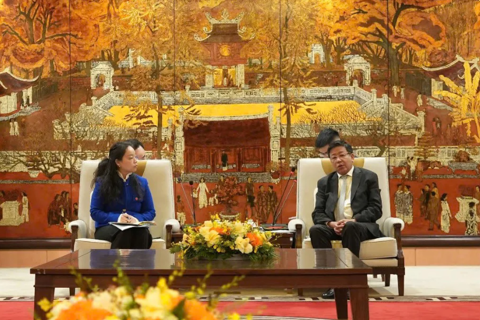
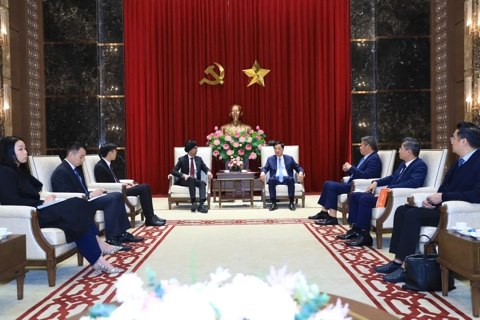
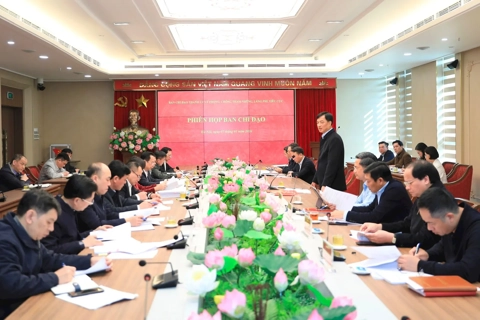
The proposals were discussed at a working session between Party General Secretary To Lam, Prime Minister Pham Minh Chinh, National Assembly Chairman Tran Thanh Man and the Standing Board of the Hanoi Party Committee at the Hanoi Party Committee headquarters.
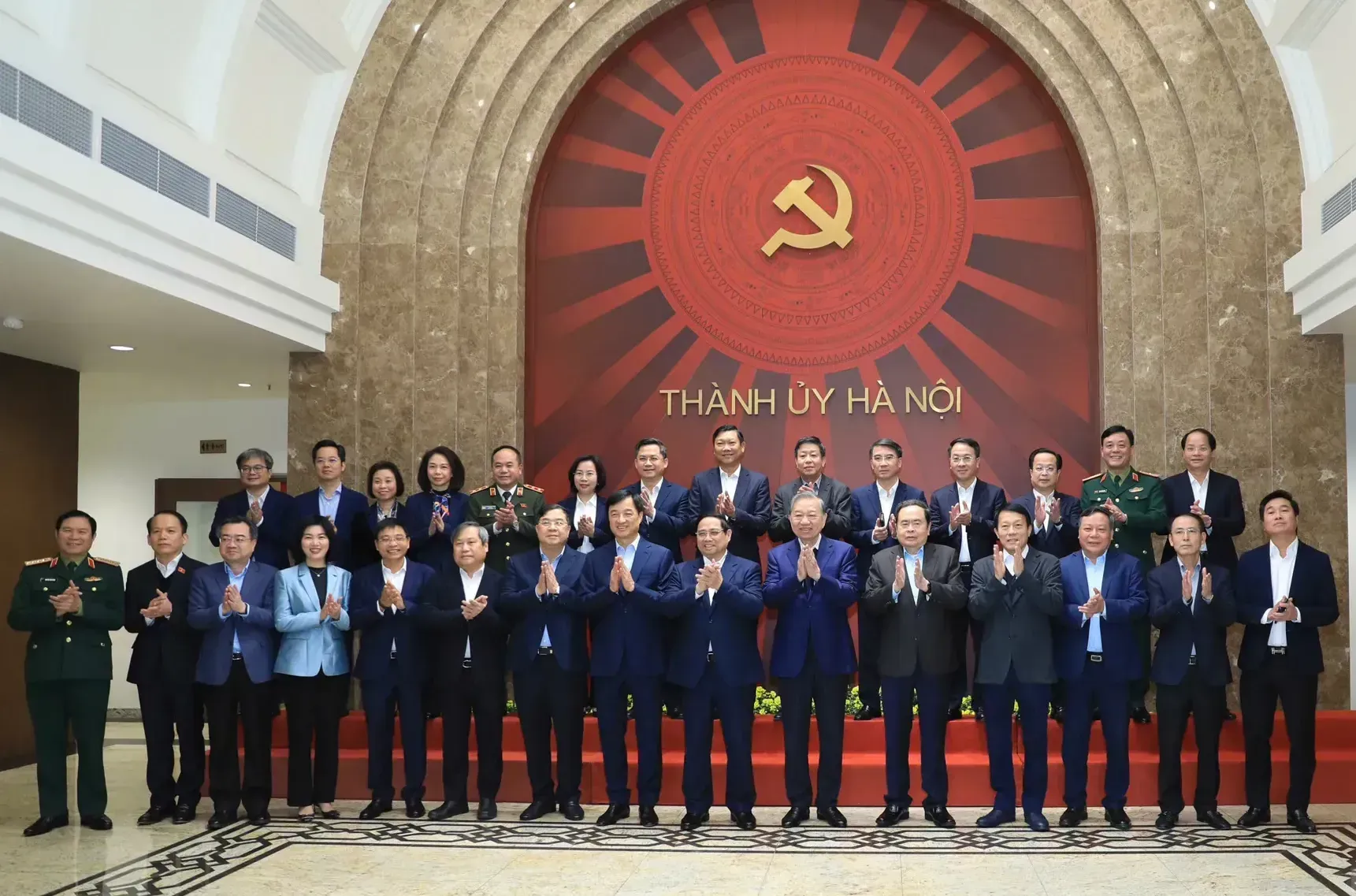
This was the first time during the 13th Party Congress term that the three top leaders jointly worked with Hanoi and also the first working session in 2026 between central leaders and the capital, highlighting the special importance attached to Hanoi’s political, economic and social development.
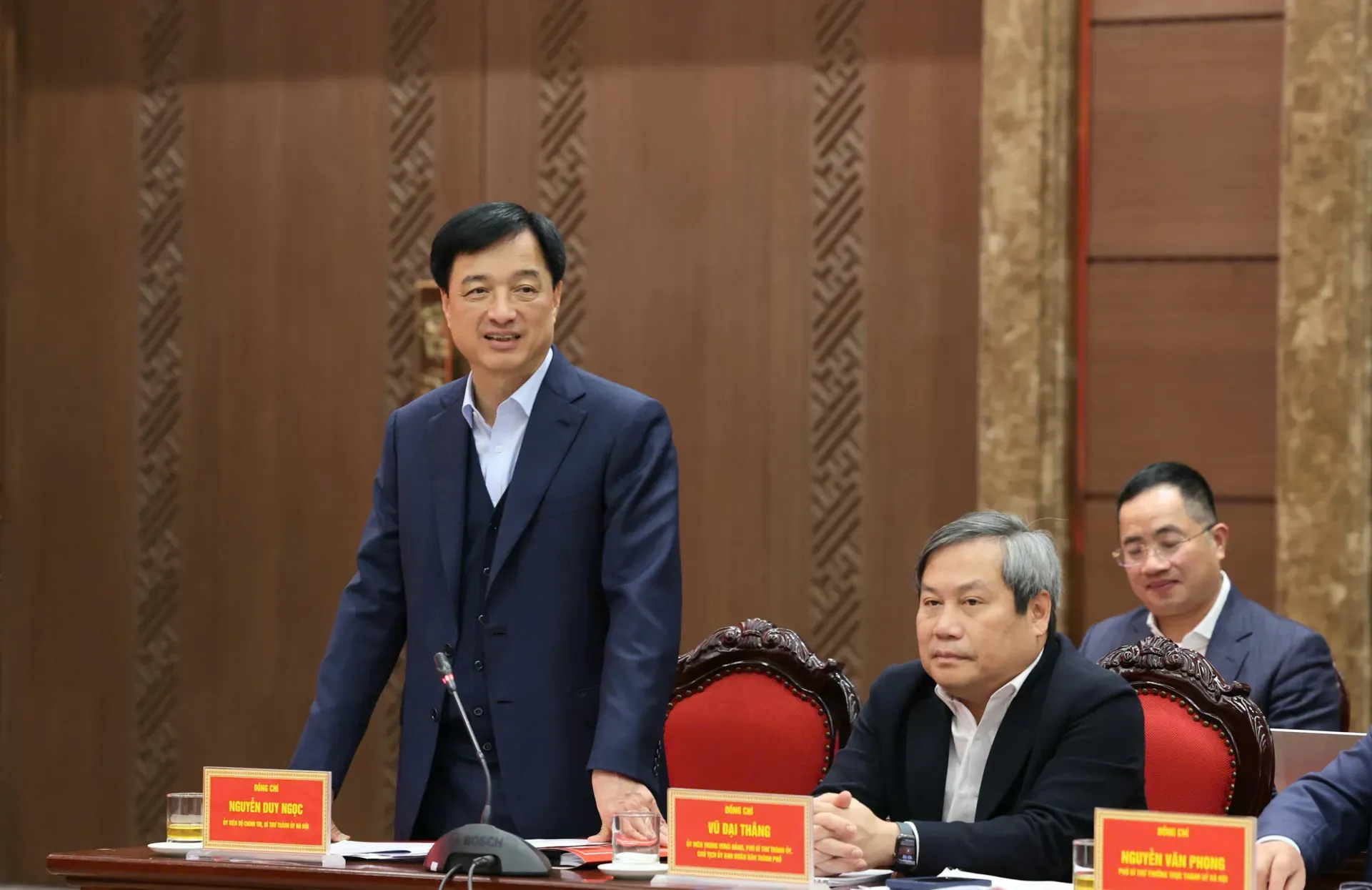
Opening the meeting, Hanoi Party Secretary Nguyen Duy Ngoc said the city had fully absorbed resolutions of the Politburo, the 18th Hanoi Party Congress and guidance from General Secretary To Lam over five working visits, as well as directions from the Government Standing Committee.
Facing new development requirements, Hanoi sought central approval and guidance on two foundational tasks critical to shaping the capital’s long-term trajectory.
First: Comprehensive master plan with a 100-year vision
The Comprehensive Master Plan for the Capital with a 100-year vision is being developed in line with conclusions of the Politburo, the National Assembly and the Government Standing Committee, while integrating the Capital Planning and the General Urban Planning to overcome limitations of previous planning frameworks.
According to Standing Vice Chairman of the Hanoi People’s Committee Duong Duc Tuan, a core objective running throughout the plan is to remove major bottlenecks that have constrained Hanoi’s development for years.
On flooding, the plan adopts a long-term, synchronized approach, focusing on underground infrastructure, underground transport corridors linked to ring roads and radial axes, combined with water collection systems, underground reservoirs and pumping stations.
As for transport, the plan prioritizes multimodal infrastructure development, strengthening regional connectivity by road and rail. Urban railways are identified as the backbone, developed in association with TOD models, underground parking facilities and service spaces around stations.
“Hanoi is studying the expansion of Red River crossings, completion of ring roads and radial routes, and a review of airport planning to expand development space and gradually reduce pressure on the inner city,” said Tuan.
On environmental issues, the plan revises waste and wastewater treatment planning, improves collection, classification and synchronized processing systems, and defines green corridors and green belts along rivers as key ecological spaces linked to waterway clearance, environmental improvement and public space development.
One breakthrough element of the master plan is urban restructuring to fundamentally address issues of order, architecture and infrastructure. Restructuring will focus on areas inside Ring Road 3, with priority given to Ring Roads 1 and 2, following a “multi-layer, multi-level” urban model that combines preservation and restoration of historical-cultural areas with comprehensive redevelopment of other zones.
In parallel with planning, Hanoi emphasized the urgent need to complete a development institution for the capital. Based on a review of Resolution No.15-NQ/TW and the 2024 Capital Law, Hanoi argued that new breakthrough goals set by the Party’s 14th Congress require a new Politburo resolution and revisions to the Capital Law to establish a superior, stable and long-term institutional framework.
| The draft new resolution sets out three overarching principles: positioning Hanoi as the national political-administrative center and a major hub for economy, culture, science, education and healthcare with global connectivity; establishing a special governance and institutional model with maximum decentralization and accountability; and building a clean, strong and exemplary Party organization and political system. |
The resolution defines long-term development goals extending beyond 2065, five strategic orientations, and key task groups on planning, institutions, governance models, culture, education, healthcare, science and technology, and resource mobilization. These are designed to be fully institutionalized in the revised Capital Law, creating a solid political-legal foundation for implementing the 100-year master plan.
Second: A new growth model targeting sustained double-digit expansion
Vice Chairman of the Hanoi People’s Committee Nguyen Xuan Luu presented a summary of Hanoi’s socio-economic development model, which identifies science, technology, innovation and digital transformation as the primary growth engines linked to strategic solutions for achieving double-digit growth.
In 2025, despite global economic volatility, Hanoi achieved GRDP growth of 8.16%, exceeding targets and significantly higher than in 2024. The city’s economic scale reached approximately US$63.5 billion, with per capita income at $7,200.
Major balances remained stable. Total social investment reached VND595 trillion ($22.6 billion), foreign direct investment hit $4.3 billion, up 169% year on year, and state budget revenue climbed to VND711 trillion ($27 billion), the highest in many years. Public investment disbursement exceeded 106% of the plan assigned by the Prime Minister.
Hanoi also launched and accelerated multiple strategic infrastructure projects, improving connectivity and urban competitiveness, while maintaining social welfare and strengthening public trust.
Based on these results, Luu said the 18th Hanoi Party Congress set a target of over 11% economic growth for 2026 and the 2026-2030 period.
From early 2026, Hanoi plans total social investment of around VND730 trillion ($27.7 billion), with clear allocation across public, private and foreign sectors, while fully implementing special mechanisms approved by the National Assembly under Resolution No.258/2025/QH15. These mechanisms are intended to address urgent bottlenecks while longer-term legal frameworks are finalized.
Hanoi will focus on accelerating land clearance, speeding up major projects, especially strategic infrastructure, large-scale urban developments and new growth corridors such as the Red River landscape axis, ring roads, urban railways and regional connectivity infrastructure.
For the 2026-2030 period, Hanoi’s growth model will emphasize improving productivity, expanding the digital economy, building digital government and digital society, developing shared data platforms, reforming administrative procedures toward substantive outcomes and enhancing urban governance and public investment efficiency.
Alongside new economic drivers, Hanoi places strong emphasis on cultural values, heritage and creative spaces. Cultural industries are identified as a spearhead sector linked to tourism and capital branding, targeting a 8% contribution to GRDP by 2030, while tourism is oriented toward professional, modern and smart ecosystem development.
During the discussion session, representatives of central ministries and agencies praised Hanoi’s performance in 2025, noting strong economic results and increasingly proactive governance.
Minister of Justice Nguyen Hai Ninh said Hanoi has demonstrated breakthrough and strategic innovations in both mindset and implementation, particularly in carrying out political tasks with a strong action-oriented and highly effective approach.
Looking ahead, the minister noted that Hanoi is simultaneously advancing three major tasks, including the formulation of a Comprehensive Master Plan for the Capital with a 100-year vision, a new Politburo resolution to replace Resolution No.15-NQ/TW and amendments to the 2024 Capital Law.
“These three pillars are mutually reinforcing and critical to enabling Hanoi’s development in the new phase,” said Ninh.
He said the Ministry of Justice is working closely with Hanoi on drafting the revised Capital Law, which is scheduled to be submitted and adopted at the first session of the 16th National Assembly under an expedited procedure.
Providing further details on the amendments, the minister said the revised law is being designed to expand Hanoi’s authority, allowing the city to proactively decide on major issues, while ensuring that legal provisions can be implemented quickly and effectively in practice, thereby contributing directly to the goal of double-digit economic growth.
The law will also include major institutional mechanisms and policy frameworks, and, where necessary, allow for specific mechanisms that can be implemented immediately. In addition, it is designed to address inter-regional development, with Hanoi assigned a coordinating and leading role among surrounding localities.
However, Ninh stressed that greater authority must be accompanied from the outset by mechanisms for power control, accountability and supervision to ensure effectiveness and prevent abuse.
Minister of Finance Nguyen Van Thang said that in 2025 Hanoi achieved highly positive results, with many indicators reaching their highest levels in years, particularly economic growth.
He noted that Hanoi has made a significant contribution to national growth, especially in state budget revenue, public investment disbursement and foreign investment attraction.
Regarding upcoming tasks, Thang emphasized that issuing new institutional frameworks for Hanoi is essential, including the 100-year master plan, the new Politburo resolution and amendments to the Capital Law.
The finance minister expressed strong support for Hanoi’s 11% growth target, noting that the city has demonstrated firm determination to pursue economic development with science and technology as the core growth driver in the new development phase.
On the Comprehensive Master Plan, Thang cautioned that the urban spatial structure must prioritize transport connectivity. International and domestic experience shows that polycentric or clustered urban models only function effectively when transport infrastructure is complete or developed ahead of demand, he said.