Hanoi Metro trials biometric identification for smart train travel
The introduction of electronic biometric authentication marks a concrete step toward realizing Hanoi’s smart city strategy to 2030, integrating multiple public services through digital platforms from healthcare and education to transport.
THE HANOI TIMES — Urban railway operator Hanoi Metro is piloting electronic identification, authentication and biometric recognition for the Cat Linh–Ha Dong route to promote smart city development in the capital.

A metro staff assists commuters above 60 years old in using chip-based ID cards at the entrance. Photos: Pham Cong/The Hanoi Times
Running until September 30, the pilot program applies to passengers over 60 years old, who already enjoy free fares, and up to 1,000 passengers using single-ride or daily tickets after registering at 12 stations on the Cat Linh–Ha Dong line.
The trial introduces advanced technologies such as e-identification, biometric authentication and ticketing through citizen ID cards, the Hanoi Metro mobile app, paper tickets and international payment cards like VISA.
Passengers joining the trial are guided on how to pass through gates, experience new technology solutions and pay fares via cashless methods.
Specifically, passengers use the ticketing app linked to e-wallets. After payment, they receive a QR code for boarding. For commuters above 60 years old, a larger QR code is printed from their citizen ID to make scanning easier.
Ticket gates scan faces and biometrics for single-ride and daily ticket users. Senior passengers using their ID cards can pass with a single swipe.
As the trial only began on September 20, station staff are on hand to guide passengers. Instruction boards explaining e-identification and biometric use have been placed across all 12 stations to ensure smoother operations.
Many young people were eager to try the new service. Nguyen Thi Hanh, a resident of Thanh Xuan Ward, found this new method very convenient and quick.
“However, it doesn’t yet link with many banks. I hope the operator fixes this soon,” she said.

The mobile app launched by Hanoi Metro to make ticket purchasing easier.
According to Khuat Viet Hung, Chairman of Hanoi Metro’s Members’ Council, applying electronic ID and biometrics benefits passengers and supports smart traffic management.
Once the system is synchronized, passenger data will be securely stored for flow analysis, frequency optimization, and better ticket fraud prevention.
This is a concrete step toward realizing Hanoi’s smart city strategy to 2030, integrating multiple public services through digital platforms, ranging from healthcare and education to transport. Metro, as the backbone of public transit, is seen as the ideal space to deploy and scale these technologies.
A Hanoi Metro representative noted that countries such as Japan, South Korea, and Singapore already use biometric identification in metro systems.
By testing it now, Hanoi shows its proactive approach to global trends. The long-term goal is multimodal integration, allowing passengers to use a single payment method for metro, buses, electric taxis, or public bicycles.
Challenges remain, including data security, system stability, and public acceptance. Experts suggest Hanoi Metro should continue collecting feedback, refining technology, and ensuring readiness before expanding to other lines.
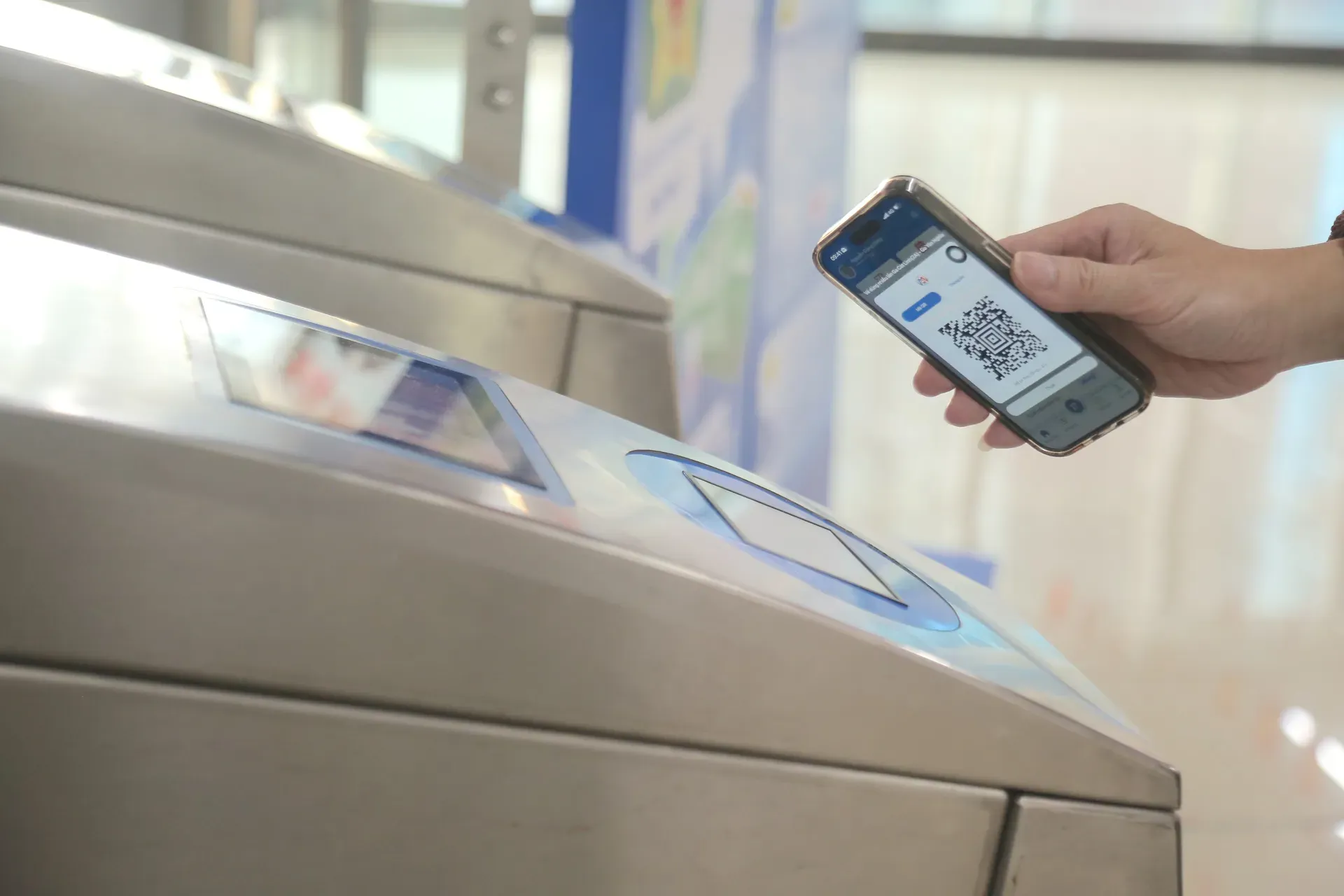
Single-ride and daily commuters scan their QR codes to board on the train.
The company said it will listen to passengers’ input, then improve services to provide safe, convenient, and eco-friendly experiences, steadily applying modern technology to enhance service quality.
Passengers on both Cat Linh–Ha Dong and Nhon–Hanoi Station lines must buy tickets at stations with cash and use paper smart cards to pass gates. During rush hours, this often means long queues.
Since opening, the two metro lines have eased Hanoi’s traffic burden. As of early August 2025, the elevated Nhon–Hanoi Station section had carried more than 6.4 million passengers in its first year. The Cat Linh–Ha Dong line alone served 4.8 million passengers in the first quarter of 2025.
During the 80th anniversary of the August Revolution and National Day, Hanoi Metro carried 1.8 million passengers between August 21 and September 2. On September 1, the Cat Linh–Ha Dong line set a new record, transporting more than 165,000 passengers in a single day.