Hanoi patriots remembered for their role in Vietnam’s independence
The stories of those patriotic Hanoians highlight a revolution powered by the unity of ordinary citizens and intellectuals.
THE HANOI TIMES — Vietnam has just wrapped up nationwide celebrations for the 80th anniversary of the August Revolution and National Day, with tributes highlighting the vital contributions of Hanoi intellectuals and patriotic entrepreneurs to the country’s struggle for independence and the founding of the Democratic Republic of Vietnam.
The Hanoi Times introduces several prominent figures whose stories show how individuals of wealth, culture and education placed national liberation above personal interests.
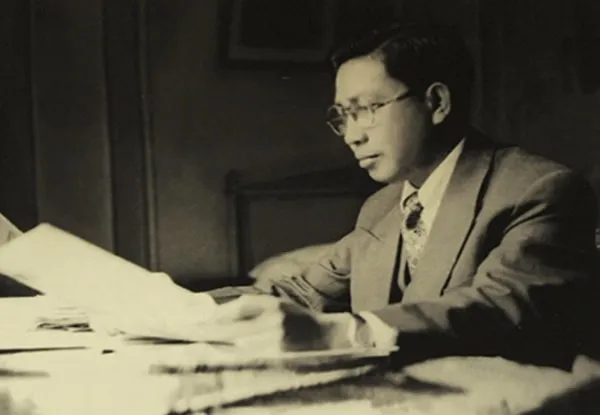
Do Dinh Thien, a famous Hanoi patriotic capitalist.
Do Dinh Thien and Trinh Thi Dien: from communist cadres to patriotic capitalists
Do Dinh Thien and his wife, Trinh Thi Dien, were among the most remarkable figures of their generation.
Initially early sympathizers of the Communist movement, they later became affluent business owners in Hanoi but never abandoned their revolutionary ideals.
At the height of Vietnam's financial desperation in 1945, the couple made extraordinary sacrifices, donating one hundred thousand Indochinese piastres and 100 taels of gold, equal to 133.3 ounces, to the newborn government during the critical Golden Week fundraising campaign.
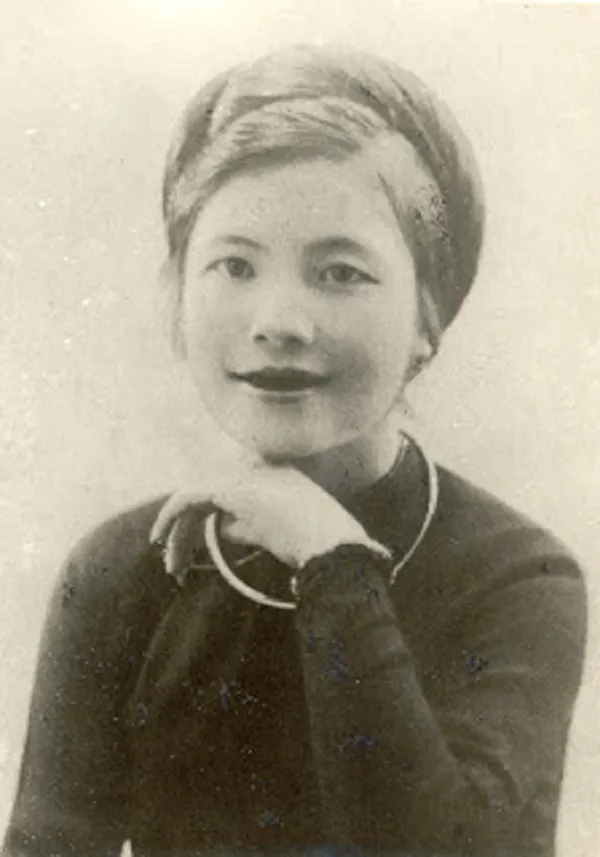
Trinh Thi Dien, the wife of Do Dinh Thien, was a communist and patriotic capitalist.
Their home at 54 Hang Gai Street in Hanoi became a safe shelter for revolutionaries, including Ho Chi Minh.
It was not just a house but a hidden command post where strategies were drawn up and critical documents printed.
Following the success of the revolution, Do Dinh Thien took charge of the Independence Fund and spearheaded financial campaigns to stabilize the young republic.
His leadership in economic matters provided the backbone for sustaining the revolutionary cause.
The couple did not hesitate to give away nearly all of their property, including houses, plantations and even a specialized printing facility. Their devotion was later recognized with the nation’s highest honors.
Trinh Van Bo – a merchant who became a financial pillar of the new government
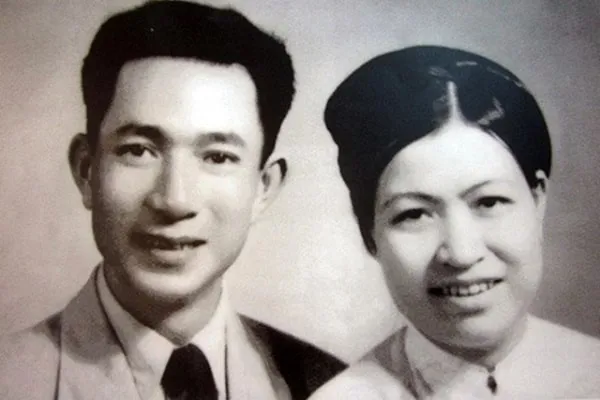
Trinh Van Bo and his wife Hoang Thi Minh Ho contributed more than 5,000 taels of gold, or 6,670 ounces, to the revolutionary government.
Another outstanding figure was Trinh Van Bo, owner of the Phuc Loi shop in Hanoi. Born into a respected merchant family, he quickly rose to become one of the most trusted financial backers of the revolution.
In the fall of 1945, when the national treasury was nearly empty, Trinh Van Bo and his wife Hoang Thi Minh Ho contributed more than five thousand taels of gold, or 6,670 ounces.
He also mobilized the wider merchant community to support the new government with additional funds and resources.
His wife famously said that the couple had four hands and two brains, and would give everything for independence. This declaration symbolized their complete devotion to the survival of the young republic.
The Phuc Loi shop also played a symbolic role. Its second floor was used as a discreet base for Ho Chi Minh while he drafted the Declaration of Independence. The shop became a bridge between commerce, culture, and revolutionary leadership.
Thanks to his economic vision and patriotic dedication, Trinh Van Bo later became Chairman of the Bank for Industry and Trade, ensuring that Vietnam's financial system served the needs of the people and the nation.
Ngo Tu Ha – Chairman of the first National Assembly
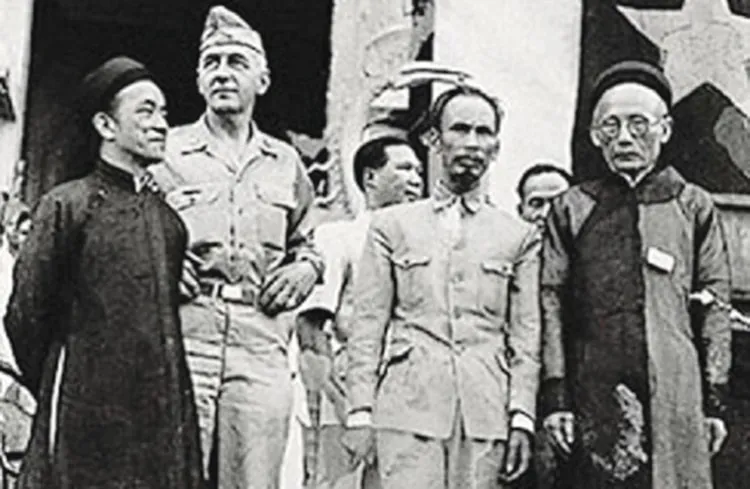
Ngo Tu Ha (first from the right) and President Ho Chi Minh.
While some intellectuals supported the revolution with wealth, others contributed by shaping the new nation's institutions.
Ngo Tu Ha, a respected Hanoi intellectual and owner of a well-known printing press, was one such figure.
After independence was declared in 1945, Ngo Tu Ha entered politics and became a member of the first National Assembly of the Democratic Republic of Vietnam.
His printing expertise had already made him an influential voice, but his role in politics marked a new chapter.
He was chosen to chair the first meeting of the National Assembly, a role full of symbolic meaning. By leading that session, he helped set the groundwork for Vietnam’s democratic lawmaking.
His leadership showed that intellectuals and cultural figures were vital to the revolution, not only in fighting or fundraising, but also in shaping the new government.
Their legacies matter
Do Dinh Thien, Trinh Van Bo and Ngo Tu Ha each embodied a different facet of the revolution. Although they never fought on the front lines, their contributions were vital to the revolution’s success.
Each provided what they could: money, shelter, printing presses, or legislative leadership, sustaining the revolution in its most fragile moment.
They embodied multi-class solidarity, showing that patriotism could transcend social divisions when the nation’s survival was at stake.
For younger generations, these Hanoi patriots prove that progress requires courage, integrity, generosity, and putting community above self.
On this 80th anniversary of the August Revolution and National Day, Vietnam pays tribute not only to its political leaders but also to the intellectuals and entrepreneurs who stood by the revolution.
The aforementioned individuals remain shining examples of patriotism. Their vision and sacrifices helped establish the foundations of modern Vietnam, a legacy that continues to inspire generations at home and abroad.