Vietnam becomes EU’s first ASEAN Comprehensive Strategic Partner
Trade, investment and climate cooperation are set to drive EU-Vietnam relations after the two sides agreed to elevate ties to a Comprehensive Strategic Partnership following more than 35 years of cooperation.
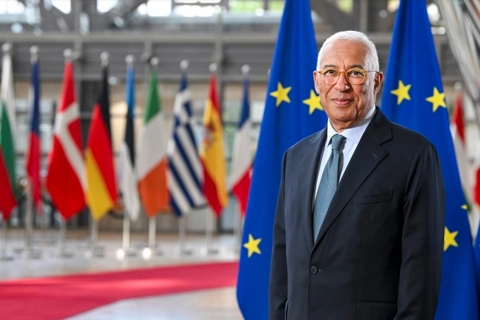
THE HANOI TIMES — Vietnam and the European Union have agreed to upgrade their relationship to a Comprehensive Strategic Partnership, marking a major milestone in bilateral ties and making Vietnam the first ASEAN country to reach this level of relations with the EU.
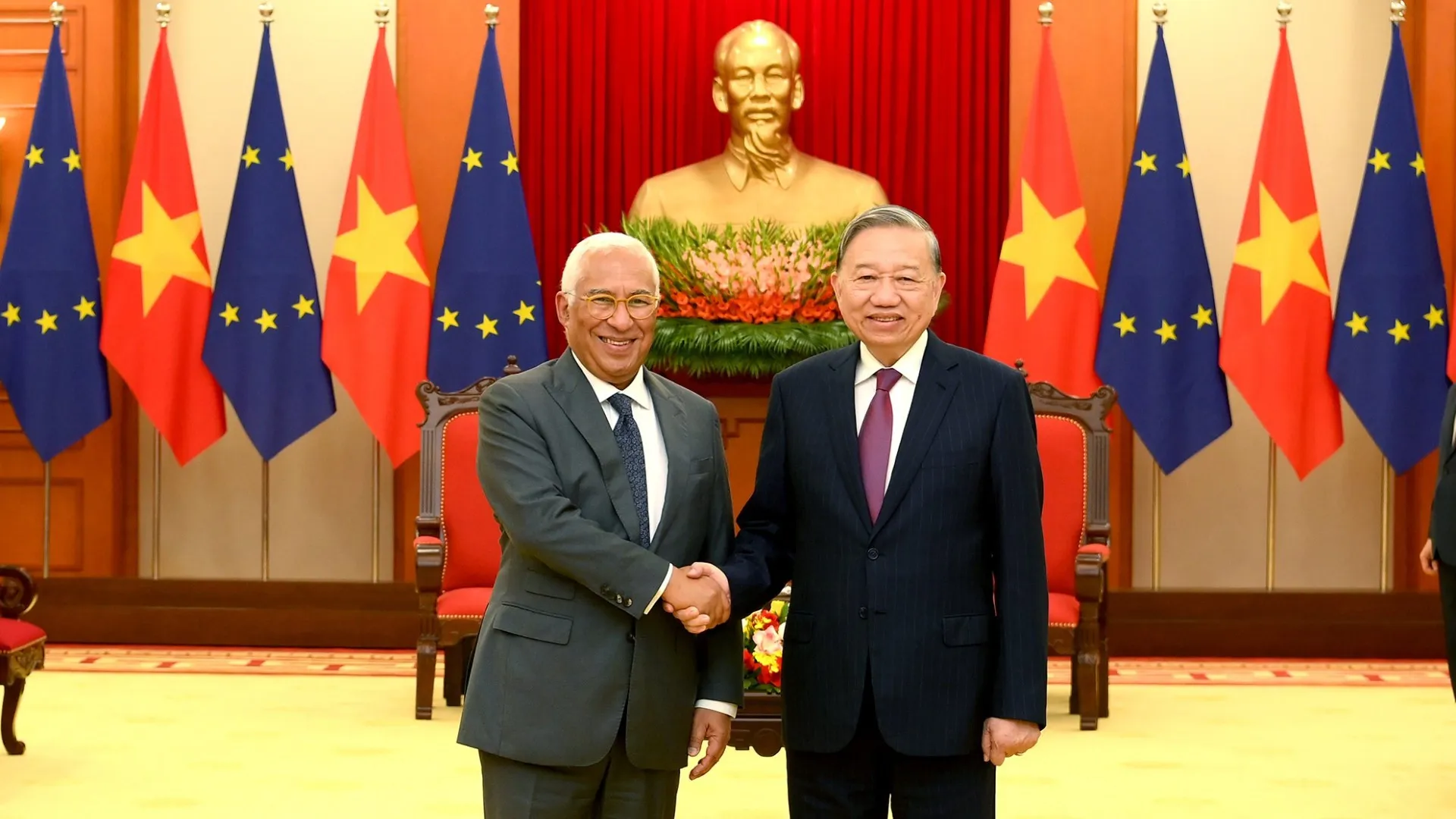
Vietnam's General Secretary To Lam (R) and European Council President António Costa in Hanoi on January 29. Photo: Nhan Dan Newspaper
The decision reflects more than 35 years of cooperation and underscores shared interests in peace, security and prosperity within a rules-based international order grounded in international law.
The upgraded framework, announced during the official visit by European Council President António Costa, is expected to elevate Vietnam-EU relations bilaterally, regionally and multilaterally, while delivering practical outcomes for both sides and contributing to stability and sustainable development in Southeast Asia, Europe and beyond.
Strong foundations for a new partnership
The Comprehensive Strategic Partnership builds on a solid institutional and legal foundation formed through key agreements and cooperation mechanisms.
These include the Framework Agreement on Comprehensive Partnership and Cooperation, the EU-Vietnam Free Trade Agreement (EVFTA), the Framework Participation Agreement enabling Vietnam’s participation in EU crisis management activities and the Just Energy Transition Partnership.
Regular dialogue mechanisms have also played a central role, including the Joint Committee under the Framework Agreement on Comprehensive Partnership and Cooperation (PCA), the EVFTA Trade Committee, the annual EU-Vietnam defense and security dialogue and the EU-Vietnam human rights dialogue.
Both sides said these frameworks have helped expand cooperation across sectors and will be fully utilized under the upgraded partnership.
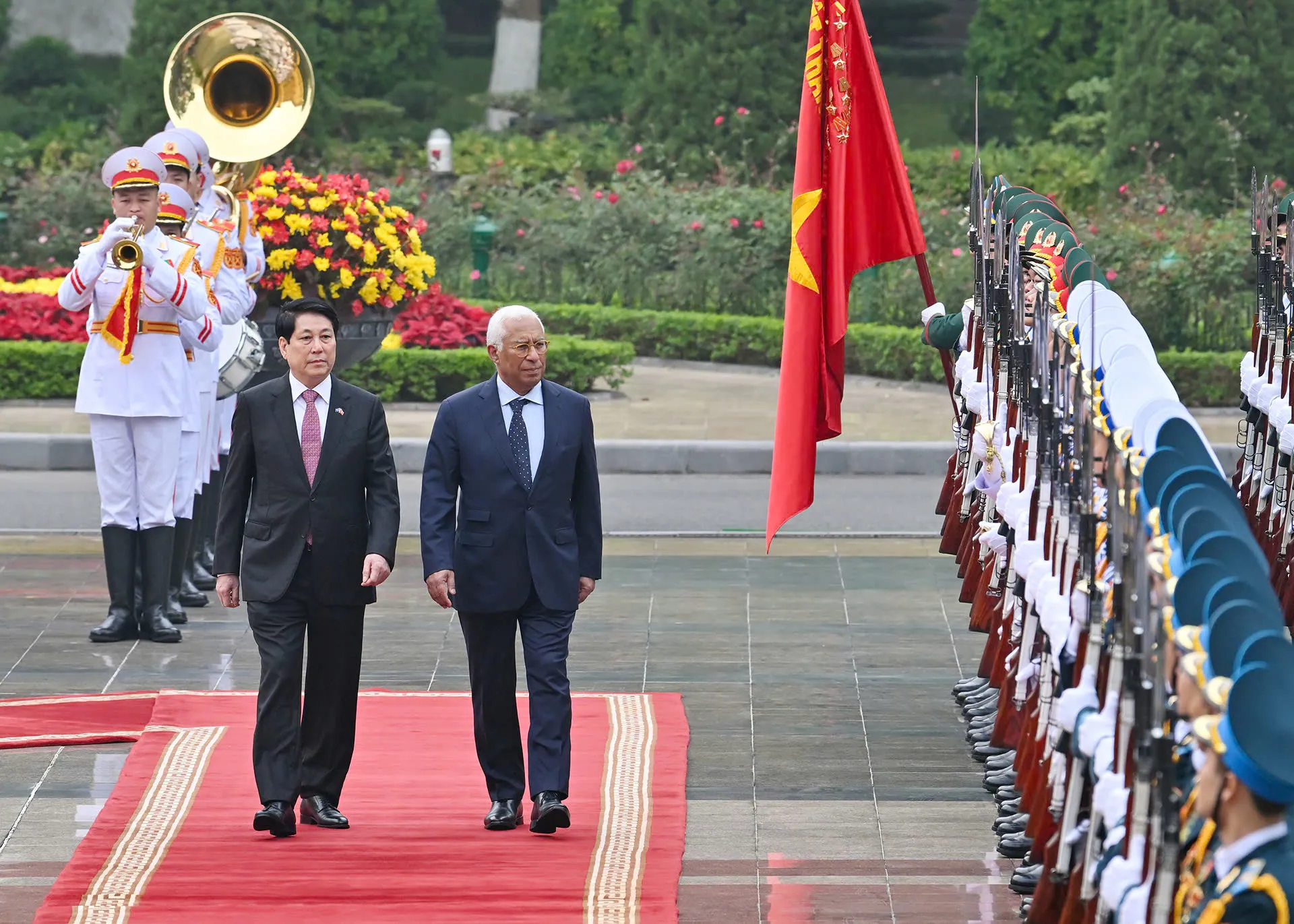
Vietnam's President Luong Cuong receives European Council President António Costa in Hanoi on January 29. Photo: Nhat Bac/VGP
Political cooperation and dialogue
Political cooperation will continue to be strengthened through contacts at all levels, with particular emphasis on senior-level engagement.
Vietnam and the EU agreed to enhance diplomacy and people-to-people exchanges to support the effective implementation of measures promoting bilateral relations.
Both sides reaffirmed their commitment to fully implementing existing agreements and stepping up consultation and policy coordination, especially on strategic issues.
Inter-parliamentary cooperation will also be strengthened through regular exchanges between the Vietnamese National Assembly and the European Parliament, including cooperation related to the implementation of the EVFTA.
Economic, trade and investment ties at the core
Economic, trade and investment cooperation was reaffirmed as a core pillar of the Comprehensive Strategic Partnership and a key driver of sustainable and inclusive growth.
The two sides agreed to strengthen dialogue on economic and trade policies and relevant legal frameworks, while prioritizing the resolution of emerging challenges through open and constructive engagement.
The EU highlighted the benefits generated by the EVFTA and emphasized the importance of its full and effective implementation to unlock its full potential.
The bloc also recognized Vietnam’s efforts to modernize its economy and attract foreign investment and confirmed its readiness to engage constructively as Vietnam advances toward a more advanced development stage.
Both sides reaffirmed their commitment to trade and sustainable development obligations under the EVFTA, with particular emphasis on labor cooperation, workers’ rights protection and the effective application of International Labor Organization standards.
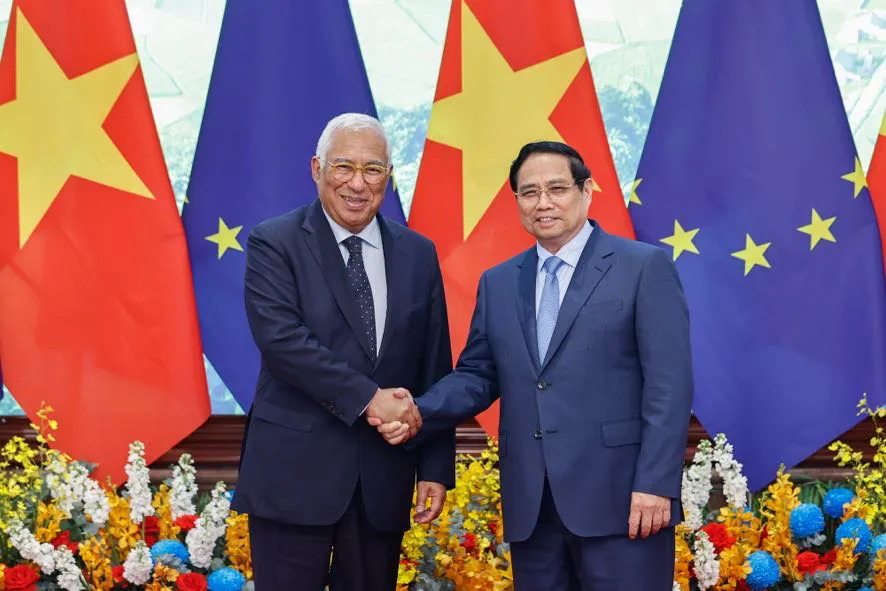
Vietnam's Prime Minister Pham Minh Chinh and European Council President António Costa in Hanoi on January 29. Photo: Nhat Bac/VGP
Expanding cooperation in priority sectors
Vietnam and the EU agreed to expand trade and investment cooperation across priority sectors of mutual interest.
These include critical raw materials, energy and low-carbon technologies, the circular economy, logistics, transport and infrastructure, secure and trusted communications infrastructure, semiconductors, artificial intelligence, digitalization, cybersecurity and supply-chain resilience.
Sustainable agriculture, forestry and fisheries were also identified as priority areas.
The two sides agreed to make greater use of available financial tools, promote a transparent and trusted regulatory environment and share experience in financial sector development.
Cooperation on critical raw materials will focus on identifying opportunities, fostering responsible partnerships and promoting sustainable mining and processing.
Commitment to a rules-based trading system
Both sides reaffirmed their commitment to a transparent and rules-based international trading system and to cooperation in strengthening and reforming the World Trade Organization.
They also agreed to explore closer coordination on issues related to the Comprehensive and Progressive Agreement for Trans-Pacific Partnership.
Institutional structures under the EVFTA, including the Trade Committee and a planned EU-Vietnam task force, will play a key role in addressing trade barriers, expanding market access and guiding future cooperation.
Both sides also emphasized the importance of advancing the ratification and effective implementation of the EU-Vietnam Investment Protection Agreement to encourage high-quality investment flows.
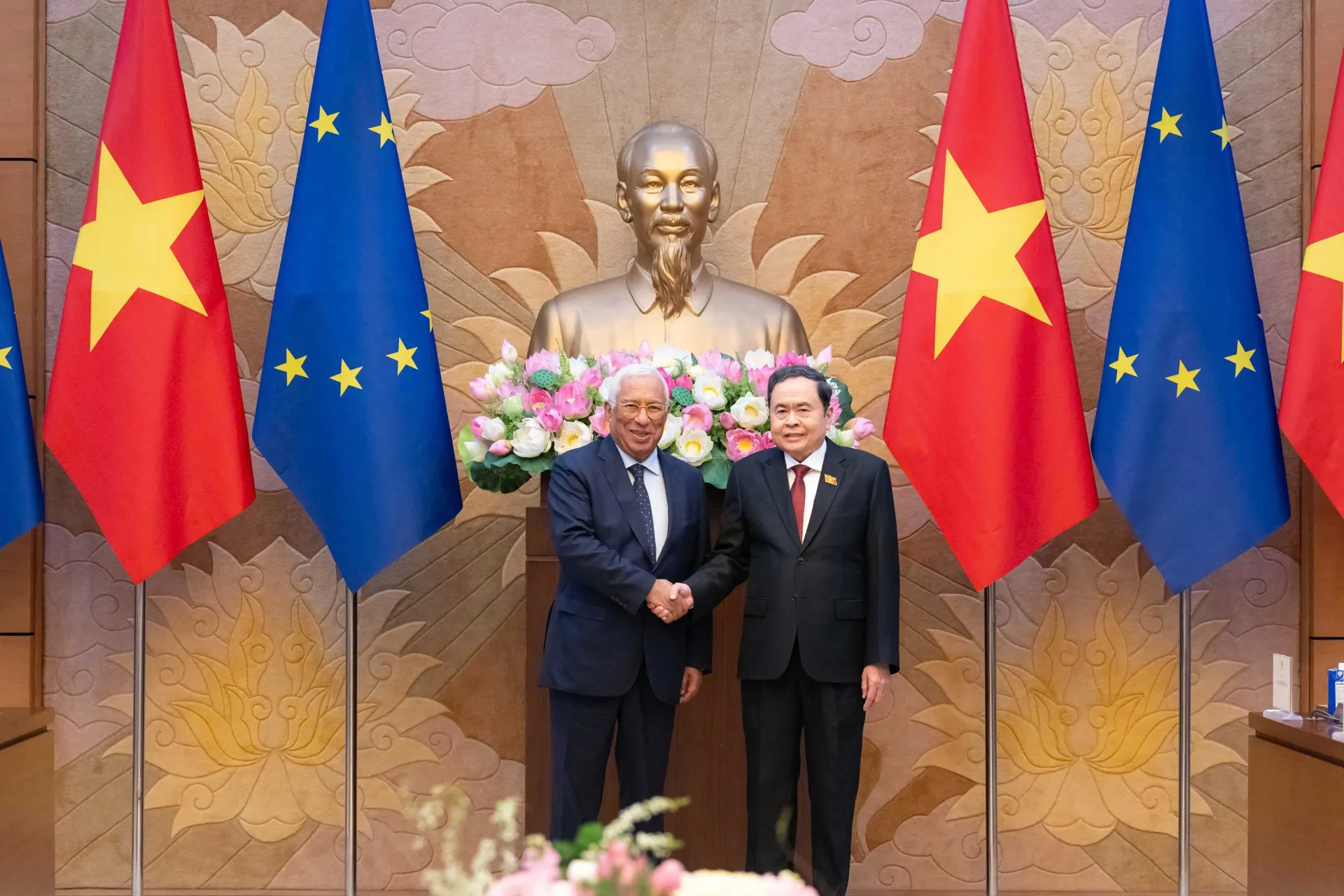
EC President António Costa meets Vietnam's National Assembly Chairman Tran Thanh Man in Hanoi on January 29. Photo: Quochoi
Peace, security and maritime cooperation
Vietnam and the EU underscored the importance of peace and international security and reaffirmed support for multilateralism, the UN Charter and international law.
Defense and security cooperation will be strengthened through existing dialogue mechanisms, with continued cooperation in peacekeeping and crisis management.
The two sides expressed their intention to expand cooperation in training for peacekeeping operations, search and rescue, fire prevention and responses to chemical and environmental incidents.
Maintaining peace and stability in the South China Sea (referred to as the East Sea in Vietnamese) was highlighted as a shared priority.
Both sides reaffirmed respect for international law, particularly the 1982 United Nations Convention on the Law of the Sea (UNCLOS), and stressed the importance of freedom of navigation and overflight.
They also underscored the need to fully implement the Declaration on the Conduct of Parties (DOC) and welcomed progress toward an effective and substantive Code of Conduct (COC) consistent with international law.
ASEAN and regional cooperation
Vietnam and the EU reaffirmed the central role of ASEAN in the evolving regional architecture and their commitment to strengthening EU-ASEAN relations.
Both sides agreed to enhance coordination within ASEAN-led mechanisms, including ASEAN Plus frameworks, to promote dialogue, trust-building and practical cooperation.
Vietnam reaffirmed its support for deepening the EU-ASEAN Strategic Partnership, while the EU recognized Vietnam’s active and constructive role within ASEAN.
They committed to working together to promote peace, stability and sustainable development in Southeast Asia, in line with ASEAN principles of unity, centrality and inclusiveness.
Climate action and sustainable development
Climate action and sustainable development form a central pillar of the Comprehensive Strategic Partnership.
Both sides are committed to implementing the Paris Agreement, achieving net-zero emissions by 2050 and strengthening cooperation under the Just Energy Transition Partnership.
They agreed to cooperate on biodiversity protection, circular economy development, carbon markets, pollution control and the sustainable management of forests, oceans and water resources.
Both sides highlighted the importance of sustainable fisheries and commited to promoting cooperation in this area, noting Vietnam's efforts in combating illegal, unreported and unregulated (IUU) fishing, and the timely lifting of the EU's Yellow Card.
A framework for long-term cooperation
The Comprehensive Strategic Partnership provides a structured and long-term framework for deepening Vietnam-EU cooperation across political, economic, security, environmental and social areas.
By building on existing agreements and shared commitments, the partnership aims to deliver concrete benefits while reinforcing multilateralism, international law and sustainable development at regional and global levels.
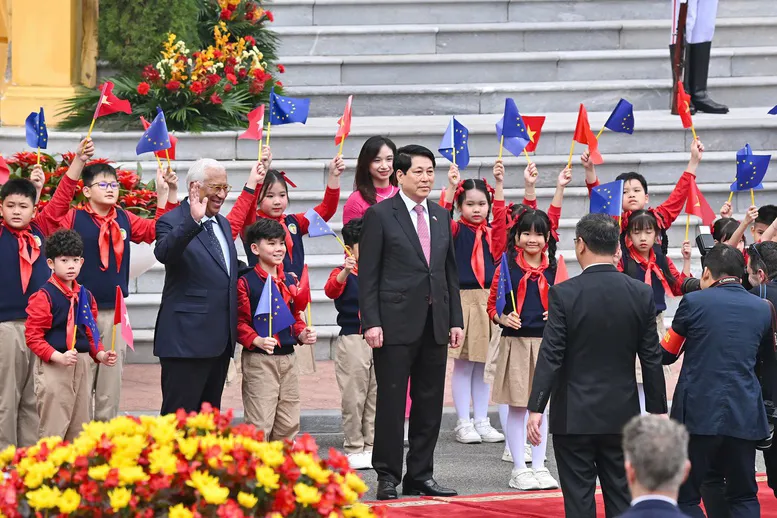
Vietnam is the first ASEAN country to upgrade ties with the EU to a Comprehensive Strategic Partnership. Photo: Nhat Bac/VGP
|
On the same day, European Council President António Costa held a series of high-level meetings with Vietnam’s top leaders, underscoring the significance of the newly upgraded partnership. Meeting with General Secretary To Lam, President Costa welcomed Vietnam’s increasingly active role in regional and global affairs and reaffirmed the EU’s commitment to strengthening cooperation on the basis of mutual respect, independence and international law. General Secretary To Lam described the upgrade to a Comprehensive Strategic Partnership as a reflection of strong political trust and shared strategic interests, stressing that Vietnam views the EU as one of its leading partners in trade, investment and development cooperation. Both leaders agreed to deepen cooperation across a wide range of areas, including politics and diplomacy, trade and investment, science and technology, climate response, digital transformation, education and people-to-people exchanges. During talks with State President Luong Cuong, the two sides officially announced the partnership upgrade and agreed to develop an action plan to ensure effective and substantive implementation of the new framework. President Luong Cuong highlighted the EU’s importance as a key economic and development partner and called for stronger cooperation in green growth, innovation, sustainable development, the maritime economy and governance. President Costa reaffirmed the EU’s support for Vietnam's development goals and underscored shared commitments to a rules-based international order, free trade and respect for international law, including the UNCLOS 1982. Prime Minister Pham Minh Chinh later received President Costa and said the upgraded partnership creates new momentum for bilateral cooperation as both sides pursue green and digital transitions. Prime Minister Chinh urged the EU to continue supporting Vietnam through technology transfer, high-quality investment and access to green finance while calling for the full and effective implementation of the EVFTA. Both sides also agreed to work toward the early ratification of the EU-Vietnam Investment Protection Agreement and to address remaining trade and investment barriers to facilitate business cooperation. Meeting with National Assembly Chairman Tran Thanh Man, the two sides emphasized the role of parliamentary cooperation in consolidating political trust and supporting the implementation of bilateral agreements. They agreed to strengthen exchanges between the Vietnamese National Assembly and the European Parliament with a focus on lawmaking experience, digital economy, climate change, energy transition and sustainable development. The meetings highlighted strong alignment between Vietnam and the EU on strategic priorities and laid a solid foundation for deeper and more comprehensive cooperation in the years ahead. |