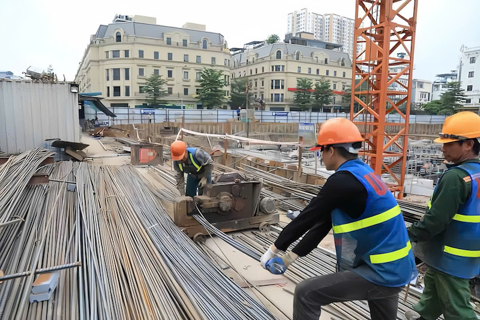
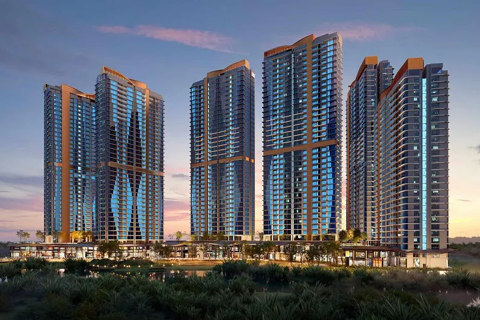
Hanoi prioritizes green constructions for sustainability
Green constructions are key to turn Hanoi into a sustainable, modern and energy-efficient city.
Promoting green building and smart urban infrastructure is a strategic task to transform Hanoi into a green, smart, and modern city, worthy of its stature, said Vice Chairman of the Hanoi People's Committee Duong Duc Tuan on September 26.
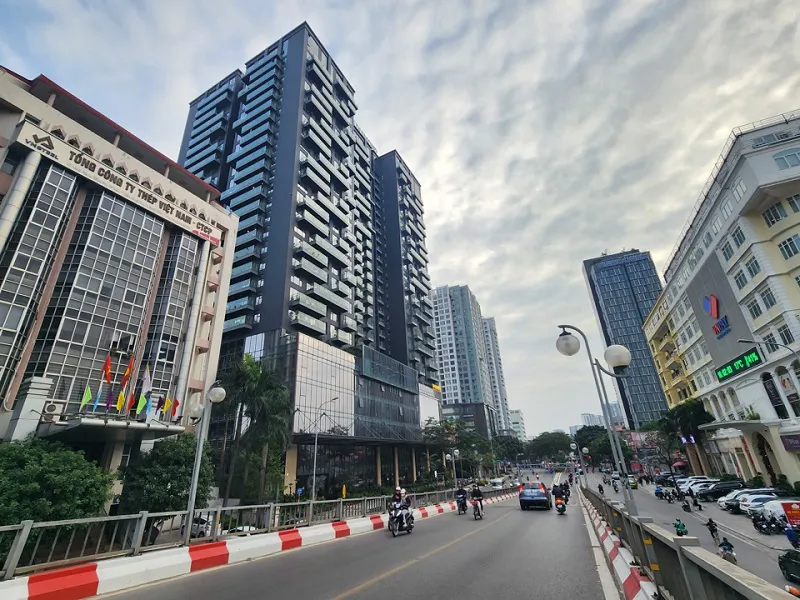
| Environmentally friendly materials were used to construct a building on Lang Ha Street, Hanoi. Photo: Thanh Hai/The Hanoi Times |
Addressing the forum titled "Promoting Green Building Development in Vietnam: Experiences and Solutions", co-organized by the Hanoi People's Committee and the Ministry of Construction, Tuan highlighted that the city has enacted numerous significant policies to promote green buildings, smart urban infrastructure, and sustainable development.
He reaffirmed Hanoi's commitment to developing into a green, smart, and sustainable city and called for participation and cooperation from experts, investors, consulting organizations, and individuals with experience and expertise in green urban development.
Tuan wanted investors to share practical experiences and provide advanced technical and technological solutions, building materials, and skilled labor for developing green buildings and smart urban infrastructure in Hanoi.
According to Tuan, the Resolution of the 17th Party Congress of Hanoi on October 13, 2020 outlined a vision for the city by 2030, focusing on becoming a green, smart, and modern capital. Under the resolution, Hanoi targets to develop green transportation, expand green spaces, and ensure that construction projects adhere to energy-saving and greenhouse gas reduction standards.
"The Hanoi People's Committee is committed to working closely with central agencies and domestic and international partners to accelerate urban transformation, creating a green, smart, sustainable and modern capital," he said.
Deputy Minister of Construction Pham Minh Ha noted that green buildings have emerged in Vietnam over the past 15 years. From the first green buildings in Ho Chi Minh City, there are now nearly 500 green buildings across the country, with a total floor area of about 11.5 million square meters.
Considering the annual construction of residential and office buildings totals around 100 million square meters, excluding industrial factories and other structures, the potential for green building development in Vietnam remains substantial, Ha stated.
He also highlighted that the global trend of green transition aims to reduce ecosystem degradation and negative environmental impacts. Green buildings enhance energy efficiency, reduce carbon emissions, promote sustainable use of natural resources, minimize environmental pollution, and encourage societal participation, he said.
Thus, fostering green building development is also a key solution for accelerating green transition at the national level, Ha affirmed.
Despite strong policies from the Party, the State, and momentum from international commitments, green building development in Vietnam has faced several challenges, according to Deputy Minister Pham Minh Ha.
These include the fact that green building development is currently encouraged but not mandatory, and investors face technical, technological, and financial limitations, as well as difficulty in accessing green financing, the deputy minister said.
Challenges and Solutions for Green Buildings
Thai Duy Sam, Vice Chairman of the Vietnam Building Materials Association, pointed out that while building materials are diverse, not all are suitable for green buildings.
He advised businesses and organizations to focus on energy-saving practices during construction and ensure that building materials do not negatively impact human health.
In recent years, the Ministry of Construction has assigned the Institute of Building Materials to carry out several research projects and develop evaluation processes for certifying green building materials, he said.
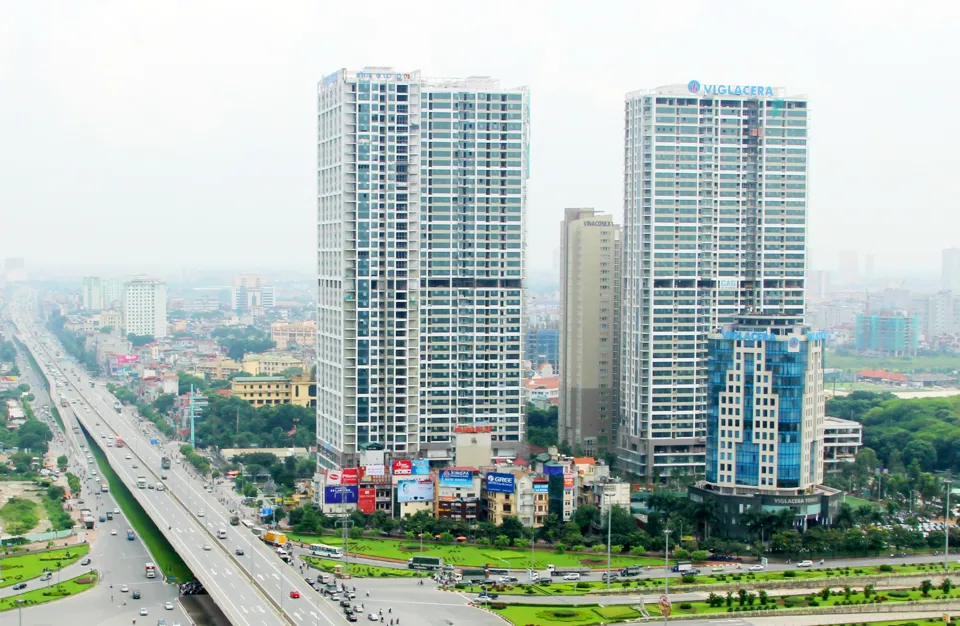
| Thang Long Number One building, the first green construction recognized in Vietnam. Photo: Cong Hung/The Hanoi Times |
However, legal obstacles still impede the provision of information about green building materials, he added.
Sam suggested that the Institute of Construction Economics should further research the investment efficiency of green buildings, especially their usage efficiency and payback period compared to conventional buildings, to make the benefits clearer to potential users.
Ngo The Vinh, from the Institute of Construction Economics, said that public investment capital is mainly allocated to social welfare projects and technical infrastructure.
In the realm of state management, funding for green buildings is primarily invested in office buildings and housing, he said.
However, data on this sector is still limited, and information is being collected, so the focus should be placed on key public investment projects, he said.
“The Ministry of Construction is working to provide complete information and databases, simplify administrative procedures, and potentially create a favorable legal framework for green building development, Vinh recommended.
According to Vũ Ngọc Anh, Director of the Department of Science, Technology, and Environment under the Ministry of Construction, green buildings in Vietnam have experienced rapid growth in recent years, with diverse potential across various building types, including residential, office, and hotel structures.
The Ministry of Construction has issued circulars guiding specialized agencies in addressing challenges, developed standards for energy saving, and issue new standards to raise investor awareness of their responsibilities in building, managing, and operating projects that meet energy-efficient and green building standards, he said.
“These efforts aim to enhance the quality, comfort, and energy efficiency of buildings while ensuring environmental protection, Anh added.
According to the Hanoi Department of Industry and Trade, it is key to resolve issues related to improving the legal framework, establishing specific standards and processes for green building construction, drafting incentive mechanisms for investors, and training and enhancing human resource capacity in the green building field.
At the same time, efforts should be made to build an information-sharing platform on green technologies, solutions, and exemplary projects, allowing stakeholders to exchange experiences. Developing the green materials market is also important, and activities to promote and recognize green materials and energy-efficient equipment will help investors and consumers better understand these products.
Hanoi’s Deputy Mayor Tuan said that green buildings need to be designed to optimize energy use and natural resources through the application of environmentally friendly materials.
Furthermore, green spaces within buildings are essential for improving microclimates, creating a healthy living environment, and enhancing the well-being of users, he said.
Modern smart urban infrastructure is also crucial for efficient urban management, Tuan noted.
"The use of advanced technologies such as the Internet of Things (IoT), artificial intelligence (AI), and big data in urban management can save resources and optimize public services," he said. "For example, smart traffic systems can help reduce congestion, save time and energy, and lower emissions from vehicles."
Hanoi is currently drafting regulatory documents to implement the 2024 Capital Law, particularly focusing on developing green, smart, and sustainable urban policies, Tuan said.
"These regulations will provide a solid legal foundation for the long-term development of the capital in alignment with the green-smart-modern orientation," he added.