Hanoi proposes tolls on Ring Road No.4
Tolls for the entire 113 km of Ring Road No.4, scheduled to be operational by 2027, would range from VND214,000 to VND815,000 ($8.81-$33.54).
The Hanoi People's Committee has scheduled the operation of Ring Road No.4 to commence in 2027, with a proposed toll of VND1,900 (US$0.078) per kilometer for standard vehicles.
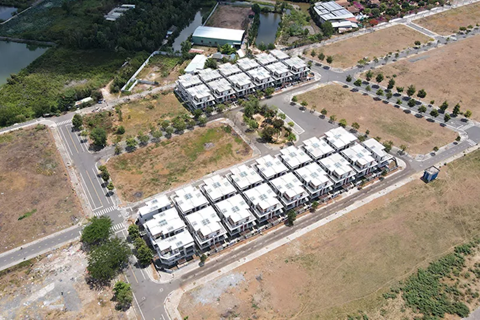
| The design of the Ring road No.4. |

The proposal has been submitted to the Ministry of Transport and the provinces of Bac Ninh and Hung Yen, with the expectation that all parties will soon reach an agreement on the pricing and timing of the toll increase for the Ring Road No.4 projects.
“This toll determination is the basis for finalizing the feasibility study report, encompassing the financial plan and capital recovery for the project,” noted Vice Chairman of the Hanoi People’s Committee Duong Duc Tuan in the proposal.
In this regard, vehicles with less than 12 seats and trucks under 2 tons will pay the lowest toll per kilometer at VND1,900 ($0.078) or about VND214,000 ($8.81) for the entire 113 km, while trucks of 18 tons or more and 40 ft containers pay the highest at VND7,220 ($0.3) or about VND815,000 ($33.54) for the entire route.
The vehicle fees will be gradually increased every three years until the project is fully paid for. By 2054, as the payback period approaches, the toll per kilometer on the expressway is projected to reach a low of VND5,400 ($0.22) and a high of VND20,520 ($0.84).
The Hanoi People's Committee notes that the proposed pricing framework for driving on the Ring Road No.4 expressway is consistent with the North-South Eastern expressway built in the BOT (Build-Operate-Transfer) form during the 2017-2020 period, by current regulations.
A representative from the Vietnam Road Administration said that Hanoi's proposal is generally suitable for the year 2027 and aligns with the price increase roadmap for the three North-South expressway projects under the PPP method, namely Dien Chau - Bai Vot, Nha Trang - Cam Lam, and Cam Lam - Vinh Hao.
The Hanoi Ring Road No.4 involves the construction of a 113 km highway through Hanoi, Hung Yen, and Bac Ninh. It starts at the junction of the Hanoi - Lao Cai expressway and ends at the Noi Bai - Ha Long expressway connection, with a total investment of VND55 trillion ($2.26 billion). Work on the project is set to start in 2022, and to be operational by 2027.
The Hanoi People's Committee has proposed subdividing the project into two categories. Category 3.1, funded by the State budget, has an investment of nearly VND26.6 trillion ($1.1 billion), covering the construction of Hong Ha Bridge, Me So Bridge, Hoai Thuong Bridge, and sections from the junction of Highway 6 to the Hanoi - Hai Phong expressway intersection.
Category 3.2, funded through the BOT model, has an investment of nearly VND28.5 trillion ($1.17 billion), and includes the construction of highway sections from the Noi Bai - Lao Cai intersection to the National Highway 6 intersection and from the Hanoi - Lao Cai highway intersection to the Haiphong - Noi Bai - Ha Long expressway intersection. This will be executed through the public-private - Partnership.
Completing Ring Road No.4 is expected to alleviate traffic congestion, enhance provincial connectivity, and foster new development opportunities for the entire capital region, encompassing Hanoi, Hung Yen, and Bac Ninh.

![[Infographic]Hanoi starts construction of Ring road No.4](https://cdn-media.hanoitimes.vn/2023/06/25/vanh_dai_4.jpg?w=480&h=320&q=100)