Hanoi pumps West Lake water to revive To Lich River
The pumping project aims to revive To Lich River by reducing odors, improving urban landscape and maintaining stable water levels year-round.
THE HANOI TIMES — Hanoi on September 9 officially started pumping water from the West Lake into To Lich River in an attempt to revive the river that has been long polluted.
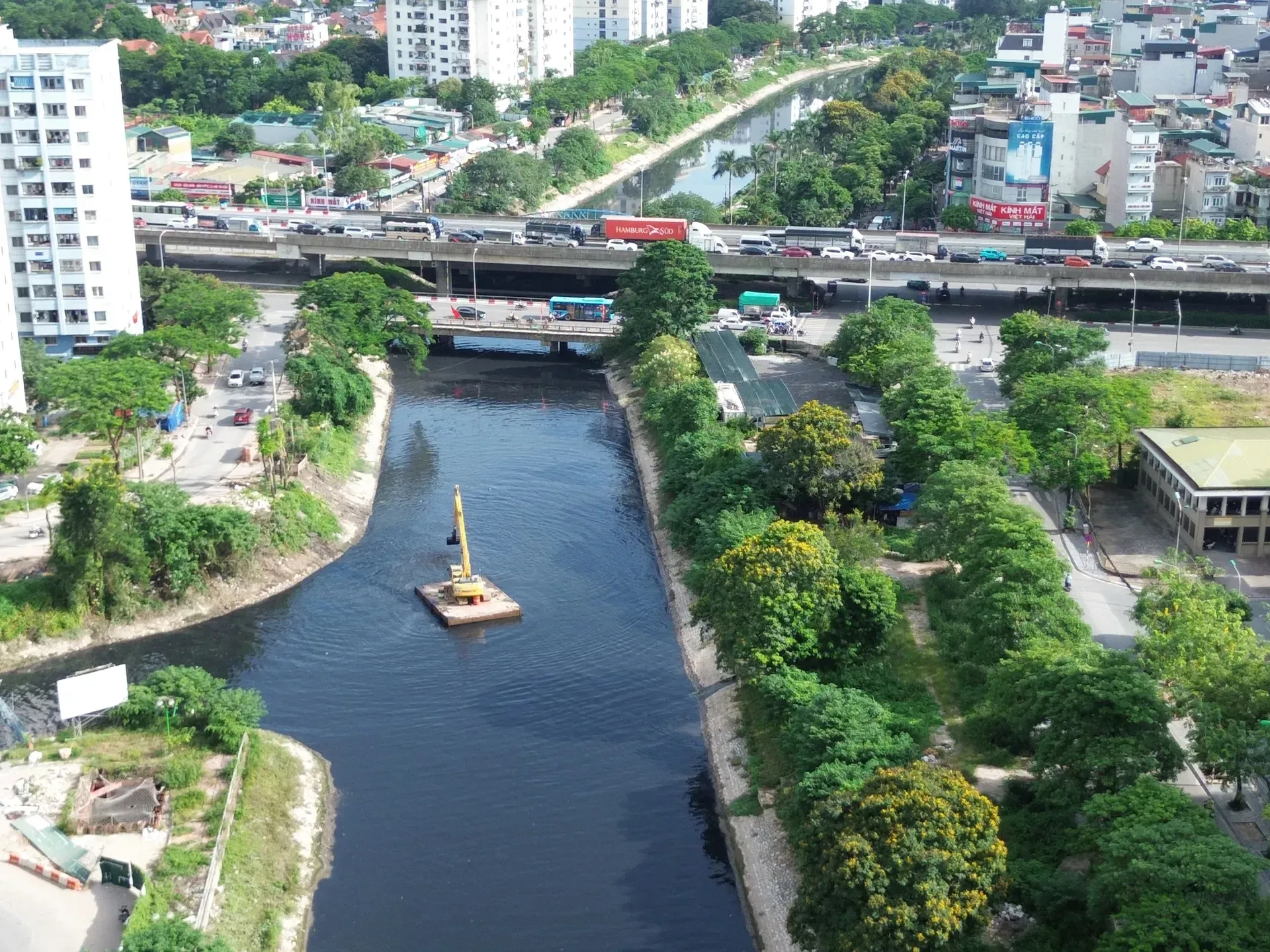
To Lich River gradually turns clearer after restoration efforts. Photo: Quy Nguyen/The Hanoi Times
Water from the West Lake is injected through a double-pipe system that runs for 1.5 kilometers, supplied in cycles, kept separate from wastewater and directed to the Yen Xa Wastewater Treatment Plant.
Tran Van Tien, Deputy Director of the Management Board for Hanoi Technical and Agricultural Infrastructure Development Projects, noted that replenishment from West Lake has significantly reduced foul odors and improved the landscape.
After a few hours, Tien said the To Lich River showed visible signs of recovery, with clearer water and reduced odors. "It is the first time residents have been able to see the riverbed, a clear sign of the project’s effectiveness."
With combined flows from the West Lake, treated water from the Yen Xa Wastewater Treatment Plant and the regulating dam, To Lich River is expected to maintain a stable water level of a minimum of 3.5 meters.
This water level will ensure the river flow continues during the year, which is an important factor in helping realize Hanoi's dream of reviving the historic river.
By September 20, the city will complete the dam at Quang Bridge and introduce additional treated water from the Yen Xa Wastewater Treatment Plant, starting at 200,000 m³/day and later increasing to 270,000 m³/day.
Currently, the To Lich River maintains a water level of about +3 m thanks to the sluice gate regulation at Quang Bridge, preventing it from drying up.
The historic river of To Lich runs a distance of 14 kilometers. Each day it receives some 150,000 cubic meters of domestic wastewater from hundreds of sewers. Untreated domestic wastewater has been the source of pollution in the river for decades.