Hanoi pushes digital transformation and English teaching in vocational education
Experts called on Hanoi to expand digital infrastructure and English training support, ensuring vocational students are equipped for global integration and future job markets.
THE HANOI TIMES — Experts and educators have urged Hanoi to enhance support for vocational schools in advancing digital transformation and English teaching, heard a seminar on November 4.
The seminar aimed to develop practical solutions to accelerate digital transformation in education and expand foreign-language instruction, contributing to the national program “Making English the Second Language” and Hanoi’s “Digital Literacy for All” campaign.

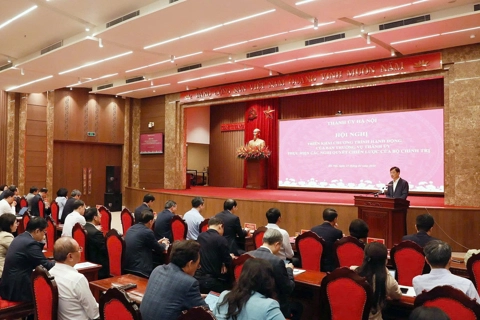
Delegates attend the seminar. Photo: Nam Du/The Hanoi Times
Nguyen Van Toan, Director of the Son Tay Vocational Education and Continuing Education Center, said that the center recognizes the importance of digital transformation in language teaching and multiple challenges in implementation.
The center has only 26 permanent staff and must contract 64 additional teachers, he said. Despite some upgrades, the school still lacks modern equipment for teaching and online training.
“Digital transformation requires a strong technological foundation, yet we face shortages in both human and financial resources,” Toan said, citing that even purchasing basic online learning software remains difficult due to limited budgets.
He proposed that the city increase financial support and organize digital skills training for teachers, particularly for key educators responsible for leading transformation initiatives in vocational education.
Pham Xuan Khanh, Rector of the Hanoi High-Tech College, said that all training programs, textbooks and lectures need digitizing to meet the demands of vocational training in the digital age.
The college now trains students in 45 disciplines, so digital transformation must be applied across the system, from electronic textbooks to simulated experiments and digital assessments, he said.
Rector Khanh suggested that the city government invest in upgrading information technology infrastructure, build shared data repositories and establish a joint AI research and application center for vocational institutions.
Regarding foreign-language education, Dao Thi Thu Huong, Head of the English Faculty at FPT Polytechnic College, proposed that local authorities help vocational schools create practical English-learning environments and exchange activities for students.
She said that all students at her college now study and take exams online, using digital platforms and AI tools to strengthen listening, speaking, reading and writing skills.
Technology helps students develop faster language reflexes and overcome psychological barriers to communication, making English practice more natural and interactive, the lecturer added.
Huong emphasized that for vocational students, listening and speaking English effectively are essential skills for adapting and competing in the international labor market.
According to Five-Star E-Learning (FSEL), a technology company specializing in digital education solutions, noted that only about 5% of Vietnamese students study English under international standards.
The business proposed working with the Hanoi Department of Education and Training to provide free English proficiency assessments for 140,000 teachers and design pathways for achieving B1 and B2 levels.
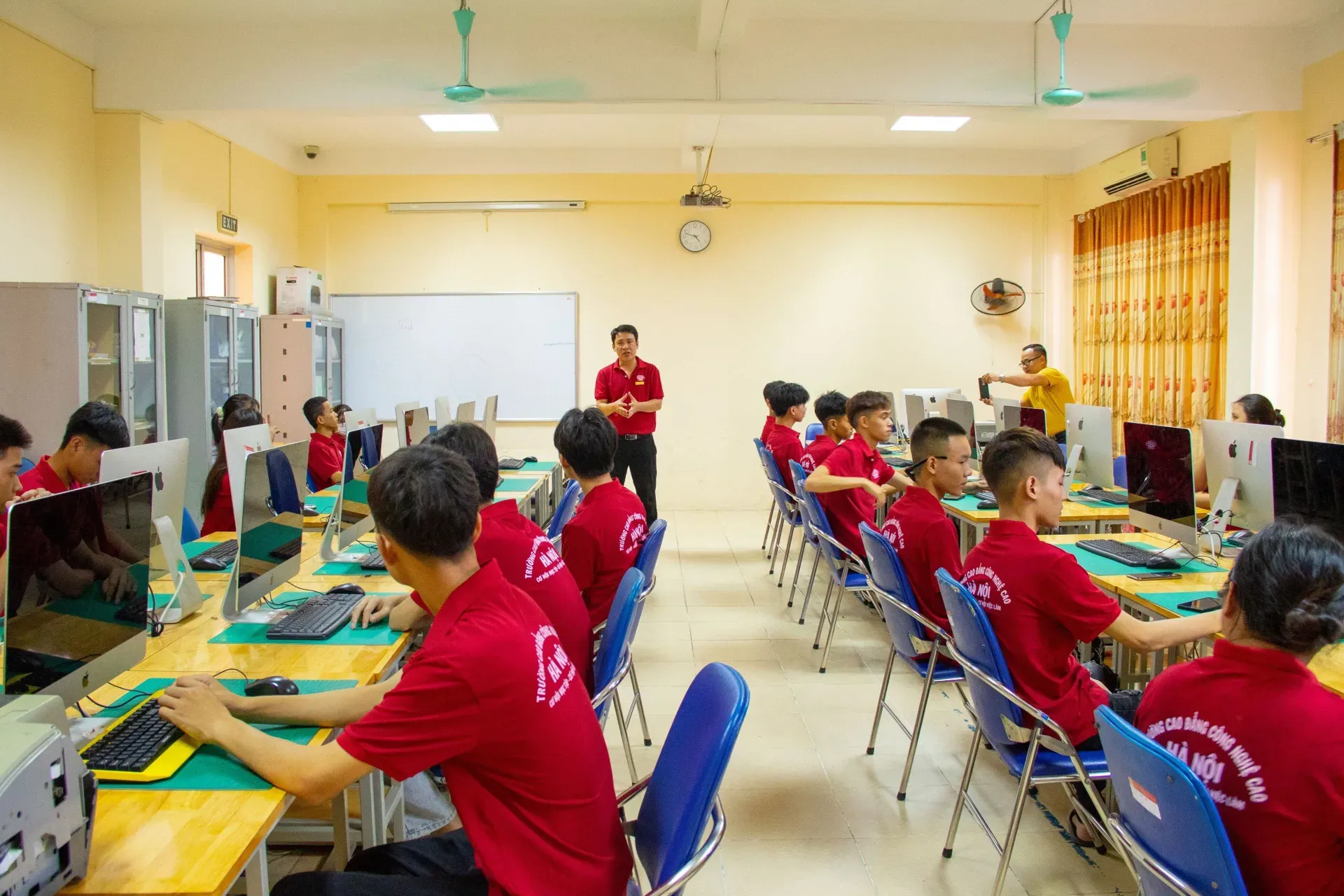
A computing class at the Hanoi Hi-Tech College. Photo: Kinh te & Do thi Newspaper
The company also recommended allowing vocational institutions to share a unified digital platform for teaching, learning and assessment to enhance consistency and efficiency across the network.
Tran The Cuong, Director of the Hanoi Department of Education and Training, said that digital transformation and language proficiency are twin pillars for improving the quality of Hanoi’s human resources.
He added that the “Digital Literacy for All” movement is expanding rapidly, promoting lifelong learning in a digital environment and reducing inequalities in access to education.
According to the department, Hanoi now has 68 colleges, 85 vocational secondary schools and 29 vocational and continuing education centers.
Over 70% of these institutions have introduced learning management systems, online training platforms and digitalized records and learning materials to improve teaching efficiency and accessibility.
Delegates agreed that combining digital transformation with foreign-language teaching is vital to modernize Hanoi’s vocational education system and develop a competitive, globally ready workforce for the future.