Hanoi pushes forward urban facelift with three major resolutions
New resolutions form the action framework to remove longstanding bottlenecks and improve urban landscape.
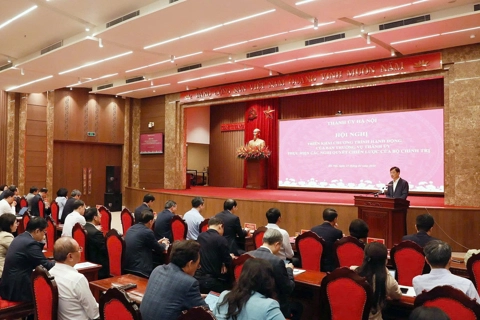
THE HANOI TIMES — Hanoi is finalizing three major resolutions on urban renewal, resettlement and investment incentives to create a concrete legal framework under the Capital City Law to upgrade urban spaces and improve living conditions.
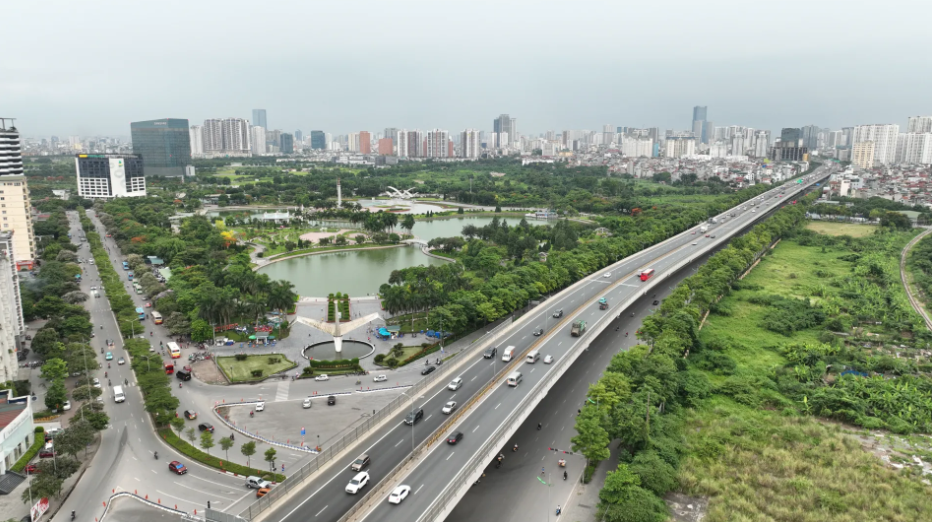
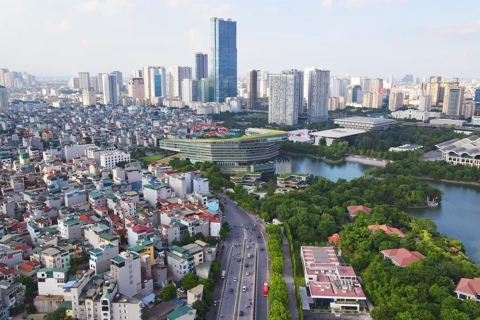
Hanoi from above. Photo: Pham Hung/The Hanoi Times
New mechanism for urban development needed
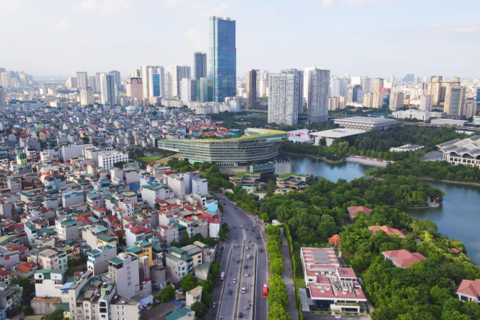
Hanoi is entering a new development phase. Rapid urbanization and population growth are straining decades-old infrastructure.
Many inner-city neighborhoods still have degraded apartment blocks, narrow sidewalks, outdated lighting and weak drainage. Residents want a cleaner, more livable environment and the city needs stronger tools to act.
The three resolutions form an action framework to remove bottlenecks. The first sets rules for urban redevelopment, creating a legal basis for faster implementation and giving district authorities more room to act.
The second introduces policies on compensation, support and resettlement for renewal projects and rebuilding old apartment blocks. It addresses the challenge of securing public consent and confidence during relocation.
The third outlines measures to attract investment in urban renewal and preserve valuable architecture. It mobilizes private resources to upgrade old areas while protecting the city’s cultural identity.
If the Capital City Law provides the foundation, these resolutions are the tools of execution. They enable the city to decide on issues that affect daily life. Procedures are simplified and local authorities gain more flexibility to meet each area’s needs.
When responsibility reaches the grassroots, tasks such as repairing sidewalks, planting trees or fixing lighting move faster and achieve better results. This creates a more proactive management model.
People at core of policies
Compensation and resettlement attract the most attention as they affect thousands of households.
Many old apartment complexes in Kim Lien, Giang Vo, Thanh Cong and Trung Tu have been deemed unsafe.
Redevelopment has stalled due to disagreements over benefits and relocation plans. Residents wait, investors hesitate and authorities lack mechanisms to move forward. The new resolutions aim to unlock this.
They allow flexible compensation and promote on-site resettlement, with full transparency on procedures, pricing and timelines.
People can give opinions from the planning stage and choose the option that suits them. When transparency and choice are ensured, trust becomes the key to progress.
“People want clarity about their rights and stable living conditions. Once that is guaranteed they will support the project,” said Van Tung, a resident of Kim Lien collective housing.
Beyond housing, the resolution on investment incentives will help restore areas of cultural and historical value.
Instead of demolishing and rebuilding, the city aims to upgrade infrastructure while preserving the character of old neighborhoods. This is visible in Lo Duc, Nguyen Cong Tru and West Lake, where streets, sidewalks and public spaces are improved but each area’s identity remains.
Dr. Architect Dao Ngoc Nghiem, Vice Chairman of the Vietnam Urban Planning and Development Association, stressed the need for clarity in implementation.
“A policy may be good, but if it is slow to reach real life, public trust will fade. Urban renewal succeeds only when residents feel heard and see real improvements,” he said.
The city is also advancing digital transformation in planning and architecture management. Databases on zoning, land use and redevelopment projects are being made public.
“When information is open, residents can monitor projects and investors can study opportunities. This supports faster, more sustainable implementation,” Nghiem noted.
Urban improvements from smallest action
Visible changes are taking place. Streets are repaved, trees trimmed and lighting improved.
Along the To Lich River, new promenades and walkways are emerging. In Hai Ba Trung District, Lo Duc and Nguyen Cong Tru streets have been renovated while preserving the charm of the old quarter.
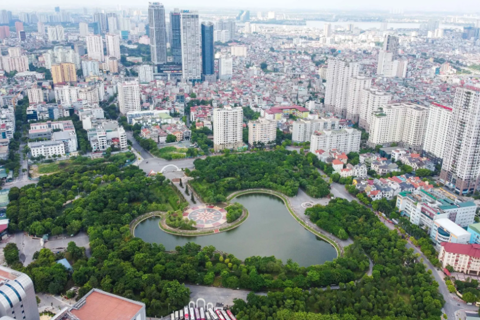
Around Hoang Cau Lake, new landscapes and infrastructure upgrades are creating more public space.
These efforts show that urban renewal must be routine work, not a reaction to decay. Each renovated street and public area turns policy into progress.
Experts agree the three resolutions are essential to turn the Capital City Law into results and build a modern and livable city.
Dr. Nguyen Tien Dinh, member of the Vietnam Fatherland Front Central Committee and deputy head of its Economic Advisory Council in Hanoi, expects the city to move from policy design to real action. “Every department and locality will have clear responsibilities. Even small projects such as better sidewalks, brighter lighting or improved playgrounds share the same goal: a sustainable and humane capital,” he said.
Urban renewal is not only about fixing streets. It is a long process of improving living conditions. With cooperation among government, community and businesses, Hanoi is moving toward a future built on action and trust, he stressed.