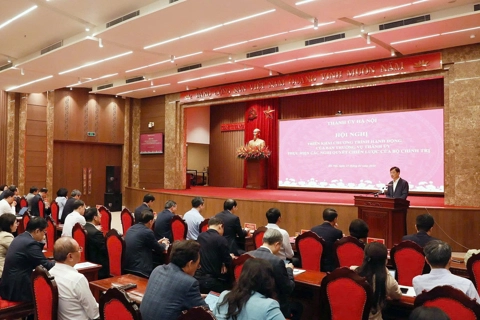
Hanoi pushes global trade agenda amid rising uncertainty
The goal is to generate new momentum for the capital’s commercial growth in 2025.
THE HANOI TIMES — Amid global economic headwinds and the looming threat of US tariffs, businesses in Hanoi are accelerating efforts to diversify markets, strengthen supply chains, and reduce reliance on single export destinations, with strong backing from local authorities.

Production at Garment 10 Company. Photo: Khac Kien/The Hanoi Times
For companies like Hanoi-based Garment 10, which relies heavily on global supply chains, the stakes are high. “This is of particular significance for firms in the garment sector like ours,” said Than Duc Viet, the company's director.
“If retaliatory tariffs are imposed by the US, export-oriented manufacturers will be the first to feel the impact," said Viet.
The warning echoes findings from a recent report by the Hanoi Department of Industry and Trade, which identified key sectors, including electronics, machinery, textiles, footwear, wood products, and furniture, as vulnerable to potential tariff hikes. These industries account for roughly 70% of Hanoi’s total exports to the US.
“In this context, local government support plays a crucial role in helping businesses overcome difficulties and maintain growth momentum,” Viet said.
In response, Hanoi is ramping up support for its business community. City agencies are actively implementing the 2025 Investment, Trade, and Tourism Promotion Program, aimed at helping companies adapt to new challenges while maintaining growth momentum.
This strategic push was formalized in Directive No. 4023/UBND-DMPT, signed by Vice Chairman of the Hanoi People’s Committee Nguyen Manh Quyen on July 10. The directive calls on departments across sectors, from agriculture to tourism, to adopt reform-driven, measurable actions to drive Hanoi’s commercial development in 2025.
City agencies are now actively implementing the 2025 Investment, Trade, and Tourism Promotion Program. This initiative is designed to keep projects on schedule, deliver high-quality results, and align with broader goals of efficiency and sustainability. Departments are also encouraged to propose future initiatives that respond to evolving market trends while advancing Hanoi’s export strategy.
Each sector plays a strategic role. Ministries, trade associations, and enterprises are expected to collaborate closely to create impactful trade promotion across both domestic and international markets.
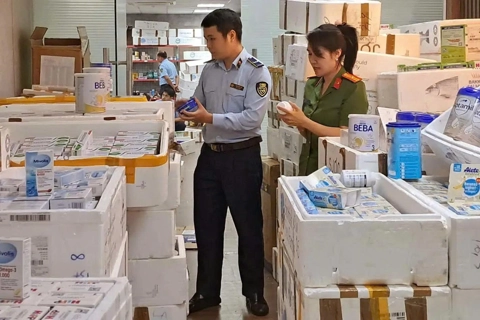
The municipal Department of Industry and Trade will work in tandem with the Ministry of Industry and Trade to roll out a variety of promotional initiatives throughout 2025. These will include expanded support for import-export activities, efforts to strengthen the domestic market, and the integration of digital and green technologies. The department will also enhance market oversight to address smuggling, fraud, and counterfeit goods.
“In 2025, trade promotion will focus on green, eco-friendly products that support sustainable transformation and boost business competitiveness in the new global landscape,” said Hoang Minh Chien, Deputy Director of the Trade Promotion Agency under the Ministry of Industry and Trade.
“The government will continue to improve the competitiveness of businesses through advisory programs, market updates, and policy support,” Chien said.
In agriculture, the Department of Agriculture and Environment is helping cooperatives, businesses, and farmers adopt sustainable practices, including international standards like VietGAP and GlobalGAP. These standards not only improve product quality and traceability but also strengthen the competitiveness of Vietnamese products abroad while meeting domestic demand.
Efforts are underway to better connect producers and consumers, particularly in sectors such as agriculture, forestry, and fisheries. Investments in traceability systems and high-tech farming are being made, alongside public campaigns to raise awareness about food safety and certified local goods.

Visitors explore the Bat Trang ceramic exhibition area. Photo: Thuy Linh/The Hanoi Times
Hanoi will also spotlight its OCOP (One Commune One Product) offerings, ranging from traditional handicrafts to agricultural products, through targeted trade promotion that reaches new markets and customer segments.
The tourism sector is contributing as well. The Department of Tourism is working with local governments and enterprises to showcase Hanoi’s cultural identity as a core brand value. This strategy aims to build stronger, more recognizable product brands, particularly in the OCOP and handicraft sectors. Tourism operators are being supported with promotional campaigns and service upgrades to attract both domestic and international visitors.
At the coordination level, the Vietnam Fatherland Front’s Hanoi chapter and the city’s Cooperative Alliance have been tasked with overseeing implementation alongside relevant agencies.
At the grassroots level, commune and ward authorities are expected to closely collaborate with city departments to execute trade promotion initiatives. The combined effort is set to make Hanoi’s commercial landscape more dynamic and resilient in the year ahead.
According to the Hanoi Statistics Office, the city’s import and export performance in the first half of 2025 faced multiple challenges. These included the lingering effects of US trade policies, rising global competition, and market volatility.
Despite these obstacles, Hanoi posted strong trade figures: total trade turnover reached US$32.3 billion, up 13.7% year-on-year. Of this, exports stood at US$9.9 billion (up 12.5%) while imports rose to US$22.3 billion (up 14.3%).
These figures reflect the city’s determined efforts to maintain trade momentum even as global competition intensifies and policy shifts introduce uncertainty.
As Hanoi’s businesses adapt to changing conditions, the city's comprehensive, sector-specific strategy, underpinned by practical policy tools and inter-agency coordination, is proving essential. For many local firms, this combination of public support and forward-thinking reforms may be the difference between surviving and thriving in the next phase of global trade.