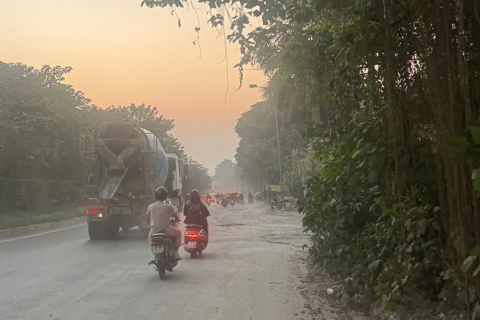
Hanoi ramps up national and regional cooperation to tackle air pollution
In a recent request, the government of Hanoi has asked for support from neighboring provinces and cities as well as international organizations in its struggle against air pollution.
THE HANOI TIMES — Hanoi is ramping up coordination with ministries, sectors and neighboring provinces to tackle air pollution, protect public health and support sustainable urban development.
The call comes in a recent dispatch from Vice Chairman of the Hanoi People’s Committee Nguyen Manh Quyen to the Ministry of Agriculture and Environment and the governments of Haiphong, Bac Ninh, Hung Yen, Phu Tho, Thai Nguyen and Ninh Binh.
Nationwide collaboration required to combat air pollution
In the dispatch, the Hanoi government official called for stronger joint action on urgent air-pollution control measures across the capital region. He stressed the central coordinating role of the Ministry of Agriculture and Environment in managing cross-regional air pollution.
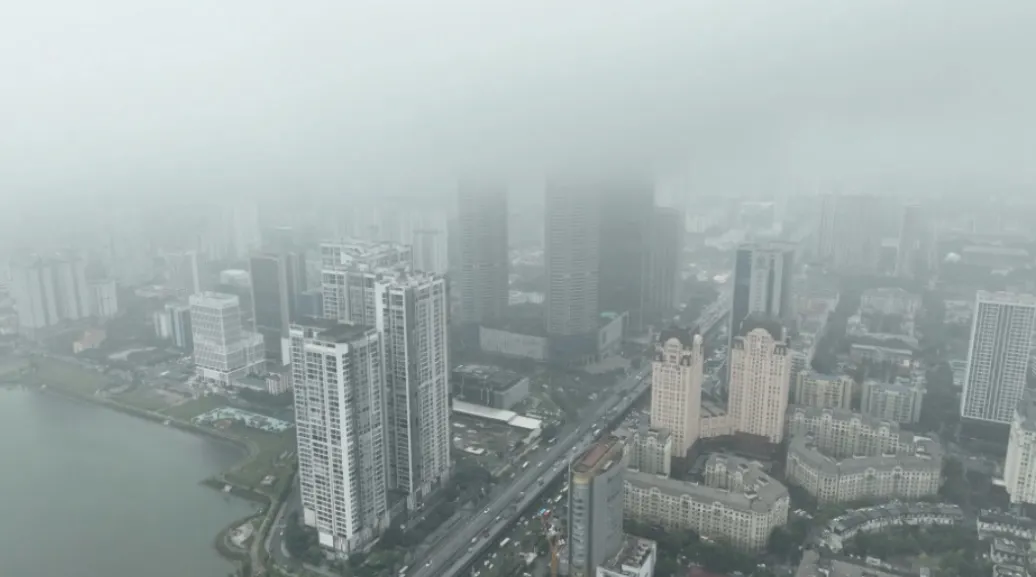
Haze blankets Hanoi’s skyline on recent mornings. Photo: Cong Hung/The Hanoi Times
The document identified the development of coordination mechanisms and shared responsibilities among localities as a critical foundation for controlling major emission sources with wide and transboundary impacts.
Pointing to fragmented data as a persistent weakness in air-quality management, Hanoi proposed expanding the development, linkage and sharing of air-monitoring systems between the capital and neighboring provinces.
The city also urged provinces to unify methods for assessing and warning about air quality, serving forecasting, early alerts and timely public information. With connected, transparent and real-time data, authorities can base response decisions on stronger scientific evidence.
Hanoi further proposed the early issuance of regulations governing cross-regional and interprovincial air-quality management, along with the operation of a national air-pollution warning, forecasting and control system.
As severe pollution episodes increasingly affect wide areas, regular and timely information exchange among localities remains essential for coordinated responses that reduce risks to public health.
Hanoi also called on provinces and cities to closely coordinate in implementing the National Action Plan on air-pollution mitigation and air-quality management for 2026–2030, with a vision to 2045, as approved by the Prime Minister.
At the local level, authorities must strengthen oversight of industrial emission sources, especially high-risk sectors such as cement, thermal power and steel production and tighten control over craft villages that involve combustion, particularly recycling activities.
“These are emission hot spots. Without strict supervision, they generate significant pollution that directly degrades regional air quality,” the document stated.
The city stressed that controlling emissions from traffic remains a consistent and long-term priority.
Expanding public transport and accelerating the transition to clean and environmentally friendly vehicles require close cooperation from neighboring provinces, where large volumes of interprovincial traffic enter Hanoi every day.
Another pollution source that often receives insufficient attention is dust from construction activities and the burning of straw and agricultural waste.
Hanoi urged localities to strengthen oversight at large construction sites, strictly enforce requirements on material covering and transport and promptly handle violations that cause dust dispersion.
In rural areas, authorities identified the complete prevention of illegal straw and agricultural-waste burning as a key measure to cut emissions during peak pollution periods.
Measures such as cleaning vehicles, washing roads and mist spraying to suppress dust may appear technical, but when implemented simultaneously and across regions, they can produce visible and cumulative benefits.
Hanoi also encouraged production facilities to proactively adjust operations, including reducing output on days when air quality reaches unhealthy levels, to limit health risks. This approach reflects a model of responsible development that places community well-being above short-term economic returns.
A central proposal in Hanoi’s recommendations is the establishment of a national steering committee on air-pollution mitigation.
As air pollution grows more complex and cuts across multiple sectors and governance levels, a unified command body would strengthen intersectoral and regional coordination, enable timely responses to emergencies and ensure consistency in policy and action.
According to Nguyen Trong Nhat, Head of the Environmental Management Division at the Hanoi Department of Agriculture and Environment, the document signals a clear shift from fragmented local management toward region-based environmental governance built on cooperation.
Hanoi seeks global partnerships
Alongside domestic regional coordination, Hanoi is actively seeking international support to address air pollution. The city’s efforts have gained increasing recognition from the international community.
Among the city’s plans, the French National Research Institute for Sustainable Development (IRD) will install an air-quality monitoring device in the city as part of broader pollution-reduction efforts.
The project, known with the name SEACAI, is a regional initiative designed to monitor and reduce air pollution across Southeast Asia. It aims to deploy air-quality monitoring stations across several Southeast Asian countries, including three in Vietnam, with one located in Hanoi.
The project will strengthen forecasting capacity, identify pollution sources and generate scientific data to support practical and effective solutions that improve urban living standards, IRD’s Chief Representative Sylvain Ouillon told The Hanoi Times.
“It will develop short-term air-quality forecasting models and help managers assess the impact of different policy measures,” he said, adding that climate change mitigation and environmental protection remain critical for Hanoi.
Ouillon added that IRD pledges to support Hanoi in promoting sustainable and responsible development, improving the quality of life and protecting natural resources and the environment.
The United Nations Development Programme (UNDP) and the World Health Organization (WHO) have also pledged to strengthen their cooperation with Hanoi to combat air pollution.
Angela Pratt, WHO Representative in Vietnam, said that intersectoral and cross-sectoral coordination remains essential for developing effective air-quality policies in Hanoi.
“We need more detailed data to understand pollution sources and exposure patterns. More importantly, we must reduce emissions at their origins,” she said.
The WHO official noted that air pollution poses serious health risks to vulnerable groups such as children and older people.
Long-term exposure can lead to severe illnesses, including lung cancer, heart disease and other cardiovascular conditions, she said.
Pratt reaffirmed that WHO will continue close cooperation with Vietnamese agencies to advance a healthier, fairer and more sustainable future.
Air quality in Hanoi and the wider capital region has deteriorated in recent years, driven by weather conditions and pollution sources that extend beyond local and administrative boundaries.
Hanoi’s push for regional and international cooperation reflects its political commitment to environmental protection and sustainable development, making cleaner air a key indicator of modern and responsible regional governance.