Hanoi seeks superior autonomy in Capital Law overhaul
Hanoi is seeking a historic legislative breakthrough with a Capital Law overhaul and a 100-year master plan. By demanding 'superior' autonomy and exceptional mechanisms, the city aims to shatter governance bottlenecks and lead Vietnam’s new era of growth as a high-tech, global-tier capital.
THE HANOI TIMES — Hanoi has proposed amendments to the 2024 Law on the Capital to introduce stronger, more exceptional and long-term mechanisms, aiming to give the capital greater autonomy and flexibility to drive development and lead new growth models, city officials said on January 14.
At the fourth plenary session of the 18th-tenure Hanoi Party Committee Executive Board, Standing Vice Chairman of the municipal People’s Committee Duong Duc Tuan presented a report outlining the proposal to revise the Law on the Capital No. 39/2024/QH15, arguing that the current law no longer fully matches Hanoi’s evolving role and governance needs.
Need for a more robust and lasting special law
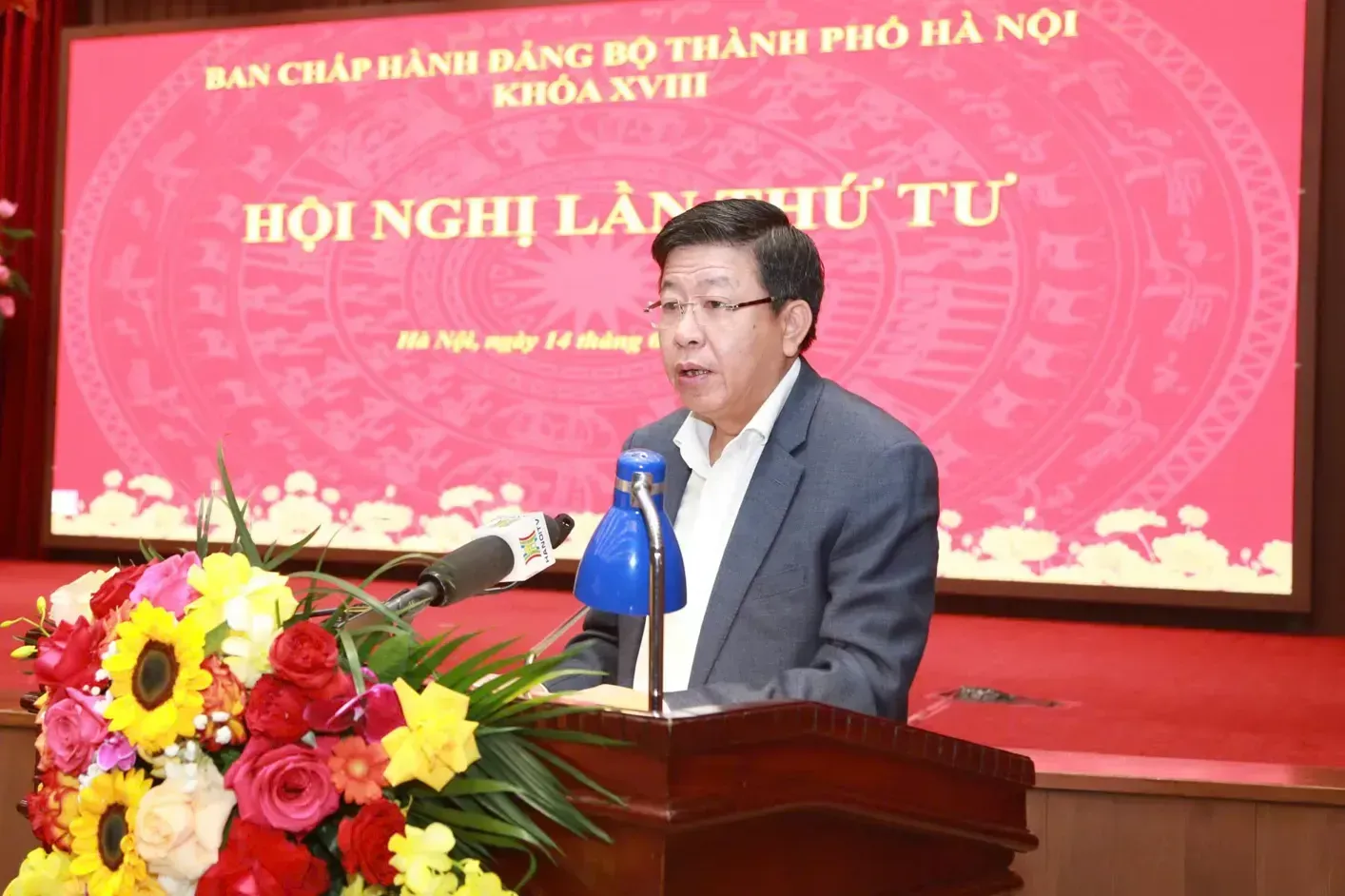
Standing Vice Chairman of the municipal People’s Committee Duong Duc Tuan. Photo: Pham Hung
According to Tuan, recent restructuring of municipal agencies and the implementation of the two-tier local government model have significantly changed the organization of the administrative apparatus, as well as decentralization and delegation of powers between levels of government.
Although the 2024 Law on the Capital introduced a number of special mechanisms at the time of its adoption, subsequent laws and National Assembly resolutions have brought new legislative thinking and more open, flexible policies. Some of these newer regulations have effectively amended or overlapped with provisions of the Law on the Capital, weakening its distinctiveness.
"In addition, several National Assembly resolutions piloting special mechanisms for other localities and major projects now contain provisions that are more favorable and innovative than those currently available to Hanoi," said Tuan.
These developments require careful review and selective adoption to suit the capital’s development in a new phase."
A key limitation, Tuan said, is that the 2024 Law on the Capital was not designed as a stable, long-term “framework law” capable of “anchoring” Hanoi’s exceptional mechanisms amid changes in general legislation.
As a result, many provisions once considered special have been quickly “generalized,” blurring the line between Hanoi’s unique mechanisms and common regulations, complicating legal application and the drafting of implementing documents.
The law also remains constrained by a uniform governance mindset, limiting Hanoi’s ability to proactively pilot and test new models and policies, particularly in urban governance, innovation and digital transformation. The absence of controlled pilot mechanisms has reduced the city’s capacity for rapid policy responses to emerging challenges.
Against this backdrop, revising the Law on the Capital is considered essential to establish durable, breakthrough institutional arrangements that can guide Hanoi’s development in line with the capital’s 100-year master plan and a new Politburo resolution set to replace Resolution No. 15-NQ/TW.
Reinforcing Hanoi’s special legal status
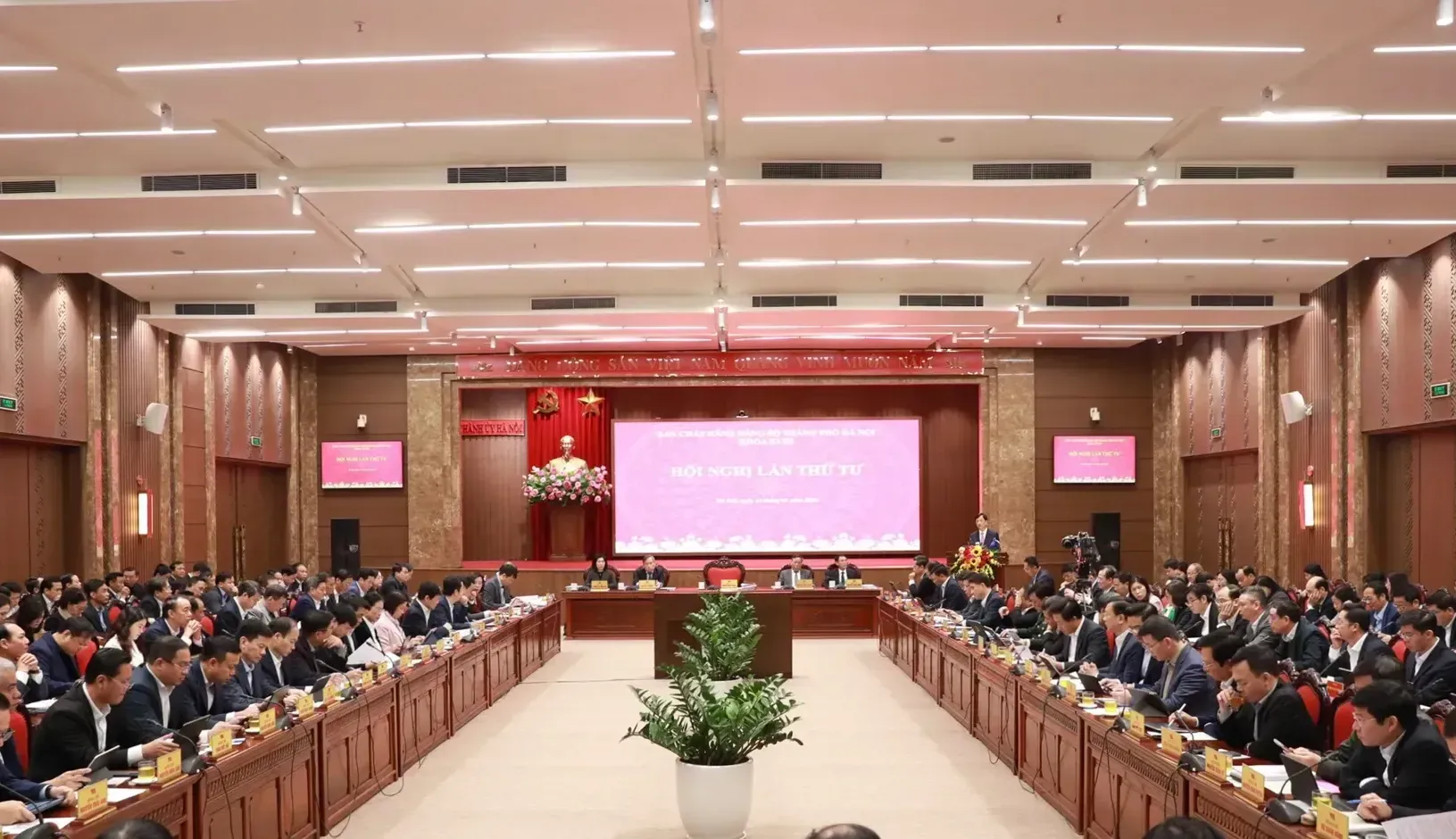
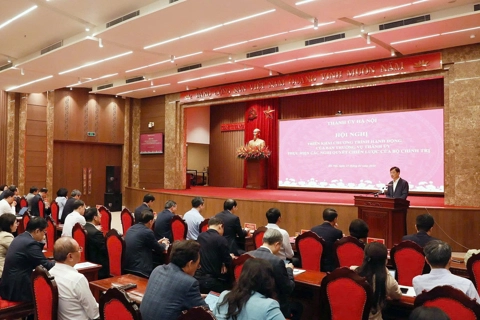
An overview of the fourth plenary session.
Based on a comprehensive review, the Party Committee of the municipal People’s Committee has set the goal of building a revised Law on the Capital that is exceptional, stable and long-term, reflecting Hanoi’s unique position and role.
The draft amendments aim to provide a legal framework enabling Hanoi to fully perform as the nation’s political and administrative center, a major hub for the economy, culture, science, technology and innovation, and a key growth engine for the northern region and the country as a whole.
He said the overarching principle of the draft law is to “grant stronger powers, implement more comprehensive decentralization and delegation, and ensure clearer accountability.”
"Revising the Law on the Capital is not solely Hanoi’s responsibility but a shared task of the National Assembly, the Government and central ministries to remove legal bottlenecks and ensure coherence within the legal system," said Tuan
Under the proposal, the revised Law on the Capital would comprise five chapters and 41 articles, institutionalizing four groups of mechanisms and policies with 31 specific mechanisms. The focus is on affirming Hanoi’s special legal status and the priority application of the Law on the Capital within the legal system.
The draft continues strong decentralization to the city government in areas such as organizational structure, staffing, salary policies, and the attraction and use of high-quality human resources.
Expanded autonomy in governance and development

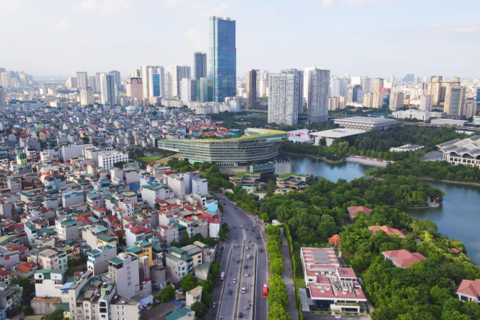
A birdeye view of a conner of Hanoi. Photo: Hoang Ha/kinhtedothi.vn
The proposed amendments would grant Hanoi comprehensive authority to decide and take responsibility for organizational arrangements, payroll and income policies, and human resource development strategies.
The city would also be empowered to propose draft laws and National Assembly resolutions, issue detailed regulations differing from those of the Government or central ministries, and pilot institutional arrangements that different from existing laws or address areas not yet regulated.
In fiscal and investment matters, Hanoi would gain greater autonomy over budget revenues and expenditures, credit decisions and the establishment of financial funds for development investment.
The city would have full authority to approve investment projects, select investors and contractors, and apply more flexible and streamlined disbursement mechanisms. It could also decide on forms of Private sector involvement, public-private partnerships, and new approaches to exploiting public assets and infrastructure.
The draft law further allows Hanoi to proactively regulate the management and use of forest, water and other natural resources; determine land-use structures and land conversion; and decide on land readjustment, compensation, resettlement, land allocation and leasing.
In governance and development, the revised law emphasizes modern urban management based on digital technologies, big data and artificial intelligence, alongside administrative procedure simplification and a shift from pre-approval to post-inspection.
Hanoi would be authorized to issue new policies and development models in science and technology, education and training, healthcare, culture and social welfare, and to apply international standards or set its own standards suited to the capital’s needs.
Ensuring alignment with the capital’s 100-year master plan and a new Politburo resolution replacing Resolution No. 15-NQ/TW is another core objective. The proposed mechanisms are designed to institutionalize major orientations on green and smart urban development, transit-oriented development, urban conservation and renewal, transport infrastructure expansion, and the preservation and promotion of Hanoi’s cultural values.
The revised Law on the Capital also seeks to clearly define the institutional framework for regional linkages among the Capital Region, the Red River Delta and the northern midland and mountainous areas, with Hanoi as the core and coordinating center.
Proposals include establishing a Capital Region Development Coordination Committee and a regional development fund to mobilize and allocate resources for inter-regional programs and address cross-regional issues such as infrastructure, environment and food safety.
Regarding the legislative roadmap, Tuan said the municipal People’s Committee has been working closely with the Ministry of Justice and relevant agencies, setting up a drafting committee and holding multiple consultations and workshops. The revised Law on the Capital is expected to be submitted to the National Assembly for consideration and passage in 2026, with approval targeted for April 2026.