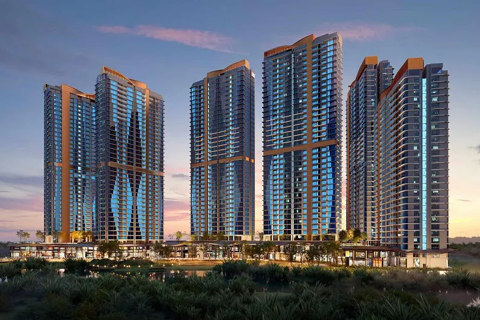
Hanoi speeds up land allocation for housing development
Property developers are urged to strictly comply with current regulations on reserving 25% of their project area for social housing.
Hanoi is revising existing planning to ensure sufficient land to meet the objective of having 44 million square meters of floors as stipulated under the city’s 2021-2025 housing development program.
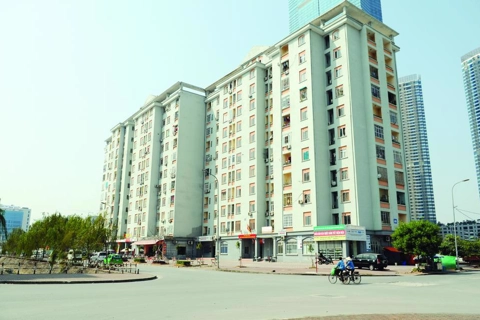
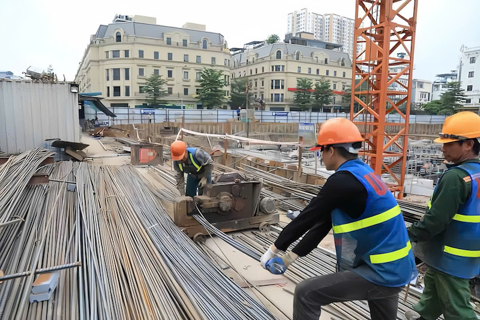
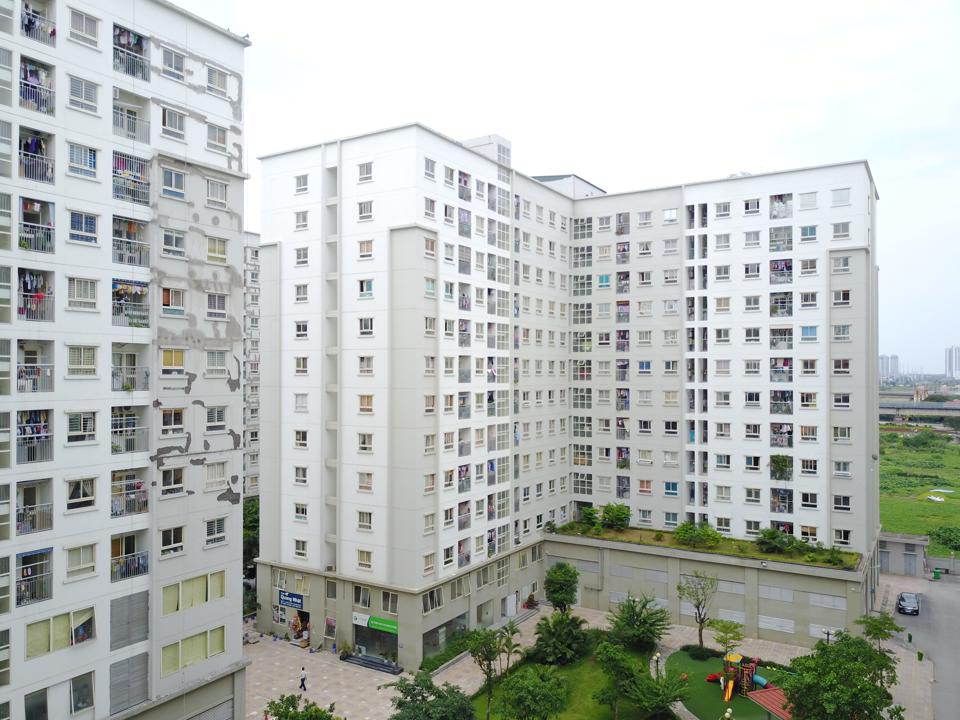
| A social housing project in Dong Ngac Ward, Bac Tu Liem District. Photo: Pham Hung |
“The focus would be to obtain the necessary land to build housing for workers in industrial parks or from low-income groups,” the department's deputy director, Mac Dinh Minh, told The Hanoi Times.
In February, the Hanoi People’s Committee issued Decision No.498 on the establishment of a task force that is specialized in overseeing current land portfolio for housing development.
As part of the efforts, Minh said the Department is working with real estate firms to ensure a minimum of 25% of land in each commercial property project is dedicated to social housing.
“Property developers are urged to strictly comply with current regulations of allocating 25% of their project area for social housing,” he continued.
Minh also noted the city would retrieve lands from projects of slow progress for the purpose of housing development.
Statistics from the Department of Construction revealed during the 2016-2020 period, Hanoi had built an addition of 35 million square meters of housing floors and attracted investment for 69 property development projects for 4.3 million square meters of floors.
During this period, the city needed 40 housing projects for resettlement with a combined area of 1.3 million square meters of floors. But as of 2021, only 19 had been completed with 371,000 square meters.
Meanwhile, 82 social housing projects were expected to complete during the period, but only 25 have been inaugurated so far.
From early 2021 to date, there have been no budget-housing projects with prices below VND25 million per square meter in the city. As of the end of the second quarter, housing prices increased by 10% year-on-year, which is putting pressure on people of low income in need of housing.
Tightening urban planning process
As the city’s push for building social houses amid rising demand, experts have expressed concern that repeatedly adjusting planning could hinder the realization of the housing plan.
“A hasty adjustment of urban plan without the consultation of experts, or locals in the surrounding areas, may undermine construction discipline in the city,” architect Pham Gia Khanh told The Hanoi Times.
“The planning process is a reflection of the authorities’ long-term vision for development, in which benefits of the country and people should be of the top priority,” Khanh said, adding the necessity to further tightening the planning process.
On this issue, the Hanoi Party Committee recently issued directive No. 14 on improving leadership in the discipline of urban planning and construction in Hanoi, calling for avoiding planning adjustments that may result in an area of land smaller than regulated for public spaces or facilities.
The Hanoi People’s Council in July ratified a resolution on housing development in the city for the 2021-2030 period, which set the goal of mobilizing VND880 trillion ($37.7 billion) for housing projects, with VND11.7 trillion ($501 million) from the state budget. By 2025, the city targets the average floor area per person to be 29.5 square meters. The size of dwellings in the urban areas is 31 square meters per person and 28 square meters per person in rural areas. These figures would rise to 32 square meters by 2030. The size of dwelling in urban areas would be 33 square meters per person and 28 square meters per person in rural areas. By 2030, Hanoi would have 5.55 million square meters of social housing, and 100% of industrial parks would provide social housing for laborers. |