Hanoi steps up efforts to address urban challenges
The city’s upcoming plans include strengthening industrial infrastructure, attracting investors to industrial zones, and promoting craft villages as key economic drivers.
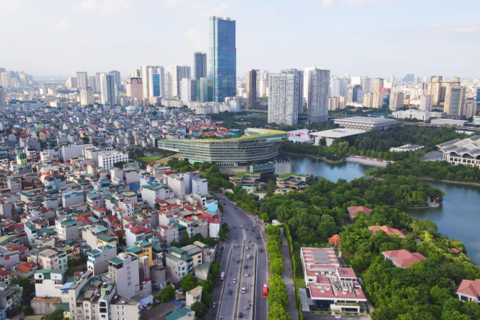
Hanoi, despite plans for satellite cities and population redistribution, needs more investment for balanced growth amid major challenges, including traffic congestion, flooding, and pollution in urban development.
| Overview of the group discussion. Photos: Thanh Hai/The Hanoi Times |
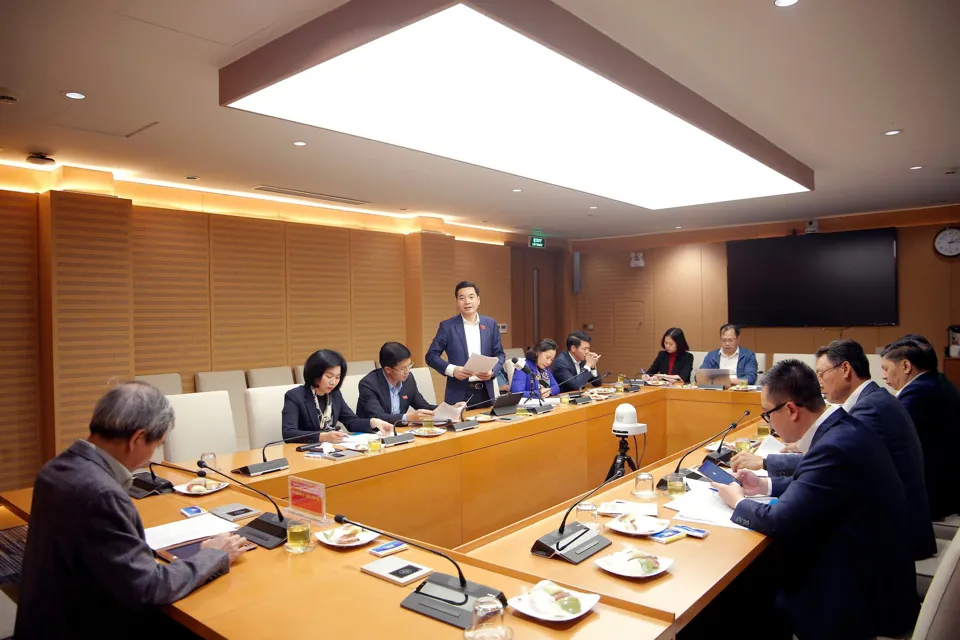
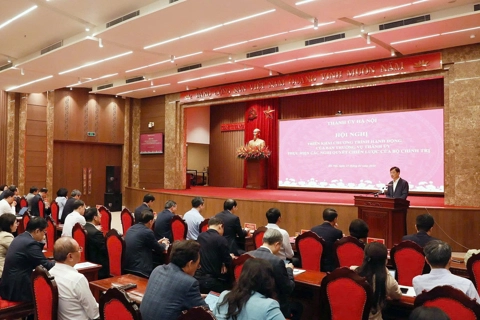
Deputies of the Hanoi People’s Council shared this view during a group discussion held on December 9 on the city’s socio-economic performance in 2024.
During discussions, deputies agreed with the assessment of Hanoi's socio-economic development in 2024, highlighting key achievements despite challenges. These included important policy resolutions, strong outcomes in tax revenue, culture, and social welfare, and significant progress in digital transformation.
Regarding existing issues, Deputy Duong Hoai Nam from Long Bien District raised concerns about urban challenges, particularly environmental pollution and traffic congestion. He emphasized the serious daily impact of air, wastewater, and solid waste pollution on residents' health and called for both immediate and long-term solutions.
Deputy Nguyen Ngoc Viet from My Duc District noted delays in sewage treatment projects such as Yen Xa and waste treatment facilities in the southern areas, alongside unresolved road and sidewalk issues contributing to traffic problems. He suggested the city provide detailed explanations and focus on tackling pollution in major rivers and lakes through comprehensive planning and targeted investment.
Meanwhile, Deputy Truong Hai Long from Thach That District proposed the creation of a master plan to assess pollution levels in rivers and lakes throughout the city, set timelines, and allocate funds to address these issues systematically over a five-year period. Additional concerns included the shortage of parking spaces, inconsistent parking fees, and a lack of affordable housing projects, particularly social housing under VND30 million (US$1,200) per square meter. They called for regulatory tools to control real estate prices.
Deputies also emphasized the need for Hanoi to focus on economic development, particularly in commerce, tourism, and high-quality tourism products to upgrade the sector. They urged continued investment in public infrastructure, land clearance, and land auctions to mobilize resources for unfinished projects like Ring Road 1 and Ring Road 2.5, alongside an improved investment environment to attract large investors.
| Deputy Nguyen Ngoc Viet from My Duc District Delegation. |

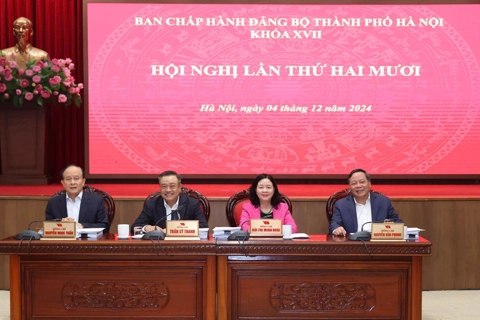
During group discussions, Vice Chairman of Hanoi People's Committee Nguyen Manh Quyen highlighted two major urban challenges: traffic congestion and environmental pollution. He stressed the importance of satellite city development and population redistribution to alleviate these issues, alongside investing heavily in synchronized urban development for a "bright, green, clean, and beautiful" capital. Future plans include boosting industrial infrastructure, attracting investors to industrial zones, and promoting craft villages as key economic drivers.
Deputies also discussed the reorganization of administrative units after the merger. Deputy Duy Hoang Duong from Hoai Duc District proposed that procedures and regulations for organizational restructuring and reporting be finalized by January 2025. Chairwoman of Hanoi's Vietnam Fatherland Front Committee Nguyen Lan Huong emphasized the need for clear policies to support employees, officials, and surplus personnel during the restructuring process, ensuring social security, order, and stability.
Deputies urged the city to fulfill its responsibilities effectively, prioritize support mechanisms for affected workers, and recognize Hanoi's unique characteristics when implementing reforms.
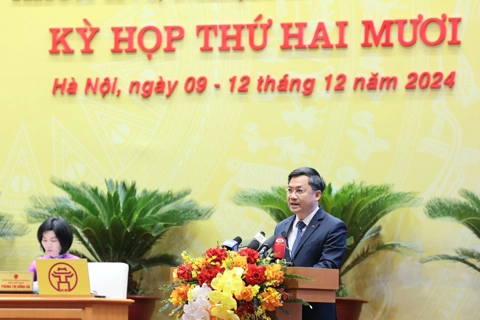
In an earlier report on Hanoi's socio-economic performance in 2024, Vice Chairman of the Hanoi People’s Committee Ha Minh Hai stated that major economic balances were maintained, with growth driven by efficient resource mobilization and investment measures tailored to the city's practical needs.
Hanoi's economy continued to grow at a higher rate than last year, with GDP growth projected at 6.52% (up from 6.27%). The city’s GRDP is estimated at approximately $58 billion.
The budget balance between revenues and expenditures was maintained, with total state budget revenue estimated at 120.5% of the target, or approximately $20.2 billion. Domestic revenue reached about $18.9 billion, accounting for 93.8% of total revenue. Fiscal and credit policies were effectively implemented, ensuring timely capital support for production and business activities.
Foreign trade rebounded strongly, with exports reaching $19.4 billion (up 16.7%) and imports at $41.1 billion (up 9.6%). Foreign direct investment (FDI) inflows exceeded $2 billion, while total development investment across the city amounted to nearly $22.6 billion, an increase of 10.5%. Economic sectors continued to grow alongside structural innovation: Industry and Construction grew by 6.21%, Agriculture by 2.52%, and Services by 7.14%. Over 27,000 new businesses were registered, with total registered capital exceeding $11.3 billion, bringing the cumulative number of businesses in the city to over 401,000.
Retail sales and service revenues surpassed $36 billion, growing by 10.5%. The average consumer price index (CPI) for the year ranged from 4.2% to 4.6%.