Log in
Hanoi

Hanoi steps up efforts to adopt non-cash payment mechanism in parking lots

Authorities will not renew the licenses of car park operators who fail to implement technological solutions for cashless payment.

Hanoi has issued temporary regulations to implement technological solutions for cashless parking service search and payment in the city.

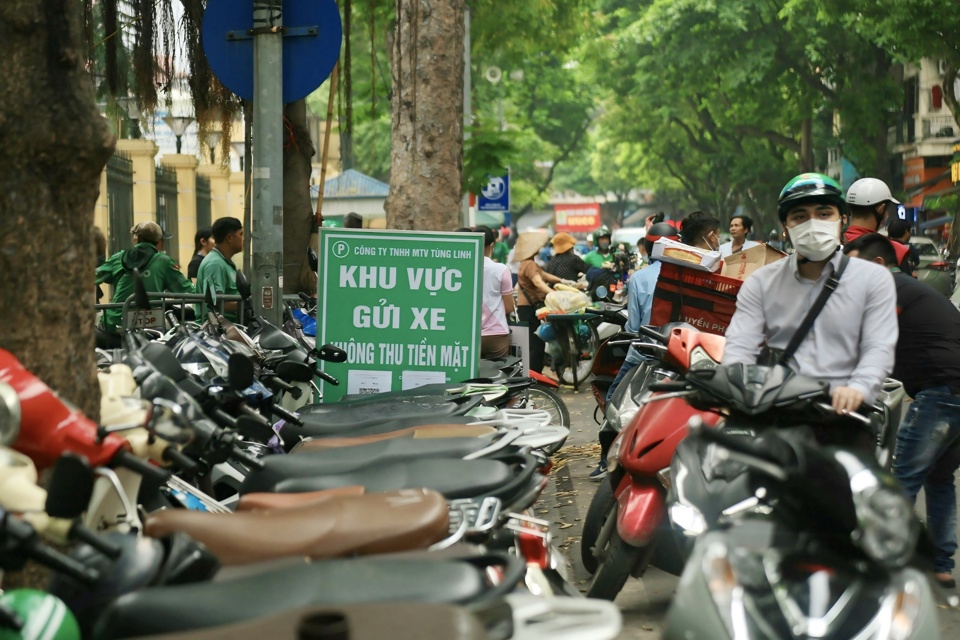
 A non-cash payment parking lot in Hanoi. Photo: The Hanoi Times

The temporary regulation outlines the use of technological solutions for searching and making cashless payments for parking services in Hanoi.

This applies to existing parking lots, those under construction, temporary car parks in vacant areas or delayed projects (with land designated for parking), and temporary roadside or sidewalk parking. It also covers parking facilities in residential complexes, commercial centers, mixed-use buildings (residential, commercial, office), hospitals, and educational institutions.

Under the new regulation, parking operators must implement technology for locating and paying for parking, ensuring that transactions are cashless and that electronic receipts are issued and linked to the tax authorities.

The authorities will, therefore, not renew licenses for organizations or individuals who do not adopt these technological solutions. Additionally, new permits for temporary use of roads or sidewalks will not be granted to those who do not have a plan for cashless payment solutions.

To support this transition, the city has tasked the Office of the Hanoi People's Committee with developing a feature on the iHanoi platform to help residents and businesses quickly find available parking spots.

The office will work with the Departments of Information and Communication and Transport to promote the use of smart technology for parking services.

In addition, the Department of Transport will oversee the implementation of these technological solutions, and will also carry out parking inspections and enforcement throughout the city.

Starting April 15, Hanoi launched a four-month cashless parking pilot program. As of now, 99 car parks across the city have adopted this cashless payment solution.

The distribution of these carparks is as follows: Hoan Kiem (49 spots), Cau Giay (11 spots), Nam Tu Liem (10 spots), Dong Da (9 spots), Tay Ho (8 spots), Hai Ba Trung (6 spots), Bac Tu Liem (4 spots), and Ba Dinh (2 spots).

According to Tran Huu Bao, Deputy Director of the Hanoi Department of Transport, the pilot program is running smoothly. Most residents support it, as it reduces corruption, ensures correct pricing, provides transparency, and improves service quality. This initiative is also part of Hanoi's broader goal of developing a smart city by 2025, with a vision for 2030.

“Cashless parking payment enhances the management of parking facilities, ensures traffic order and safety, improves urban aesthetics, and reduces traffic congestion across the city,” said Bao.
Reactions:
Share:
Trending
Most Viewed
Related news
Hong Van Commune rises as Hanoi’s emerging model for community-based tourism

Hong Van Commune rises as Hanoi’s emerging model for community-based tourism

Blessed with natural beauty, strengthened by deep cultural heritage and supported by its residents, Hong Van Village is emerging as one of Hanoi’s most distinctive tourism destinations. From ecology and agriculture to handicrafts and festivals, this Red River village is shaping a dynamic vision of sustainable community tourism for the capital.

Hanoi unveils digital heritage journeys to connect tradition with modern urban life

Hanoi unveils digital heritage journeys to connect tradition with modern urban life

Hanoi has launched a new digital heritage program that brings centuries-old cultural assets into a modern, interactive format. By mapping key monuments and creating themed journeys, the city aims to help residents and visitors explore its deep-rooted identity through fresh, engaging experiences.

Hanoi launches two-wheel electric vehicles to expand green urban mobility

Hanoi launches two-wheel electric vehicles to expand green urban mobility

Hanoi has introduced two-wheel electric vehicles for the first time in its transport network, offering residents a new green mobility option and marking a key step in the city’s smart-transport development.

Thai AirAsia launches new Hanoi–Luang Prabang route to boost regional travel

Thai AirAsia launches new Hanoi–Luang Prabang route to boost regional travel

Thai AirAsia has opened a new direct Hanoi–Luang Prabang route using Fifth Freedom traffic rights, creating a faster and more convenient link between two major heritage destinations in Vietnam and Laos.

Hanoi orders strong air-pollution measures and warns schools to adjust schedules

Hanoi orders strong air-pollution measures and warns schools to adjust schedules

Hanoi has issued new directives requiring schools to restrict outdoor activities and consider suspending classes when air quality drops to hazardous levels, while launching a sweeping crackdown on pollution sources across the city.

Hanoi – Vientiane ties set pace for bilateral cooperation

Hanoi – Vientiane ties set pace for bilateral cooperation

The two sides have inked two city-level agreements and eight agreements covering areas such as Party building, economic and investment cooperation, agriculture, health, education and people-to-people ties.

Hanoi completes tunneling for four underground stations of 2nd metro line

Hanoi completes tunneling for four underground stations of 2nd metro line

The completion marks a major step forward for the four-kilometer underground section of the metro line.

Rooftop solar push to boost Hanoi's green ambition

Rooftop solar push to boost Hanoi's green ambition

Rooftop solar in industrial zones has the foundations to become a new driver of Hanoi’s energy transition.