Hanoi streets: 80 years of change, 80 years of memory
Hanoi is a city where the streets themselves breathe history. From the day President Ho Chi Minh proclaimed independence at Ba Dinh Square in 1945 to the bustling, neon-lit boulevards of today, every road has carried the footsteps, hopes, and struggles of its people. Eighty years on, those same streets bear witness not only to a nation’s liberation but also to its remarkable transformation from mud paths and oil lamps to metro lines, skyscrapers, and smart city dreams.
THE HANOI TIMES — Hanoi has changed. The people have changed. But most of all, it is the streets that bear witness.
Eighty years ago, on September 2, 1945, Ba Dinh Square was not just a patch of earth in the capital. It was the beating heart of a nation.
President Ho Chi Minh stood before hundreds of thousands of people and read the Declaration of Independence.
The crowd erupted with one word that resounded across the sky: “Independence!”
Flags waved. Flowers filled the air. Tears ran down faces that had suffered decades of colonialism and centuries of feudalism.
From that day forward, every street in Hanoi became more than a place to walk. Each became a living witnesses to history.
Hanoi’s streets are not only rows of houses or stretches of asphalt. They are pages of memory, where every brick, every banyan tree, every corner tells a story.
Walking through Hanoi today feels like flipping through a diary written in stone and leaves.
Trang Tien Street – once the stage for jubilant parades in the early days of independence – is now a dazzling boulevard of boutiques and bookstores.
People march here no longer with flags but with shopping bags. Yet beneath the neon lights, the echo of 1945 still lingers.
Hang Dao Street, the heart of the Old Quarter, was once drenched in the red of dyed cloth. On August 19, 1945, thousands of citizens flooded from alleys and courtyards into Hang Dao, joining the General Uprising.
Today, Hang Dao is a pedestrian street alive with music and street art. The cries of street vendors have given way to the strum of guitars and laughter of tourists. The spirit, though, is unchanged: Hanoi’s eternal vibrancy.
Dien Bien Phu and Hoang Dieu streets, shaded by ancient trees, once carried the footsteps of revolutionaries. Today, they are green boulevards where citizens jog, couples stroll, and children ride bicycles. The trees still whisper, but now in peace.
No place in Hanoi carries memory like Ba Dinh Square. Once an empty field, it became sacred on the day President Ho Chi Minh spoke the words that changed history.
Eighty years later, the square is an immaculate green carpet, lined with flowers, flanked by solemn monuments.
Every day, thousands of people come to pay respects, to remember. Every September 2, Ba Dinh again becomes the heart of the nation, proving that history is not buried. History lives.
Streets and roads like Kim Lien, Luong Yen, and Dai Co Viet once laid on the city’s poor outskirts. Muddy alleys, thatched roofs, and the faint glow of oil lamps defined daily life.
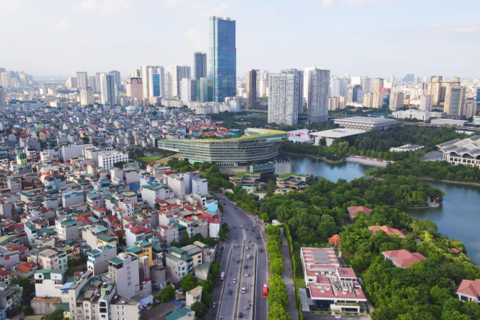
Now? High-rises gleam, cafes bustle, highways roar. The transformation is breathtaking.
Yet scattered among skyscrapers are old French villas and narrow alleys, stubborn fragments of memory reminding Hanoians where they came from.
Eighty years have turned dust into light, and poverty into prosperity.
Nguyen Dinh Thai, 83, remembers it all.
“In those days, roads were dirt, houses were small, electricity was rare,” he said, eyes misting with memory.
“I once walked for hours to Ba Dinh just to hear President Ho Chi Minh speak. The streets were narrow, and at night, only a few oil lamps flickered. Today, the roads are wide and bright. We dreamed of a new life, and now it has come true.”
His words capture the truth: Hanoi’s change is not only in concrete and glass but in the lives of its people.
Hanoi has leapt forward with steel and concrete. Nhat Tan Bridge stretches like a ribbon of light across the Red River. Vinh Tuy and Thanh Tri bridges connect bustling districts. Elevated Ring Road 3 flies above the city like a highway in the sky.
And then there is the metro. Cat Linh–Ha Dong and Nhon-Cau Giay are already humming with passengers. For the first time, Hanoians can glide through their city without the honking chaos of motorbikes.
Each bridge, each train, is a promise that Hanoi will not only remember its past but also race toward its future.
The transformation is not only in transport. Hanoi has learned to give space back to its people.
Around Hoan Kiem Lake, fences were torn down. Parks were opened. The West Lake sparkles with walking paths and open green lawns. Streets once dark are now lit with LED systems.
Nguyen Thu Ha, a resident from Hoang Mai, smiled: “Before, if I wanted to take my kids out, we had to go to Hoan Kiem Lake.”
“Now, our neighborhood has parks, sports fields, swimming pools. And I can take the metro to work. Life is so much better,” she said.
Every green tree, every park bench, every safe playground is another line in Hanoi’s poem of progress.
The numbers prove it clear. In 2024, Hanoi’s GRDP grew 6.52%, and its State budget revenue reached VND513 trillion (US$19.5 billion) – the highest in Vietnam.
In the first half of 2025 alone, revenue already hit VND392 trillion ($14.9 billion), nearly a third of the country’s total.
Behind those numbers are factories humming, tech firms booming, and service industries thriving. Hanoi is no longer just a city of memories, it is the economic engine of the North, a capital leading the nation’s development.
But Hanoi is not stopping here. The city is drafting ambitious plans: a smart, green, humane city by 2030, and a globally connected capital by 2050.
Major projects are underway, including Ring Road 4, Tu Lien Bridge, restoration of the To Lich River, renovation of old apartment blocks.
The city has streamlined governance, reducing administrative units by over 76%, with the overwhelming support of citizens.
Hanoi is not just building buildings. It is building confidence, trust, and pride.
Experts say Hanoi’s strength lies in putting people at the center of development.
That is why the spirit of “Independence – Freedom – Happiness” declared in 1945 is not just in textbooks. It lives in every lamp post, every playground, every metro station.
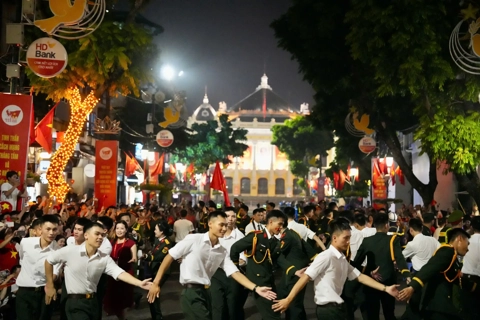
Eighty years ago, the streets of Hanoi erupted with chants of freedom. Today, they shine with neon lights, humming engines, children’s laughter.
Different sounds. Same soul.
From Ba Dinh Square to the smallest alley, Hanoi’s streets continue to tell the same story: the story of a city that remembers its past, embraces its present, and dares to dream of the future.
The capital has changed clothes many times from colonial gray to revolutionary red to modern glass and steel. But one thing has never changed: Hanoi is the heart of the nation, pulsing with history, pride, and hope.
And if you walk its streets today, you will feel it.
Independence is not only in the Declaration of 1945. It is in the air. It is in the faces.
Most importantly, independence is in the streets themselves: living witnesses of 80 years of resilience and renewal.