Hanoi to add 4.1 million sq.m to housing space by 2023
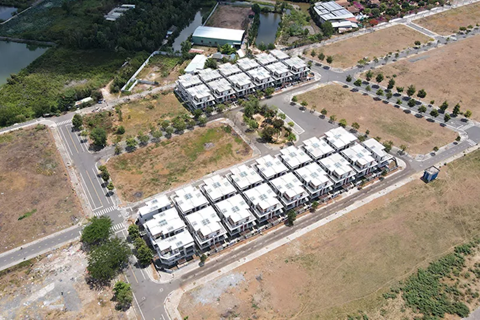
To meet the needs of people in different income brackets, the city will focus on building satellite cities and areas expected to become urban districts between 2021 and 2030.
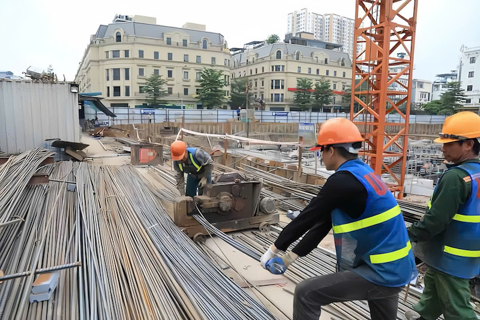
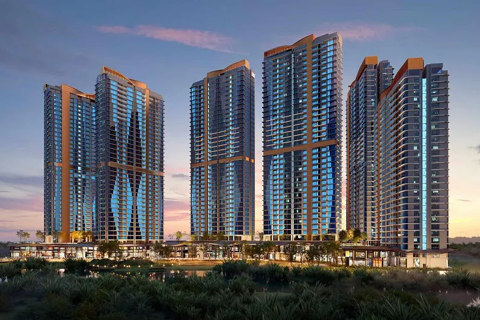
Hanoi is set to have an additional 4.1 million square meters (sq.m) of housing floors this year, part of efforts to have a total of 89 million sq.m by 2030, according to the municipal Department of Construction.
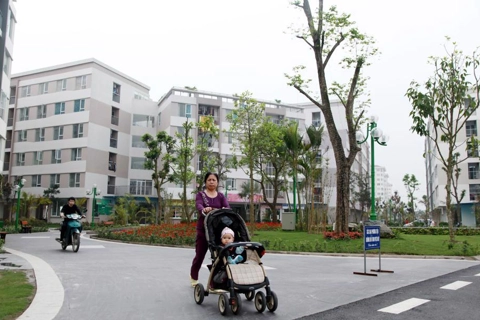
| Apartment buildings in Dong Anh District. Photo: Thanh Hai/The Hanoi Times |
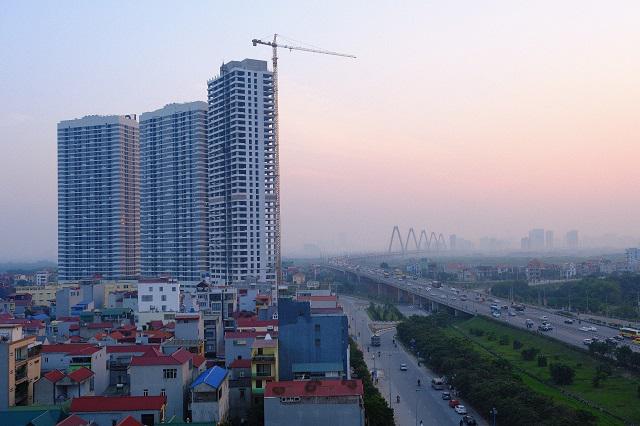
A report from the agency revealed that the city has added 1,340,000 sq.m of residential floors in 2022, which is 109% of the original plan. This includes 985,000 square meters of commercial floors from 16 projects and 257,000 square meters of social housing floors from three projects.
To meet the city's plans, the Department of Construction has focused on encouraging project investors to invest in the development of housing and urban areas.
The department is also implementing various plans, such as the Housing Development Plan for Resettlement, the Temporary Accommodation Arrangement for Affected Households during the Old Building Renovation Project in 2021-2025, and the City's Social Housing Development Plan for the period 2021-2025.
For 2023, the city targets to complete 21,100 houses and 4.11 million sq.m of housing area, as well as 400 houses and 28,000 sq.m of social housing. This is equivalent to an average housing area of 28 sq.m of floor space per person.
From 2010-2020, the city completed approximately 50 million sq.m of residential floors. However, it is predicted that from 2021 to 2030, people in the capital area will need around 89 million sq.m of floor space for housing.
The housing demand for 2021-2025 is projected to be about 44 million sq.m, while the demand for 2021-2030 is estimated to be around 45 million sq.m. To meet these demands, approximately VND880 trillion (US$37.5 billion) of investment capital is expected to be necessary, with VND11.7 trillion ($500 million) coming from the city’s budget.
In this regard, Hanoi will develop 22.5 million sq.m of individual housing, 1.25 million sq.m of social housing, 0.565 million sq.m of resettlement housing, and 19.69 million sq.m of commercial residential floors by 2025. The average residential floor area will be 29.5m2/person.
From 2021 to 2030, the city will focus on developing satellite towns and areas that are expected to become urban districts while diversifying housing types to meet the needs of people of different income levels. Priority will be given to social housing, apartment buildings, rental housing, and housing for workers in industrial zones.
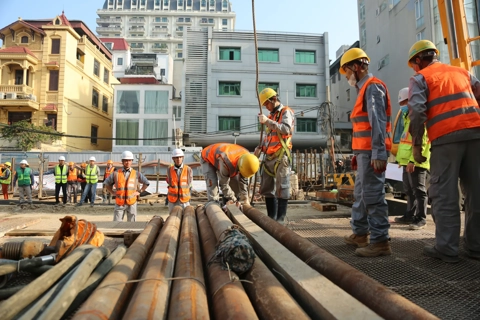
In the historic downtown area, the development of apartment buildings will be limited to minimize population growth and infrastructure congestion, except for projects aimed at renovating and reconstructing old apartment buildings and resettlement projects. In other areas, the development of landed property and detached houses will be limited, while the maximum increase in apartment buildings will be allowed to utilize land effectively. Urban and residential areas will be planned and invested in synchronously building technical and social infrastructure.
Nguyen The Diep, Vice Chairman of the Hanoi Real Estate Club, identified the key challenges that the city would have to face to achieve these goals.
"The priority is to move forward with housing projects that have been stalled for a long time by proposing specific mechanisms to higher authorities if necessary," Diep said.
He also urged the city to allocate land resources and promote social housing construction. Finally, it should speed up the renovation and reconstruction of old apartment buildings.
"Achieving these goals will require decisive action from all levels of city government," he said.