14TH NATIONAL CONGRESS OF THE COMMUNIST PARTY OF VIETNAM
Log in
Hanoi

Hanoi to build retention ponds and underground water tanks in urban areas

The move is seen as a viable solution to enhance drainage capacity and reduce inundation in the city.

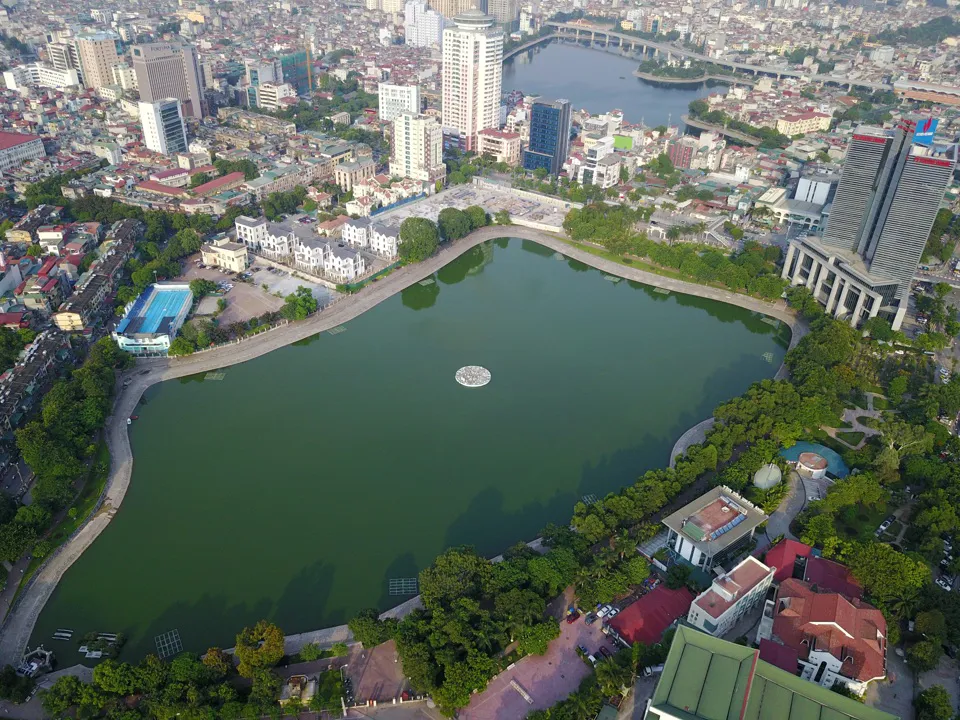
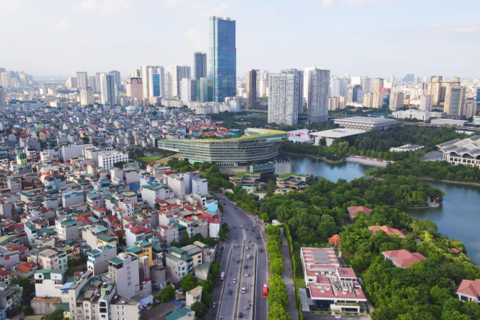
Hanoi is implementing various solutions to manage flooding during rainfall, including the development of retention ponds and underground rainwater storage tanks. This sustainable drainage solution not only helps manage water but also enhances the urban landscape and architectural space of the capital city.

 A retention pond in Hanoi. Photo: Pham Hung/The Hanoi Times
Multi-benefit solutions
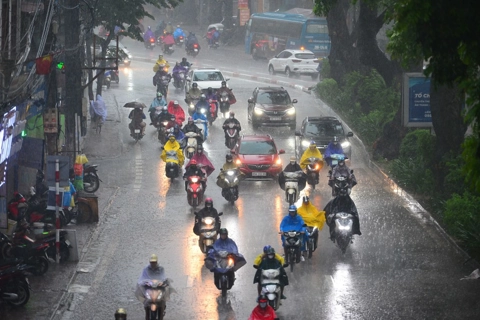
In recent years, Hanoi has devoted significant resources to improving the city's water drainage capacity. This has included the construction of numerous new retention ponds. However, the complex weather patterns, rapid urbanization, and deteriorating drainage infrastructure have made flood control and water drainage increasingly challenging.
Climate change, characterized by extreme weather and rising sea levels, exacerbates these issues. Extreme weather manifests itself in unpredictable patterns of rain, storms, heat, and cold. Heavy rains can lead to severe flooding, while prolonged dry spells cause serious droughts. In this context, developing a system of retention ponds and underground rainwater storage tanks in urban areas is essential to address these challenges.

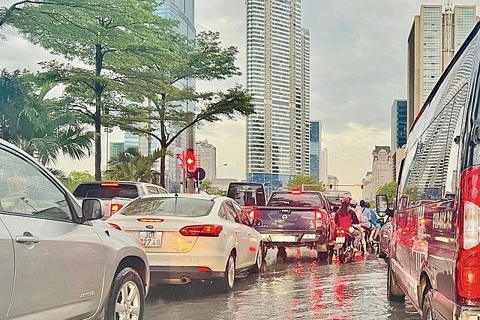
According to the Hanoi Sewerage and Drainage Company, before the installation of rainwater storage tanks, streets like Nguyen Khuyen would flood when it rained less than 50mm. However, since these tanks were installed, flooding on this street and in the surrounding areas has significantly decreased.

“ When precipitation was between 50-100mm, Nguyen Khuyen Street used to flood up to 0.5-0.7 meters. Since the rainwater tanks became operational, the water level during inundation has been reduced to 0.2-0.3 meters,” a representative from the company shared.

Associate Professor Dr. Nguyen Lam Quang, Deputy Director of the Vietnam Institute for Urban and Industrial Environment, told The Hanoi Times that sustainable urban drainage solutions involve utilizing and optimizing natural water flow through surface runoff. This is achieved by reducing the speed and volume of runoff via natural and artificial water storage systems, which help prevent flooding, replenish groundwater, and utilize rainwater for fire fighting, irrigation, and street cleaning, among other purposes.

This approach aligns with the Government's Decree 80/2014/ND-CP on drainage and wastewater treatment, as well as the specific conditions of Hanoi.

“Therefore, Hanoi must urgently implement measures to develop retention ponds and underground water tanks to enhance drainage capacity and reduce flooding in the city,” said Quang.

Rainwater regulation required
According to Quang, sustainable drainage solutions have been researched and piloted in several Vietnamese cities. Notably, projects funded by the German Development Cooperation Agency (GIZ) have explored and applied sustainable drainage models in some coastal cities in Central Vietnam and the Mekong Delta.
However, sustainable drainage solutions have not yet been widely adopted in urban planning, construction, and drainage management. This is particularly true in the design process of technical preparation plans. The lack of legal frameworks and regulatory documents is a primary reason for this situation. To enhance drainage efficiency and mitigate flooding in Hanoi and across Vietnam, it is necessary to develop a stormwater drainage service fee mechanism and related policies, including the formulation and enactment of a Rainwater Management Law.

Associate Professor Dr. Dang Minh Hai, Deputy Head of the Water Resources Engineering Department at Thuy Loi University, believes that for projects involving changes in land use or drainage direction, developers must implement solutions to prevent increased rainwater runoff into the drainage system, thus avoiding localized flooding.

Specifically, developers looking to build residential or urban areas must obtain rainwater drainage permits and pay for rainwater drainage services. This requirement should be mandatory, said Hai.

Many experts shared the view that sustainable drainage, or slow drainage, involves managing rainwater to extend the of its flow so that urban runoff patterns more closely resemble natural ones. To achieve this, Hanoi should focus on source control, surface control, and area-wide control.

For source control, Hanoi should encourage the use of underground storage systems and rainwater reuse in homes and office buildings. The development of green roofs can significantly retain rainwater in vegetation and soil layers, reducing runoff into the urban drainage system and minimizing localized flooding during heavy rainfall.

According to the drainage plan for Hanoi up to 2030, with a vision towards 2050, approved by the Prime Minister in Decision No. 725 on May 10, 2013, the urban drainage system is divided into four basins: To Lich, Left Bank of the Nhue River, Right Bank of the Nhue River, and Long Bien.
Reactions:
Share:
Trending
Most Viewed
Related news
Hanoi health sector targets digital leap under new Party resolution

Hanoi health sector targets digital leap under new Party resolution

Hanoi sets 2026 as a breakthrough year for healthcare reform, accelerating digital transformation, restructuring hospital networks and tightening food safety management under Politburo Resolution 72.

Hanoi launches state-backed innovation hub to drive digital economy

Hanoi launches state-backed innovation hub to drive digital economy

The new innovation center is designed to connect policy, technology and talent, aiming to accelerate digital transformation, support startups and position the capital as a global testing hub for emerging technologies and creative industries.

ASEAN youth showcase climate innovations at Hanoi exhibition

ASEAN youth showcase climate innovations at Hanoi exhibition

Young innovators from Vietnam and across ASEAN presented practical climate solutions in Hanoi, highlighting grassroots initiatives tackling plastic waste, renewable energy and sustainable livelihoods.

Hanoi issues action plan to implement 14th Party Congress resolution

Hanoi issues action plan to implement 14th Party Congress resolution

The goal is to turn policies into outcomes under the principle of “less talk, more action, effective results to the end, all for the capital and its people.”

ASEAN youth chart next phase of climate action in Hanoi

ASEAN youth chart next phase of climate action in Hanoi

Home to more than 680 million people, many in vulnerable coastal and low-lying areas, ASEAN is on the front line of climate change, facing rising seas, fiercer storms, prolonged droughts and accelerating biodiversity loss that endanger the region’s economic resilience and social stability.

Hanoi launches sweeping overhaul to unlock state economy growth

Hanoi launches sweeping overhaul to unlock state economy growth

Hanoi has unveiled an ambitious five-year plan to reform governance, mobilize public assets and restructure state enterprises, aiming to turn the state economy into a powerful engine of sustainable growth.

Hanoi puts people first in implementing four strategic Party resolutions

Hanoi puts people first in implementing four strategic Party resolutions

Hanoi launches comprehensive action plans to implement Politburo Resolutions 71, 72, 79 and 80, prioritizing people-centered reforms in education, healthcare, culture and state economic development.

Vietnamese families blend Tet travel trends with enduring traditions

Vietnamese families blend Tet travel trends with enduring traditions

More young Vietnamese families choose travel over staying home during the Lunar New Year holiday, seeking fresh experiences while keeping core traditions intact.