Hanoi to create suitable environment for logistics firms
The city will explore the potential for building appropriately sized logistics facilities to boost the capacity.
Comprehensive logistics service management solutions have been put in place by the Hanoi Department of Industry and Trade to assist local businesses in the sector while effectively managing both local and international freight.
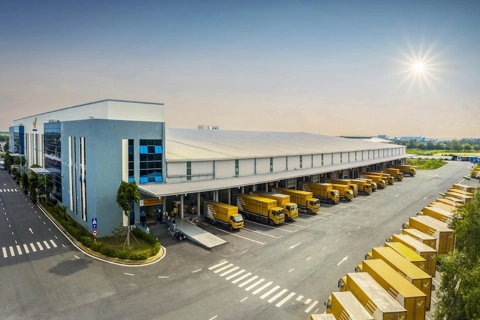
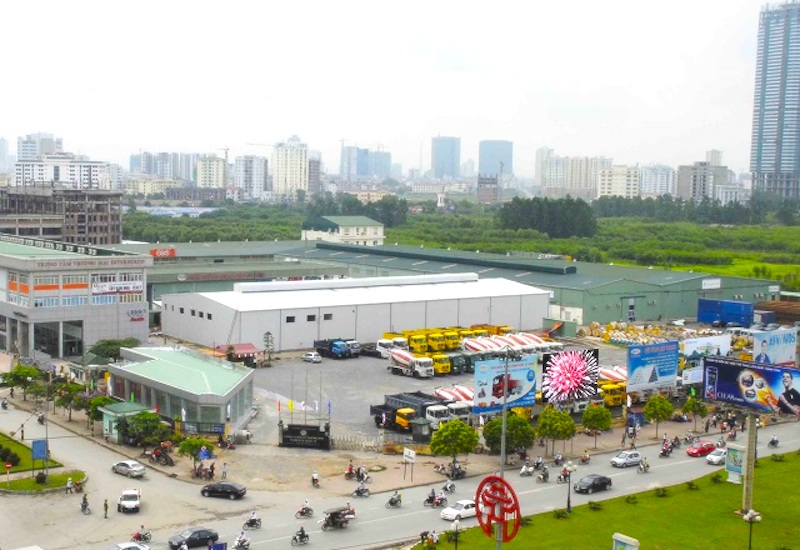
| The My Dinh ICD is one of two currently in operation in Hanoi. Photo: Tuan The/ The Hanoi Times |
These initiatives are part of the Hanoi Logistics Services Development Plan 2024, which aims to reduce logistics costs, boost outsourcing, and make services more competitive. In addition, the strategy seeks to raise the contribution of logistics services to GRDP, support the growth of traditional manufacturing, trade, international trade, and e-commerce, and leverage logistics operations to drive growth.
The initiatives are designed to address the current situation of Hanoi's logistics industry, which is unable to meet the city's logistics needs. The logistics yard and warehouse system is small, dispersed, disconnected, and lacks many specialized storage facilities, such as cold storage. There aren't many inland container depots (ICDs), and those that do exist are primarily accessible by road rather than rail or water.
High logistics costs in combination with traffic congestion also have affect local firms' competitiveness.
About 25,000 logistics companies operate in Hanoi, but according to the department, they handle only 25% of all cargo imports and exports and over 40% of the nation's cargo volume.
One of the reasons is sluggish logistics projects. Meanwhile, most of the sites designated for logistics infrastructure are connected to major transportation hubs, such as ports and national railway stations. Therefore, the projects depend on the planning of transportation infrastructure.
In terms of the legal framework, logistics services are considered a conditional business activity. The 2005 Commercial Law and Government Decree No.140 outlines the business conditions for logistics services and the responsibilities of logistics service providers. However, the management regulations in the Decree are no longer adequate with vague business conditions and unclear scope of authority over logistics activities at the local government level, according to industry's insiders.
Hanoi to fast-track logistics infrastructure construction
To accelerate the development of logistics in 2024 and enable enterprises in the industry to expand their operations, Hanoi will expedite the investment and construction of logistics infrastructure in the city.
This year, the city plans to start the construction of two ICDs in Co Bi Commune, Gia Lam District, and Duc Thuong Commune, Hoai Duc District; identify the location for two logistics centers in Phu Xuyen and Soc Son districts; and complete the investment procedures for an international container port in Co Bi and Dang Xa communes, Gia Lam District.
Deputy Chairman of the Hanoi People's Committee Nguyen Manh Quyen said the city will perform better to attract investors in logistics infrastructure projects.
In particular, investors have been presented nine logistics infrastructure projects with specific locations for study.
The city plans to explore possible scaled logistics centers along the ring roads, connecting cargo collection points, warehouses and distribution hubs in agricultural, industrial and industrial park areas. Among other things, the development of specialized warehousing and storage systems will be the top priority, according to Quyen.
At the same time, Hanoi will work with localities at home and abroad to build the city into a logistics hub for the northern region, he stressed.
| According to the latest plan to develop logistics services in Hanoi, the logistics sector is expected to contribute 9-11% of GRDP by 2025, with an average growth rate of 17-21%. The logistics outsourcing rate would be cut to 50-60%. |