Hanoi to develop housing projects on both sides of Red River
The Prime Minister has ordered Hanoi to impose strict controls on the central area's high-rise development and implement programs to renovate and rebuild the city.
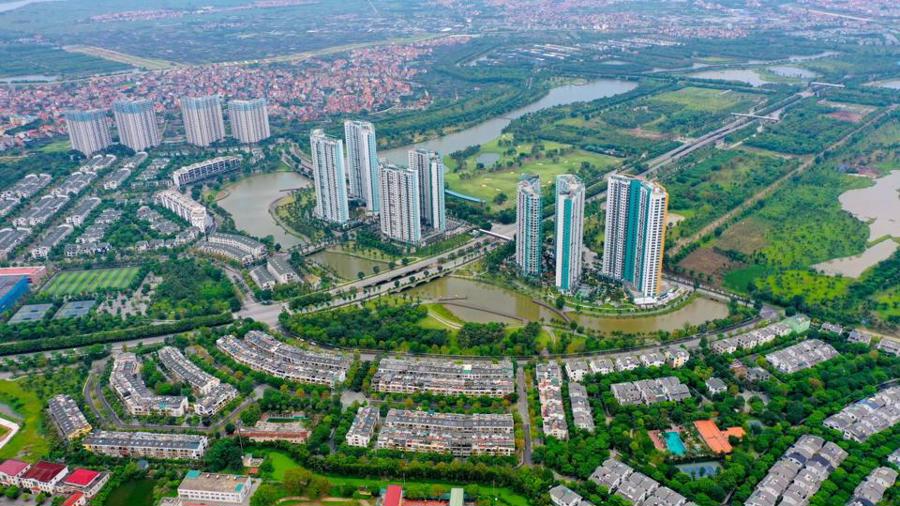
Hanoi is developing urban areas on both sides of the Red River, which remains a green axis for the capital.
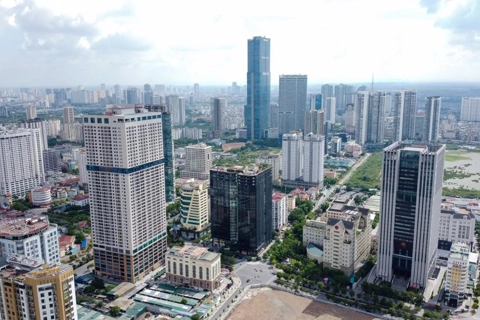
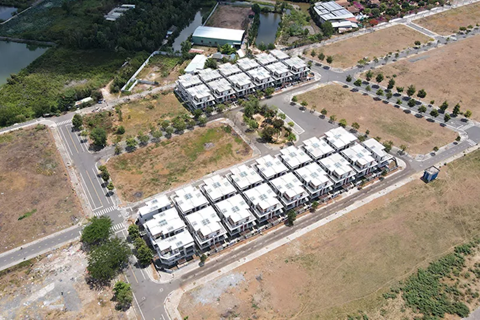
| Hanoi from above. Photo: Viet Dung/The Hanoi Times |
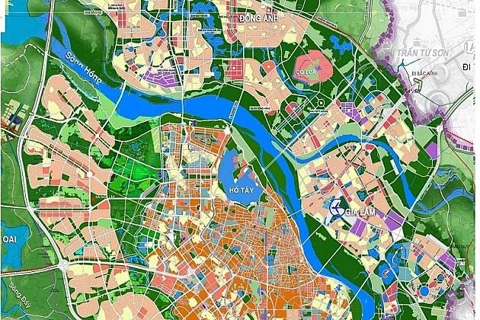
The move was mentioned in a Government decision approving the objective for adjusting Hanoi’s overall master plan until 2045, with a vision to 2065. The planning adjustment encompasses the entire administrative boundary of the capital, which includes 29 urban-rural districts and one town, spanning a vast area of 3,359.84 km2.
Based on the Prime Minister's Decision No.1259/2011 (Planning 1259), the revised Master Plan continues the overall vision of transforming Hanoi into a modern and civilized city that will serve as an engine for the development of the Red River Delta, the key northern economic region, and the entire country.
Hanoi aims to become a globally connected city, striving for a level of development comparable to that of the capitals of developed countries in the region.
The previous plan envisioned the development of Hanoi by establishing an urban cluster model consisting of five satellite towns: Hoa Lac, Son Tay, Xuan Mai, Phu Xuyen and Soc Son. Each was assigned unique and diverse functions, operating relatively independently while supporting and cooperating with the central city regarding housing, education, industry, and services.
In the revised master plan, the capital city aims to develop satellite cities along the Red River, which serves as the central landscape and green axis. In addition, there is a focus on increasing land allocation for urban development. The plan also includes the creation of new cities directly under the administration of the capital in the northern region (Dong Anh, Me Linh, Soc Son) and the western region (Hoa Lac, Xuan Mai). There is also a focus on building a smart city by leveraging infrastructure development on both sides of the Nhat Tan - Noi Bai road (Vo Nguyen Giap).
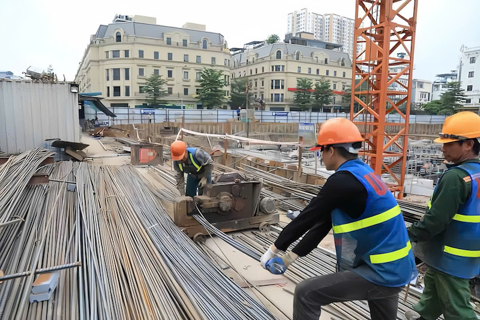
To achieve the above goals, the Prime Minister has instructed Hanoi to strictly manage the development of high-rise buildings in the central area and to implement urban renovation, beautification, and reconstruction programs.
Priority should be given to developing small towns and peri-urban areas to support rural development through urban-rural linkages.
Broader move
The city was also tasked with proposing strategic solutions to address existing problems of technical infrastructure overload and traffic congestion. This includes adjusting and complementing planning solutions for the overall technical infrastructure system in line with national sector plans (such as airways, roads, waterways, and railways) while adhering to implementation roadmaps. In addition, Hanoi will conduct studies, evaluations and necessary upgrades of major roads and bridges over the Red River, Duong River, Da River, Day River and other major waterways.
The general plan for the development of Hanoi as the capital city to 2030, with a vision to 2050, was approved by the Prime Minister through Decision No.1259. However, after 13 years of implementation, the city has not fully exploited its role, position, potential and strengths within the capital region. The population has so far exceeded the projected threshold.
Specifically, the 1259 plan estimated the city's population at around 7.3 to 7.9 million by 2020. However, the mid-2019 census revealed a population of over 8 million in Hanoi. The population density in the central area has reached 9,570 people per square kilometer, almost double the original forecast, exceeding the control measures outlined in the previous plan.
Certain aspects have not been addressed in the general plan, such as the development of green growth urban areas, the implementation of smart city initiatives, and the use of underground space for urban construction. In addition, from 2011 to the present, several legal regulations on construction planning and urban planning have been revised, amended, or newly enacted.
Vice Chairman of the Vietnam Association for Urban Planning and Development Dao Ngoc Nghiem suggested new changes in the planning, including the vision, population targets, and the city model in the capital, which have significant implications for this planning adjustment.
"It is crucial for the city to carefully select a planning consulting firm that possesses the necessary capabilities and can bring together top scientists and experts. Their collective expertise will enable them to make accurate forecasts and ensure the preparation of a high-quality and feasible master plan for the capital," Nghiem said.
Hanoi has received the Prime Minister's approval to adjust the comprehensive master plan of the capital city until 2045, with a vision extending to 2065. The urban planning adjustment project is expected to be submitted to the Ministry of Construction for review in August and then to the National Assembly for approval at the October session.
"Being the country's capital, it is of utmost importance to conduct a comprehensive review and reassessment of the general planning carried out over the past decade. This evaluation will be the basis for making strategic forecasts regarding the industry, economy, and society. Such forecasts are essential for guiding urban construction and development planning and laying the groundwork for integration into the Capital Planning period from 2021 to 2030 and beyond, looking ahead to 2050. The city must ensure that the planning process fully harnesses the potential of its resources, nature, and people. The aim is to create a capital city that is deserving of the pride of the entire country, capitalizing on its strengths and transforming it into a truly remarkable and prosperous metropolis," Chairman of Vietnam Urban Development and Planning Association Tran Ngoc Chinh. "Hanoi has dedicated significant efforts to conduct the planning process. Following the Prime Minister's approval of the planning adjustment task, Hanoi would draft a clear plan to ensure its completion on time. The projected timeline involves submitting the progress report to the Ministry of Construction for consideration of the project by August 2023. Subsequently, the final planning will be presented to the Prime Minister, and later the National Assembly, anticipated to take place in September to October 2023," Vice Chairman of the Hanoi People's Committee Duong Duc Tuan. |