Hanoi to see sharp jump in land prices under new 2026 pricing framework
The sharp increases raise concerns over affordability, investment risks and shifting market behavior as land values climb across diverse areas of the city.
THE HANOI TIMES — Land prices in many areas of Hanoi are expected to rise significantly if the city’s new land price table is approved and takes effect on January 1, 2026.
The pricing table is drafted annually by the Hanoi People’s Committee under the 2024 Land Law, with technical input from the Hanoi Department of Agriculture and Environment.
For the first time, the pricing system is organized entirely by ward and commune boundaries following the introduction of the two-tier local government model in July 2025. The table divides the capital into 17 zones.
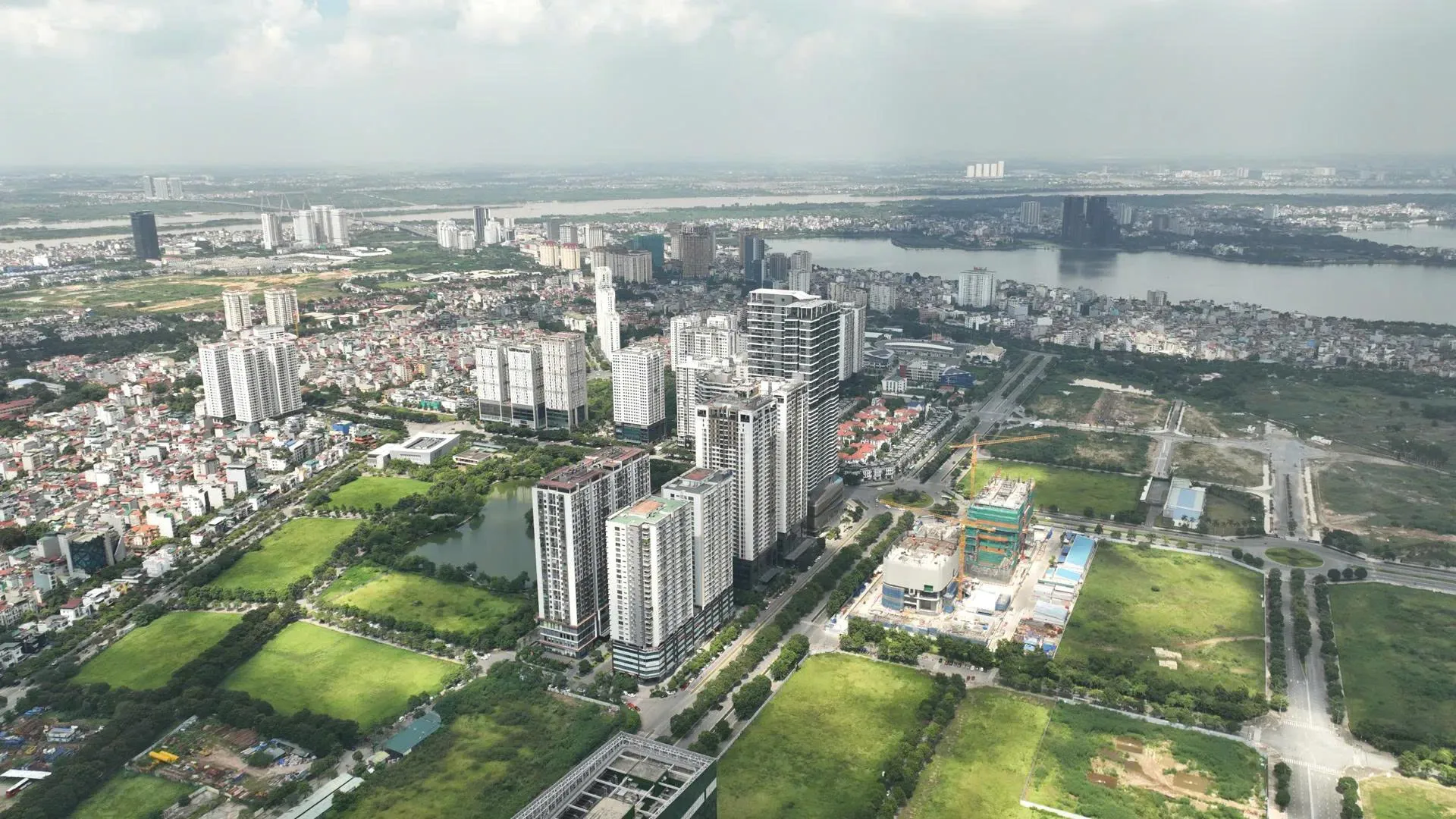
Zone 1, which covers wards inside Ring Road 1 such as Tay Ho, Ngoc Ha, Ba Dinh, Giang Vo, O Cho Dua, Hoan Kiem, Van Mieu - Quoc Tu Giam, Cua Nam and Hai Ba Trung, continues to have the highest land prices due to economic benefits.
The maximum rate may reach VND702 million (US$26,610) per square meter, applied to prime frontage plots on major commercial streets such as Ba Trieu, Dinh Tien Hoang and Hai Ba Trung. This represents a 20% increase from the current level of VND695 million ($26,340) per square meter.
In other central Hanoi areas, land prices are expected to rise slightly by 1%-6%, depending on administrative boundaries.
In the Diplomatic Corps urban area, land prices may increase by 6% to VND114.2 million ($4,330) per square meter from the current level of VND107.8 million ($4,085) per square meter.
The western area of West Lake is projected to have the same maximum land price of VND114.2 million per square meter, which represents a modest 1% increase from the current rate.
In the Nam Trung Yen Urban Area, land prices may rise slightly to VND110.4 million ($4,190) per square meter, up from VND109.3 million ($4,144) per square meter.
Land in the Giao Luu Urban Area and the My Dinh – Me Tri Urban Area is expected to increase by 2%, to VND106.3 million ($4,030) and VND102.7 million ($3,890) per square meter, respectively.
Other areas with land prices around VND100 million ($3,800) per square meter include the Nam Thang Long Urban Area, the Yen Hoa Urban Area and the Co Nhue - Xuan Dinh Urban Area.
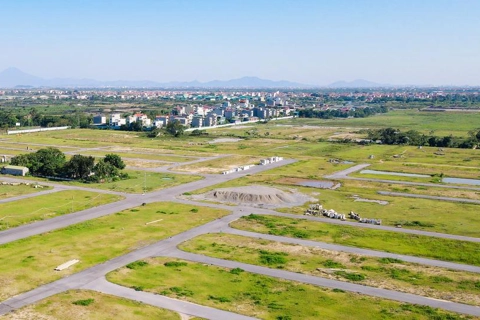
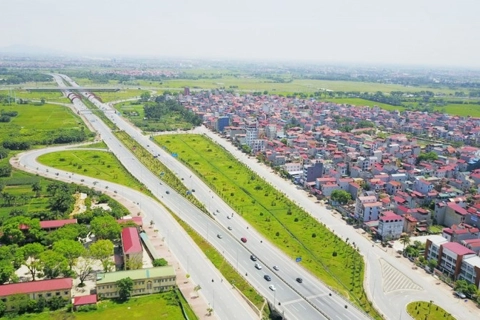
In suburban communes, land prices are expected to see the sharpest increase, ranging from 25% to 26%, in areas such as Lien Minh, O Dien, Dan Phuong, Hoai Duc, Duong Hoa, Dong Son, An Khanh, Yen Lang, Quang Minh, Me Linh, Dong Anh, Vinh Thanh and Thien Loc. Other suburban communes are expected to experience increases of 16%-24%.
The new land price table will serve as the basis for compensation, resettlement pricing and land-related taxes. If contract prices fall below the official table, taxes and fees must still be paid based on the minimum valuation set by the state.
The increases come as the 2024 Land Law abolishes fixed land price brackets and requires provincial People’s Committees to issue updated land price tables annually starting January 1, 2026, bringing official prices closer to market levels.
The Hanoi Department of Agriculture and Environment assessed that the increases are not too drastic and will not negatively affect the business activities or economic development of individuals and organizations. These adjustments are expected to ensure fair compensation for residents during land clearance, accelerating project progress.
However, the department also noted that higher land prices will mean higher financial obligations related to land, such as when transferring, inheriting, or gifting land-use rights. This could pose challenges for certain low-income groups.
Rising costs and broader impacts
According to the Vietnam Real Estate Association (VNREA), higher land prices will drive up development costs for projects in suburban areas, potentially reducing their appeal.
Most new apartment supplies in Hanoi are located in suburban zones, with over 24,500 units launched from January to September 2025. Approximately 75% of these units are in Tu Liem, Xuan Phuong, Tay Mo, Dai Mo, Dong Anh and Gia Lam.
VNREA Vice Chairman Nguyen Van Dinh stated that higher land prices will increase project input costs, including land-use fees, conversion fees and compensation.
Developers may need to raise selling prices to recover these expenses, while related taxes and fees will also rise, he said, adding that middle- and low-income households may face greater difficulty purchasing homes.
Tran Xuan Luong, Deputy Director of the Vietnam Real Estate Market Research and Evaluation Institute, said the impact of the new price table will vary across market segments.
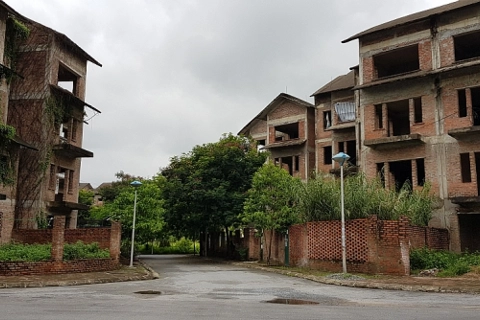
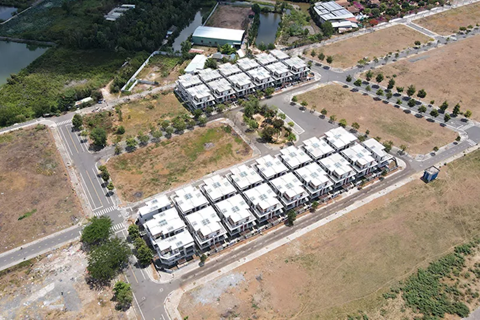
Apartment prices may rise significantly due to higher input costs, while mid-range and affordable housing supply is already limited. Townhouses, villas and land-plot properties may experience lower liquidity because much of their value is tied to land prices.
When land prices rise, selling prices increase proportionally, leading both buyers and sellers to act more cautiously and slowing transaction volumes.
Suburban land plots and farmland undergoing conversion may also face higher financial obligations.
However, industrial real estate is less affected, as rental rates depend mainly on infrastructure quality and foreign investment demand.
Associate Professor Dr. Dinh Trong Thinh commented that long-term investors may accept the new costs because market-aligned pricing helps identify areas with strong growth potential and increases government revenue for infrastructure development.
The Vietnam Institute for Real Estate Research and Valuation emphasized that the land price table is a crucial tool for calculating financial obligations and determining compensation.
The institute stressed the need for transparent data and a carefully planned roadmap to avoid placing excessive pressure on residents and businesses. It recommended that the central government establish valuation methodologies while allowing local authorities to adjust prices based on actual conditions.
Rising land prices also affect credit markets. Banks may need to reassess collateral values and tighten lending ratios, while homebuyers face higher borrowing costs.
For local governments, the new price table will increase revenue but also raise administrative workload and investment costs in areas with underdeveloped infrastructure.