Hanoi to set aside $115 million for free school lunches
Hanoi is set to provide free lunches for primary school pupils to ease the financial burden on families and improve nutrition and learning conditions in both public and private schools.
THE HANOI TIMES — The municipal government plans to spend VND3 trillion (US$115 million) on lunches for primary school students in the 2025-2026 academic year, with each recipient in mountainous areas and Red River islet communes expected to receive VND30,000 (US$1.15) for per meal and those in other, more developed areas to get two-third of the amount for their peers.
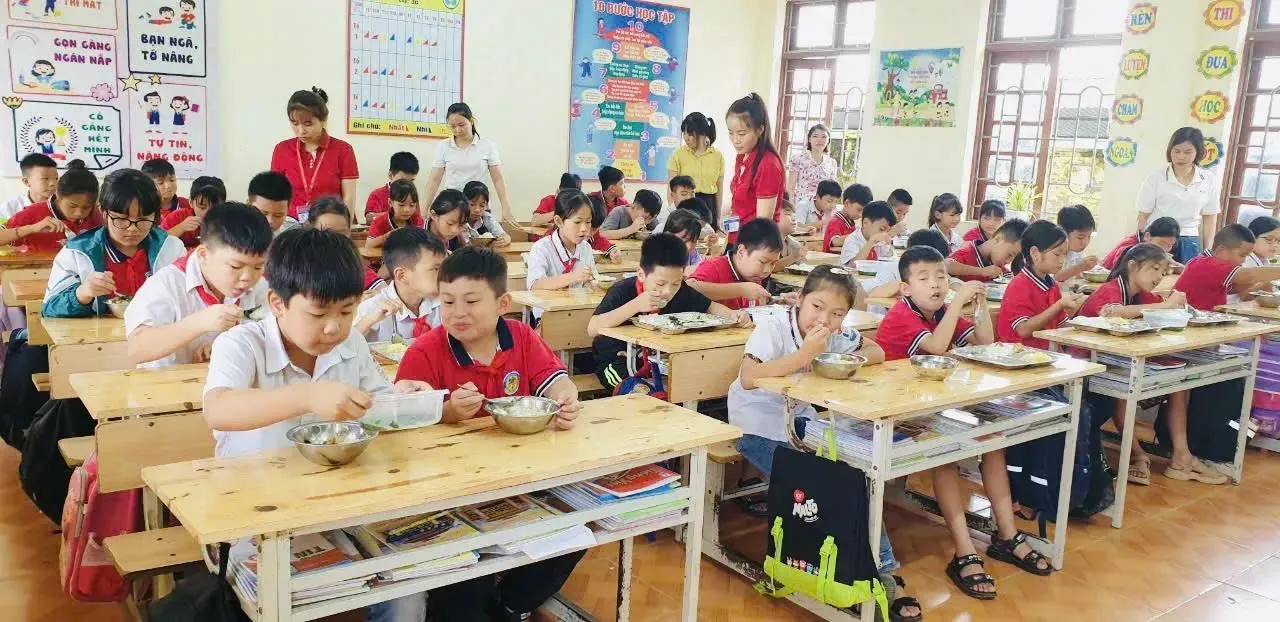
Students at Hop Thanh B Primary School in My Duc District, Hanoi have lunch. Photo: Kinh Te & Do Thi Newspaper
If parents and schools agree to a higher cost per meal, families would only need to cover the additional cost to ensure each student receives a minimum daily meal worth VND30,000 (approximately $1.15).
Support would be provided for up to nine months of the academic year, based on the number of actual school days. Funding would come entirely from the city budget.
With an estimated 768,000 students enrolled in public and private primary schools across Hanoi, the total cost of the policy is projected to be VND3 trillion ($115 million), including VND2.8 trillion ($107 million) for public schools and the remaining for private schools.
According to lawmakers, primary students enrolled in foreign-funded schools will not benefit from the policy, as their families can afford their school meals.
The meal funding follows an idea proposed by General Secretary To Lam that resonated with public concerns about rising living costs.
Many parents and education experts believe that free school lunches provide better nutrition, help children stay healthy, and enable them to concentrate in class, while tuition-free education reduces economic stress on families, especially those facing hardship.
Parents view the VND30,000 ($1.15) minimum as enough to guarantee meal quality and necessary nutrition. In rural and suburban areas, daily meal costs often fall below this threshold, making the policy even more vital.
"It would ease the financial pressure for parents like us, especially in difficult times," said Nguyen Thi Mai, a mother of two primary schoolchildren living in a Red River sandbank area.
Nguyen Thi Ha, a grandmother from Chuong My District’s Thuy Xuan Tien Commune, has three grandchildren: Two of them are in secondary school and have to return home for lunch, while one is in primary school and his family cannot afford school lunch.
"I have to pick her up and bring her back every day. If the school could provide lunch, it would be a huge relief,” she said.
Nguyen Thi Nhu Hoa, Principal of Hop Thanh B Primary School in My Duc District, said that only 60 out of 670 students are currently enrolled in the school’s lunch program due to cost constraints. “Many families want their children to stay for lunch, but can’t afford the fees. If support is provided, I expect the number of students who choose to stay for lunch will increase significantly,” she said.
General Secretary To Lam recently noted that Hanoi has between 1.2 and 1.3 million students in primary and lower secondary schools.
"With a projected first-quarter revenue of VND250 trillion ($9.5 billion) in 2025, Hanoi can more than afford it," he said during a meeting with Hanoi's constituents in April.
Need for a clear roadmap
According to experts and teachers, a well-structured plan covering infrastructure, staffing, and budgeting will be necessary for the free lunch scheme to be successful.
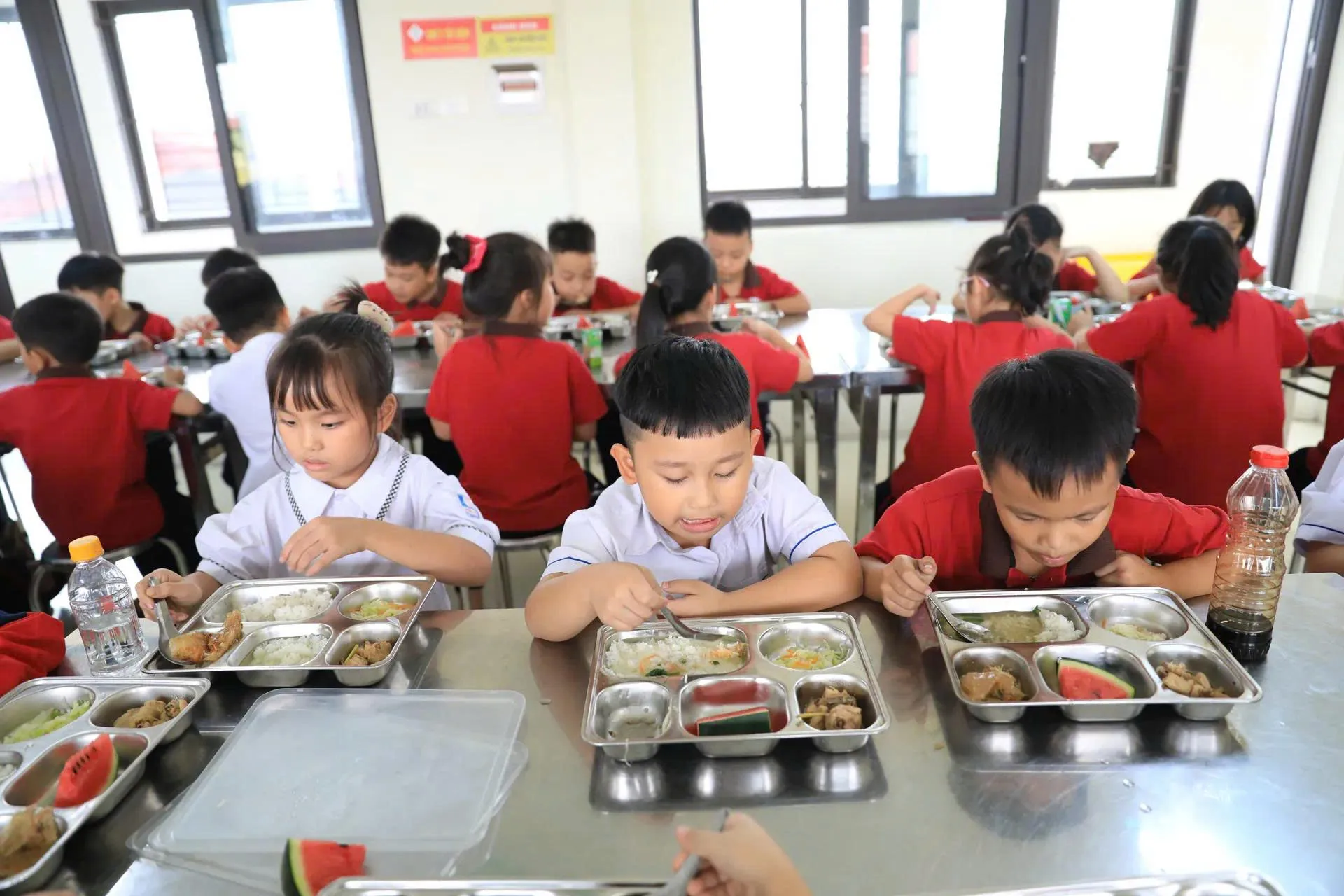
A lunch at Dai Thinh A Primary School in Me Linh District, Hanoi. Photo: Hai Linh/The Hanoi Times
To Thi Hai Yen, Principal of Giang Vo Secondary School in Ba Dinh District, recommended starting the program in disadvantaged areas and at schools lacking lunch facilities, while expecting: “It must meet safety and nutrition standards. Rushed implementation risks inefficiency.”
Nguyen The Thang, Principal of Thach Hoa A Primary School in Thach That District, said only 120 of 626 students currently eat lunch at school due to insufficient kitchen facilities and staff. "To serve all students, we need serious investment in facilities, kitchens, and staffing," he said.
Meanwhile, Hoang Thi Thu Trang, Principal of Tran Quoc Toan Primary School in Ha Dong District, reported that over 90% of her school's 1,570 students registered for school lunches last year.
The school has established effective systems for food safety, meal distribution, and supervision. However, maintaining consistent meal quality and adjusting meal counts at the last minute due to unexpected student absences.
"Without flexible plans, this can lead to waste or shortages," she said.
Le Viet Khuyen from the Vietnam Association for Learning Promotion said that many developed countries regard school meals as part of educational welfare.
"With the strongest fiscal situation in the country, Hanoi should lead the way," he said.
Associate Professor Tran Xuan Nhi, former Deputy Minister of Education and Training, called the proposal a humanitarian step, calling on Hanoi to act in a synchronized way by curbing waste, fighting corruption, and managing funds efficiently. Then the city will have more than enough capacity to provide meals for students but waive tuition, and improve education quality.
He believed that the move, with right approach tailored to national conditions, could be expanded nationwide.