Hanoi tackles informal markets with an eye on people, not just pavements
As Hanoi moves to remove sidewalk and informal markets, the city faces a sensitive challenge: restoring urban order while protecting the livelihoods of thousands of low-income traders who rely on these markets for survival.
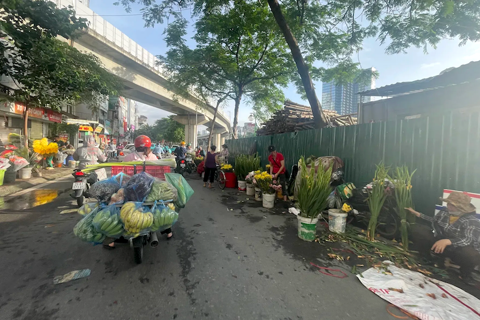
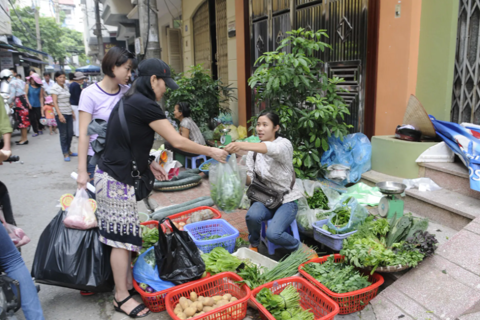
THE HANOI TIMES — On the busy Phao Dai Lang Street, small trader Le Thanh Hung, from Son Dong Commune, Hanoi, has sold goods at this makeshift market for 25 years. What many customers do not see is the cost of a sidewalk stall labeled “temporary.”
That fee covers only part of the day, Hung must rent his selling space for VND5 million (US$190) per month from 1 PM to 8 PM everyday, while another vendor uses the same spot in the morning.

Le Thanh Hung sits by his groceries at a makeshift market on Phao Dai Lang Street. Photo: Dan Viet Newspaper
To keep their stalls open and cover daily expenses, Hung and other traders, especially vegetable and meat sellers, must earn more than VND10 million ($380) each month.
Tran Duc Bao, 68, also from Son Dong Commune, said the small stall is how he survives. He has relied on it since leaving his farmland 30 years ago.
“I earn VND100,000-VND200,000 ($19-$38) a day. This stall has supported my family for more than 30 years,” Bao told Dan Viet Newspaper.
According to official reviews, by the end of 2025, Hanoi still had 231 sidewalk and makeshift markets operating in various forms.
These markets appear across wards and communes, especially in densely populated neighborhoods, along major roads and in areas undergoing rapid urbanization.
Most formed spontaneously outside the city’s market planning system. They occupy sidewalks, roadways and residential entrances, reducing road space by 30%-50% and increasing the risk of traffic congestion and accidents.
Environmental pressure compounds the problem. Each sidewalk market generates about 50-100 kilograms of waste per day, mainly organic waste and food packaging.
Without fixed collection points, vendors often leave trash on sidewalks and in drains after markets close, causing foul odors and unsanitary conditions for nearby residents.
Food safety poses the greatest concern. Vendors rarely control product origins or storage conditions, placing meat and vegetables close to the ground and exposing them to dust and vehicle exhaust.
Tran Huu Minh, Head of the National Traffic Safety Committee Office, said sidewalk markets raise traffic safety risks by occupying sidewalks and roads.
Restoring public space, he noted, improves pedestrian safety and keeps traffic flowing more smoothly.
However, sidewalk markets persist because they meet three priorities for consumers: proximity, speed and low prices. These factors matter most in older neighborhoods and new urban areas that still lack adequate commercial infrastructure.
Le Thi Hien, a resident of Hoang Mai Ward, said she can stop at the alley entrance near her home to buy vegetables or fish anytime, even after work. Large markets, she added, take time for parking and feel crowded.
For sellers like Hung and Bao from Son Dong Commune, sidewalk markets provide a critical lifeline. Most traders work on a small scale, many of them middle-aged or elderly, with limited capital and few alternative skills.
Even with support policies, renting stalls in formal markets remains costly. Sidewalk markets help traders cut expenses, manage flexible hours and adapt quickly to changing consumer demand.
Another factor behind the persistence of sidewalk markets lies in market planning.
According to the Hanoi Department of Industry and Trade, many traditional markets built decades ago have deteriorated and no longer meet the needs of a growing urban population. Meanwhile, new urban areas expand faster than investments in suitable neighborhood markets and retail centers.
Hanoi authorities have repeatedly reaffirmed their determination to eliminate sidewalk and makeshift markets.
In early November 2025, Vice Chairman of the Hanoi People’s Committee Nguyen Manh Quyen ordered the city's agencies to address sidewalk markets in a systematic, firm and continuous manner.
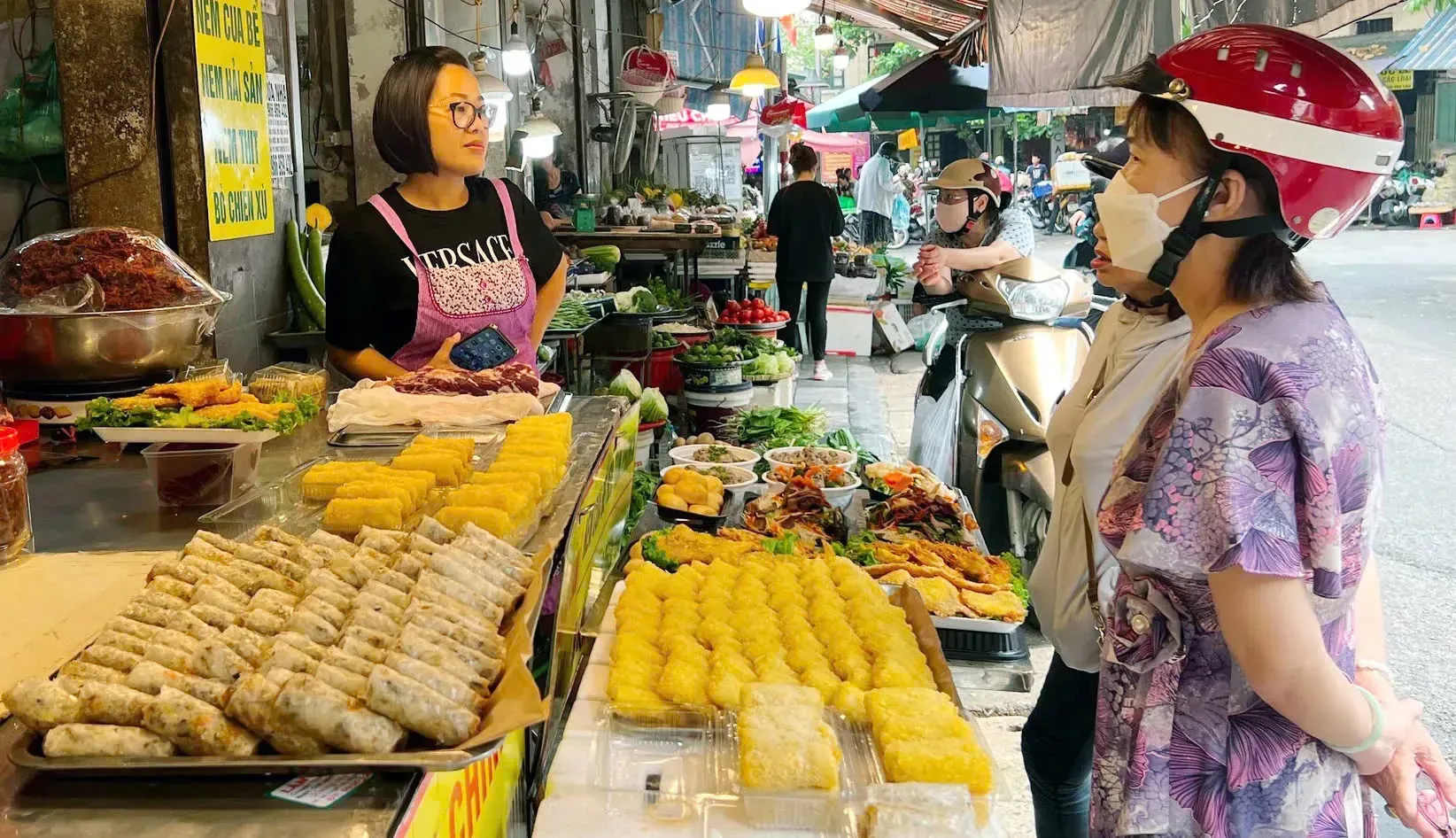
People buy foods at a makeshift market on Hang Be Street. Photo: Hoai Nam/The Hanoi Times
He asked the Hanoi Department of Industry and Trade to review data for accuracy and urged localities to coordinate clearance plans and complete them in 2026.
He said effective removal requires building replacement neighborhood markets, calling for including new markets in investment plans and attracting private capital.
He also stressed that new markets must include support for traders, clear management rules and strict controls on product origins and food safety.
What do traders think about the plan?
In late December 2025, the Hanoi People’s Committee issued a plan to remove all 231 sidewalk and makeshift markets during 2026-2027. Before January 30, the city will clear 75 priority markets and informal trading points.
Authorities will remove markets with fewer than 50 vendors before June 30, 2026. Markets with 50–100 vendors will close before December 30, 2026.
Long-standing markets with more than 100 vendors and complex conditions will complete clearance before June 30, 2027.
Rather than opposing the plan, most traders support the policy and hope authorities offer practical support to help them maintain their livelihoods.
Hung from Son Dong Commune agreed with the city’s approach but urged Hanoi to adopt solutions that prevent low-income families from falling into hardship.
“We do not need large supermarkets. High operating costs will push food prices up and traders like us cannot afford to participate,” Hung said.
He suggested planning simple outdoor neighborhood markets with roofs, clean drainage and reasonable stall fees. He said traders would move in immediately under such conditions.
Bao said he would comply but remained concerned.
“If authorities ask us to reorganize for urban order and traffic safety, we can move inside and avoid violations. I only hope they allow us to keep earning a living,” he said.
Ha Thi Ngoc, who now sells goods at Xanh Market in Cau Giay, once traded at a roadside market.
When she first moved into the formal market, she worried about losing customers and facing higher costs. Over time, she found that operating inside the market reduced the risk of clearance and improved storage conditions.
“Regular customers gradually came back and business became more stable,” she said.
Tran Van Toan, who sells breakfast food in Cau Giay, said he would relocate if authorities provided a new business location.
“If there is a centralized selling area with clear guidance, I will move. I just hope the city offers real support instead of leaving people to cope on their own,” Toan said.
In Xuan Phuong Ward, where a sidewalk market operated for years, resident Nguyen Thi Nghia said traffic congestion and scattered waste once plagued the area whenever the market opened.
“Now the road is clearer, safer and much cleaner,” she said.
At first, residents worried about inconvenience and changing shopping habits. After a short time, shopping at legal markets became routine.
“We travel a bit farther, but we feel safer about hygiene and food quality,” Nghia said.
Hanoi acts for the common good
Vice Chairman Quyen of the Hanoi People’s Committee stressed that ward and commune authorities must dismantle sidewalk markets, reclaim public space and prevent recurrence while protecting traders’ legitimate interests.
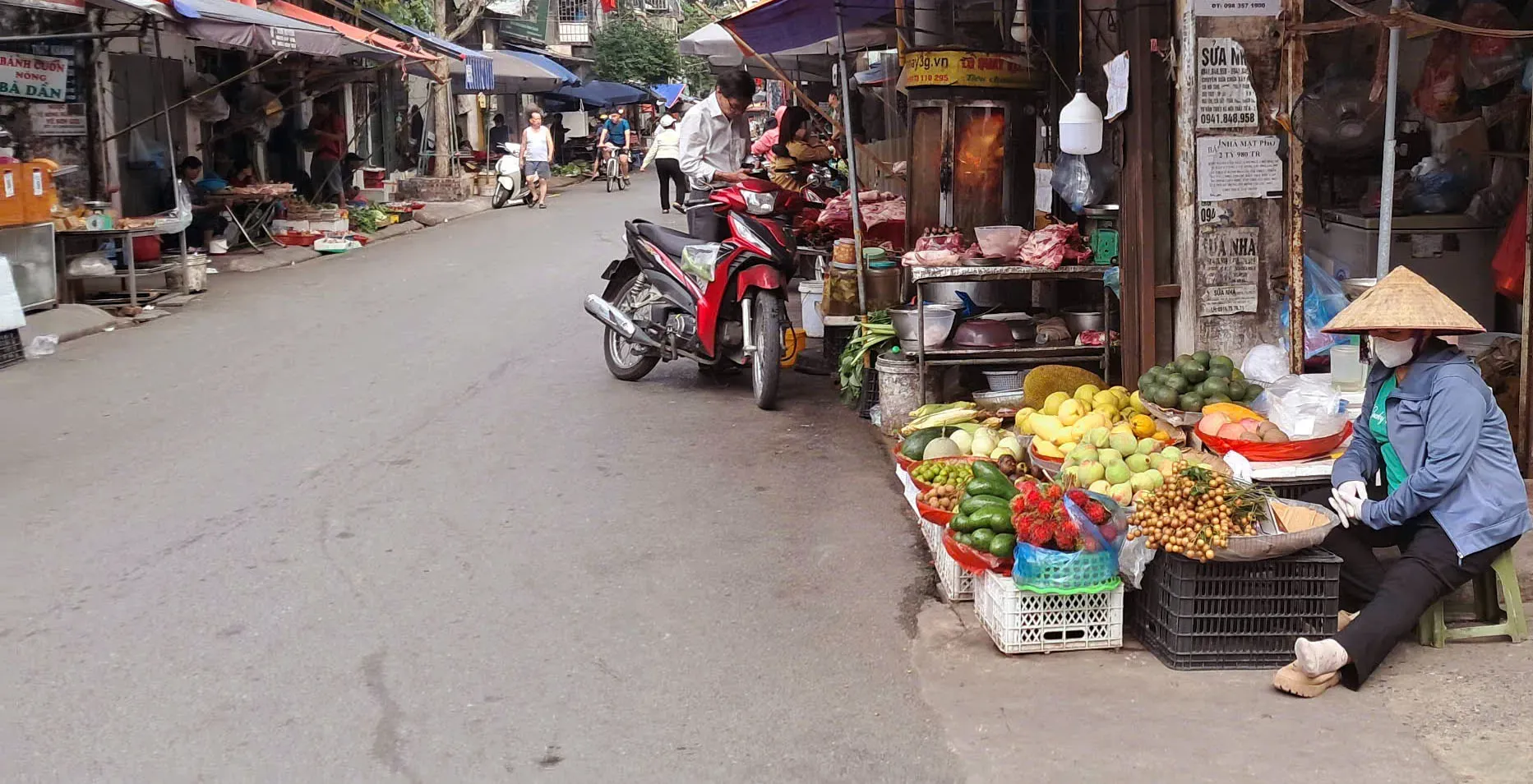
Inside a temporary, unofficial market in Dong Da Ward. Photo: Hoai Nam/The Hanoi Times
As Hanoi advances its two-tier local government model, responsibilities at the grassroots level increase. Local authorities must assign clear accountability, set deadlines and conduct regular inspections.
Nguyen Kieu Oanh, Deputy Director of the Hanoi Department of Industry and Trade, said challenges stem from long-standing shopping habits and inconsistent enforcement at the local level.
Department Director Vo Nguyen Phong urged wards and communes to continue reviews, create detailed plans and maintain checkpoints after clearance to prevent informal markets from returning.
He emphasized the role of local authorities and security forces in enforcement and public communication, encouraging residents to shop at traditional markets and formal retail outlets.
In Tuong Mai Ward, authorities will clear two large sidewalk markets in Alley 106 Nguyen An Ninh Street and Alley 293 Tam Trinh Street, affecting 130 households.
From December 28, 2025 to January 30, the ward will arrange new selling locations, conduct outreach, enforce clearance and maintain controls. Police will lead operations and keep 24/7 checkpoints at key sites.
Speaking with The Hanoi Times, Chairwoman Dao Thu Hang of the ward People’s Committee said Tuong Mai authorities have prepared solutions to focus on livelihoods rather than simple removal.
Recognizing the difficulty and social impact, the ward formed a steering committee led by the chairwoman, with participation from police, functional units, infrastructure and environmental enterprises, social organizations and residential representatives, she said.
Lieutenant Colonel Phan Tran Trung, Deputy Head of the ward Public Security Office, said his unit developed measures to prevent reoccupation after clearance.
Police also worked with residential leaders to persuade traders to stop operating at unplanned markets.
Alongside administrative measures, Tuong Mai Ward has prioritized communication to discourage residents from shopping at sidewalk markets.
Local authorities will arrange selling space for traders at Dong Tam Market or other legal markets and consider fee support to help stabilize livelihoods, strengthen outreach, monitor against reoccupation and encourage safe, orderly shopping habits.
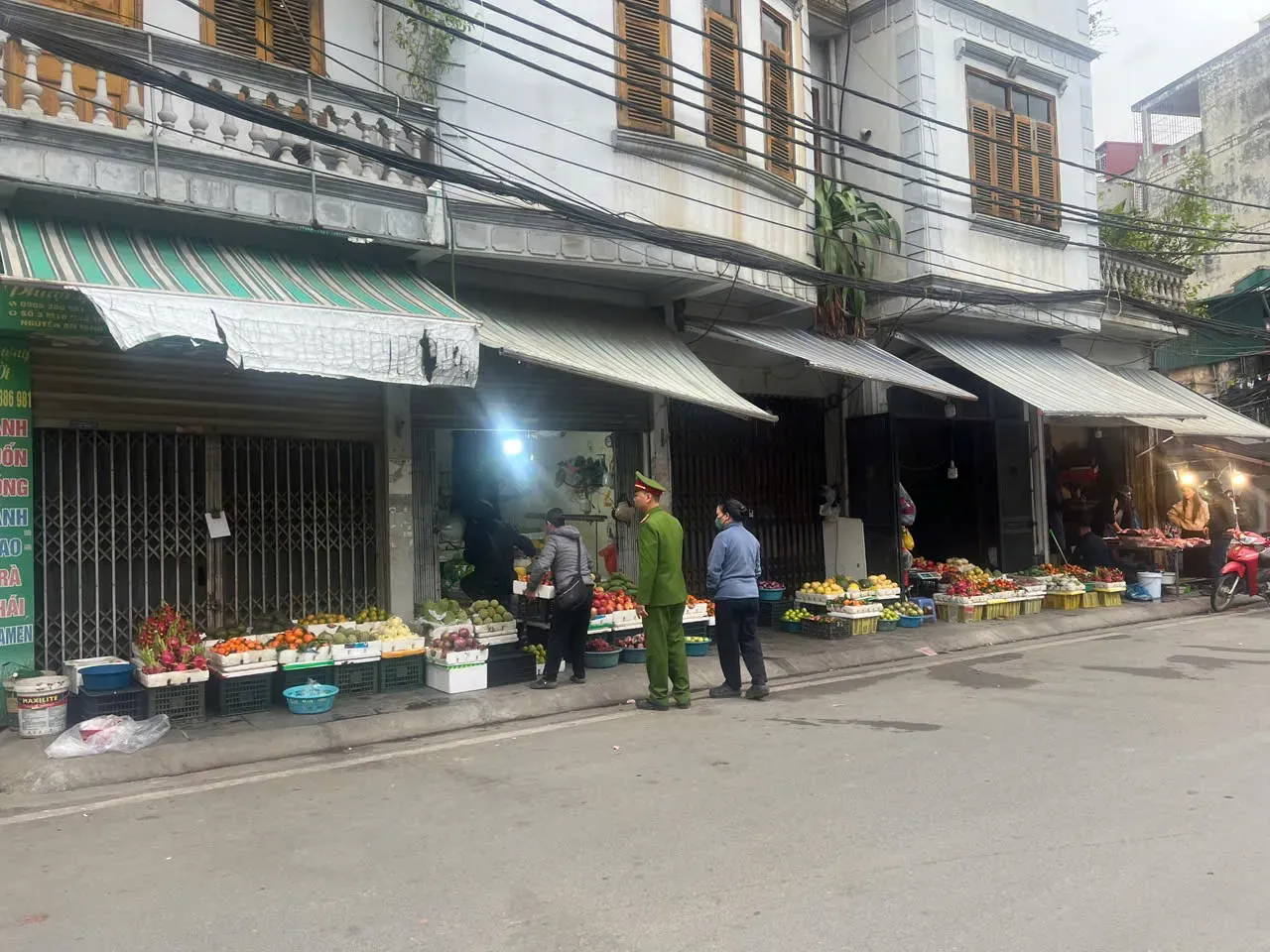
The police of Tuong Mai Ward manages a makeshift market on Nguyen An Ninh Street. Photo: Thanh An/The Hanoi Times