Hanoi to start construction of second airport in 2040
This would help create a transportation hub in the north of the country.
Hanoi plans to start construction of its second airport in the south of the city by 2040 and to have it operational by 2050.
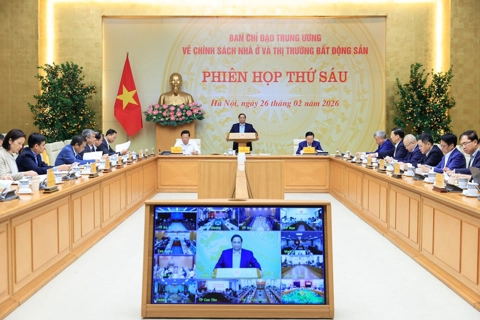
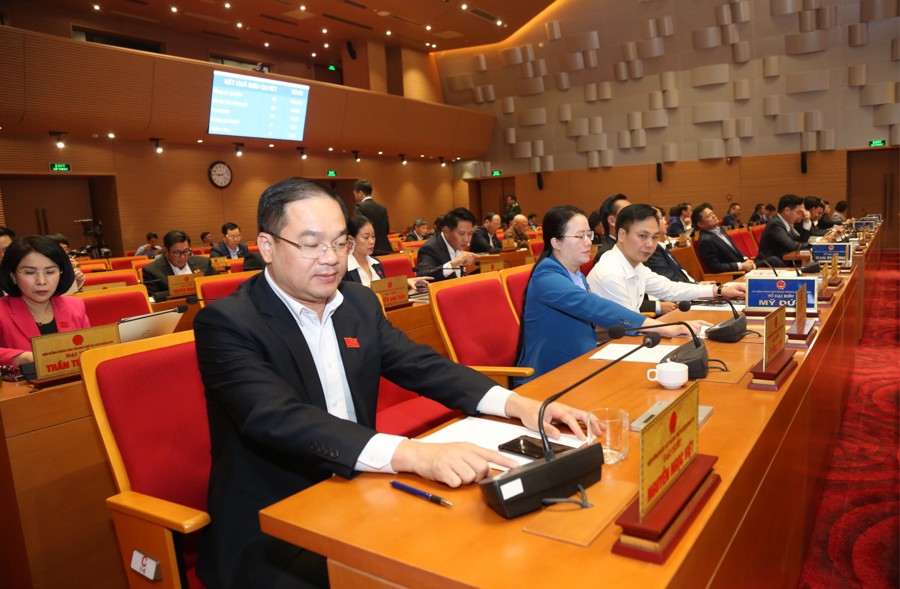
| Deputies ratify the planning. Photos: Thanh Hai/The Hanoi Times |
Specialized consulting agencies will conduct a detailed study of the specific location, scope, and scale. The findings will be submitted to the relevant authority for a decision.
This was one of the key points mentioned in the overall capital planning for 2045, with a vision to 2065, which has been ratified by 100% of deputies of the Hanoi People’s Council today [December 8] at its 14th session.
The planning now needs to be approved by the Prime Minister.
The development plan for the southern airport is designed to connect with the Phu Xuyen urban area, following the airport urban model. This initiative aims to create a central hub for comprehensive transportation services, encompassing air and rail transport (national railway, road, North-South high-speed railway, urban railway), water transport (Red River), and road networks (Phap Van-Cau Gie expressway, National Highway - Northwest, National Highway 1, Southern axis). This integrated approach is intended to create a central transportation hub in the north of Vietnam.
In particular, the planning will also focus on implementing the city-within-a-city model under distinct policy mechanisms for Hanoi West (Hoa Lac, Xuan Mai), North (Dong Anh, Me Linh, Soc Son), and potentially South (Phu Xuyen, Ung Hoa).
According to the Hanoi People's Committee, applying this model will facilitate the development of specialized areas in science and technology, education and training, trade and services, logistics, international commerce, and finance. This is expected to create new driving forces and development centers within the capital.
The planning also outlines a development corridor along the southern axis, the urban railway connecting the center to the southern airport, and the east-west traffic axis. These initiatives aim to leverage the advantages of the city's crucial southern traffic hub.
| Overview of the session. |

Furthermore, the adjusted planning project designates areas for educational training to accommodate the future relocation of universities and educational institutions from the downtown area.
For the central urban area, Hanoi plans to restore and upgrade the distinctive "French Quarter" architecture associated with core economic activities and the national financial and commercial center.
Special attention will be paid to the preservation and restoration of architectural works and significant urban spatial axes, such as the Trang Tien - Opera House cultural axis and the Ngo Quyen financial banking axis.
The Hanoi People's Committee emphasizes the priority of developing the busiest economic-financial-commercial center in the capital by exploiting heritage values alongside the existing dynamic economic potential.
Moreover, the project prioritizes underground development in this area, including an underground commercial center extending from the central Hanoi Central Railway Station along Tran Hung Dao Street, connecting to the Red River spatial axis.
The verification report of the Urban Committee of the municipal People's Council confirmed the scientific and practical nature of the proposed adjustments to the overall planning of Hanoi until 2045, with a vision to 2065.
The Urban Committee recommended further clarification of the development orientation of urban areas to align with the capital's development practices over the past decade. The report emphasizes the role of green spaces in the capital's urban structure and adds evidence to clarify the urban structure under the Transit-Oriented Development (TOD) model.