Hanoi to transfer funds away from slow projects
Effective disbursement of public funds is considered a critical political task for local authorities.
The Hanoi People's Committee plans to transfer capital from projects with delays in investment procedures, slow implementation, or difficulties in disbursing funds to those with better performance and higher capital absorption rates.
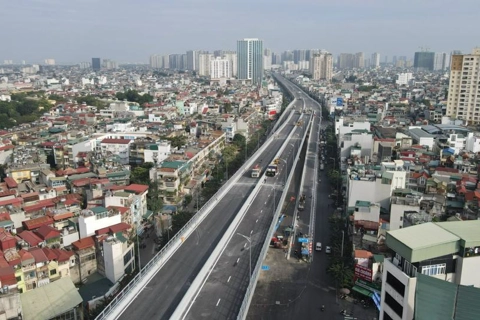
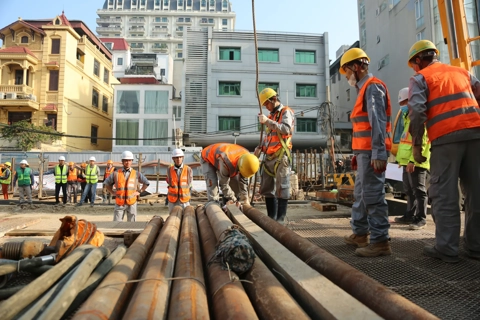
| The construction of Vinh Tuy Bridge Phase 2. Photo: Thanh Hai |

This was part of the city's Notification No. 349/TB-UBND, which contains Chairman Tran Sy Thanh's conclusion from the citywide basic construction briefing held in the first quarter of 2023.
In the notice, Thanh has urged all levels and sectors to prioritize the allocation of public investment capital as a key policy task to achieve the highest disbursement in 2023.
The mayor also stressed the need for directors, heads of departments, divisions, branches, chairmen of people's committees of districts, towns, and heads of units to take responsibility and be specific in identifying difficulties and problems in the slow budget of each project to direct timely solutions.
They are also in charge of implementing the commitment to the City People's Committee on the disbursement of public investment capital and be held accountable if the disbursement rate is not achieved as promised.
To strengthen discipline and responsibility, the law imposes severe penalties on individuals who deliberately obstruct, delay or create difficulties in the capital allocation, implementation, and disbursement process. The notice also stated that negative acts in public investment management should be dealt with firmly, and weak and ineffective cadres, civil servants and public servants who harass and cause difficulties should be replaced immediately.
The City People's Committee has tasked the Department of Planning and Investment with reviewing and making recommendations for submission to the City People's Council at the mid-2023 meeting. The recommendations will focus on transferring capital from slow-moving projects to those with better capacity to implement and absorb capital and updating and adjusting the 5-year medium-term public investment plan for 2021-2025.
This year, the Government has allocated VND47 trillion ($2 billion) in public investment capital for Hanoi in 2023. As of March 2023, the city has disbursed around VND3.9 trillion ($165.4 million), representing approximately 8% of the planned disbursement for the year.
Hanoi is undertaking 238 public investment projects in 2023, including 219 transitional projects and 19 new projects. Transport sector projects make up the largest share of the investment plan at 53.1%, with 96 projects underway. The Ring Road 4-Capital Region and Vinh Tuy Bridge Phase 2 are among the key projects progressing on schedule.
Furthermore, the city is prioritizing investments in the construction and renovation of public schools, improvements to the healthcare system, and the restoration and upgrading of cultural and historical landmarks. The city budget is expected to allocate over VND49.2 trillion ($2.08 billion) for these projects from 2022-2025.