Hanoi unveils master plans for To Lich River Green Corridor
The city is pushing forward with the goal of completion during 2026, and no later than early 2027 for the main components.
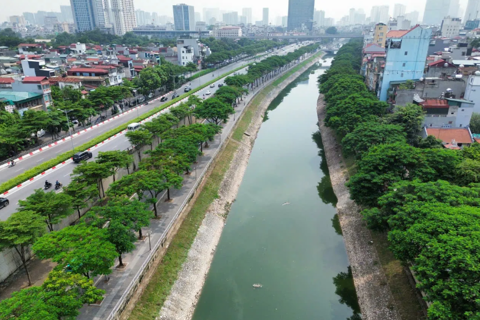
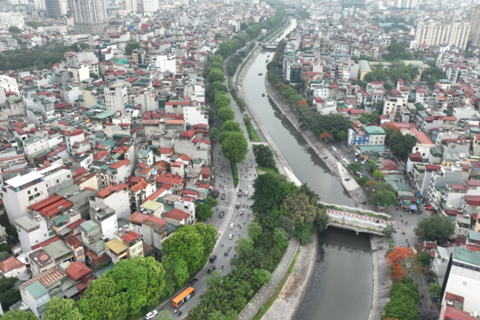
THE HANOI TIMES — The Hanoi Department of Planning and Architecture, in coordination with the Hanoi Institute of Construction Planning, has unveiled detailed master plans to transform both banks of the To Lich River into a continuous green corridor.
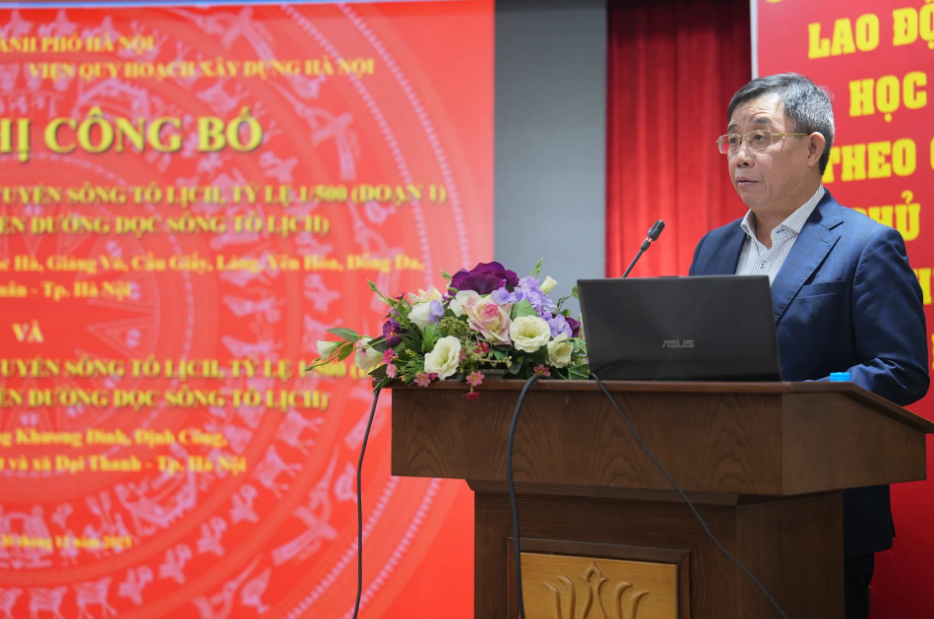
Chief of the Office of the municipal Department of Planning and Architecture Bui Van Bac. Photos: Lai Tan/The Hanoi Times.
The city aims to complete two sections by 2026 and no later than early 2027, covering two riverside routes to improve the urban environment, expand public green space and restore the river’s landscape, Chief of the Office of the municipal Department of Planning and Architecture Bui Van Bac said at a conference announcing the plans on December 30.
In particular, the planned area runs through multiple central wards, including Tay Ho, Nghia Do, Ngoc Ha, Giang Vo, Cau Giay, Lang, Yen Hoa, Dong Da and Thanh Xuan, focusing on a total river length of more than 13 kilometers, forming a key green axis that nearly encircles Hanoi’s inner city.
For the first section, the study area covers about 324,006 square meters along a 6.2-kilometer stretch, starting from the Hoang Quoc Viet–Vo Chi Cong interchange and ending near Nga Tu So.
Bac said the plan permits only low-rise structures within green spaces, including small service kiosks, rest shelters and public toilets, all limited to one storey with compact designs that enhance rather than dominate the riverside landscape, while valuing public space.
The section from Hoang Quoc Viet Road to Cau Giay is planned as an open recreational zone with pedestrian and cycling paths, public plazas and service areas, while the stretch from Cau Giay to Nguyen Trai Road will serve as a cultural corridor linked to local traditions such as the Lang Pagoda Festival and supported by continuous riverside amenities.
Infrastructure upgrades will underpin the transformation, with existing riverside roads improved largely along current alignments under the To Lich River park renovation project. Ten existing bridges will be renovated and one new bridge built to strengthen local connectivity.
The second section of the plan covers about 459,437 square meters along a seven-kilometer stretch, from Nga Tu So to the branching area toward Linh Dam and the Nhue River. Existing parks, green land and sports areas along this section will be renovated and upgraded, while new landscape designs will reflect the historical and cultural character of each area.
From Nguyen Trai Road to Ring Road 3, the riverbanks are expected to become a vibrant zone for commercial, service and dining activities, with a focus on developing night-time economic spaces.
Walkways, green areas, parks and flower gardens will be upgraded, and new pedestrian bridges will help connect both sides of the river. Further south, from Ring Road 3 to Thanh Liet Bridge, the river corridor is planned as a quieter leisure and recreation space, featuring parks, public squares and outdoor sports facilities.
Bac stated that the plan also integrates public transport. A branch of Monorail Line 2 is proposed to run along the eastern side of the To Lich River, linking Giap Bat, Thanh Liet and Phu Luong, helping improve access to the area while reducing pressure on road traffic.
Environmental improvement as a core objective
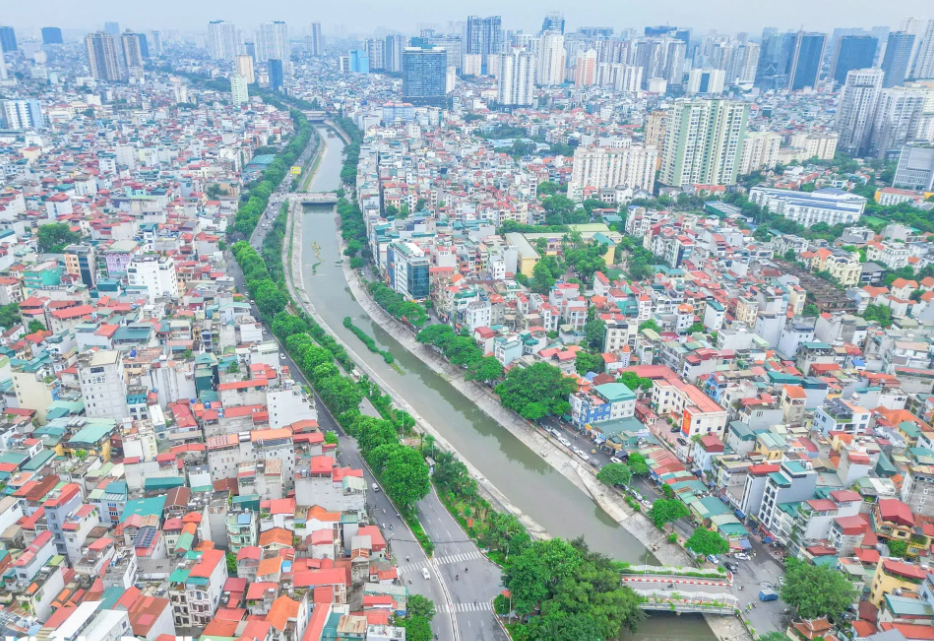
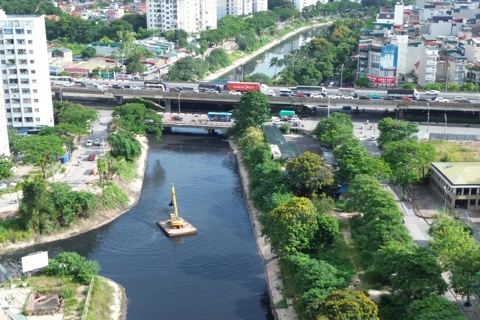
To Lich River from above.
At the event, Nguyen Duc Hung, Deputy Director of the Hanoi Institute of Construction Planning, said the planning approach combines landscape development with wastewater treatment solutions.
Measures such as dredging, water replenishment and raising the river’s water level through the Trem culvert are intended to significantly improve water quality.
“With the Red River already being developed as a major landscape axis, the To Lich River is expected to become another important green corridor, wrapping around the inner city and improving the living environment for residents,” Hung said.
Hung expects the project to play a key role in addressing long-standing environmental issues while creating a new green space that functions as an urban “green lung.”
The approval of the master plans provides a legal and technical foundation for launching riverbank renovation and redevelopment works in the coming period, he continued.
In the next phase, Hanoi has tasked consultants with preparing a third planning section, extending from Cau Buou to the Red River, to complete the entire To Lich River corridor. Once completed, green spaces, water surfaces and public amenities along the river will be seamlessly connected with nearby parks and residential areas.
At the same time, the city will tighten oversight of investment activities along both banks of the river. Most implementation work has been assigned to local authorities at the ward and commune levels, to steadily improve the river’s appearance and restore the To Lich River as a valuable public space for the capital in the years ahead.