To Lich River Park expected to be cultural landmark of Hanoi
Once completed, To Lich River Park will become a green belt that cools Hanoi, restores ecosystems, and creates a natural airflow corridor for the city.
THE HANOI TIMES — Hanoi is pressing ahead with a VND4.6-trillion (US$181 million) project to develop a riverside park along the To Lich River, designed to improve the environment, add more public space, and create a new cultural landmark for the city.
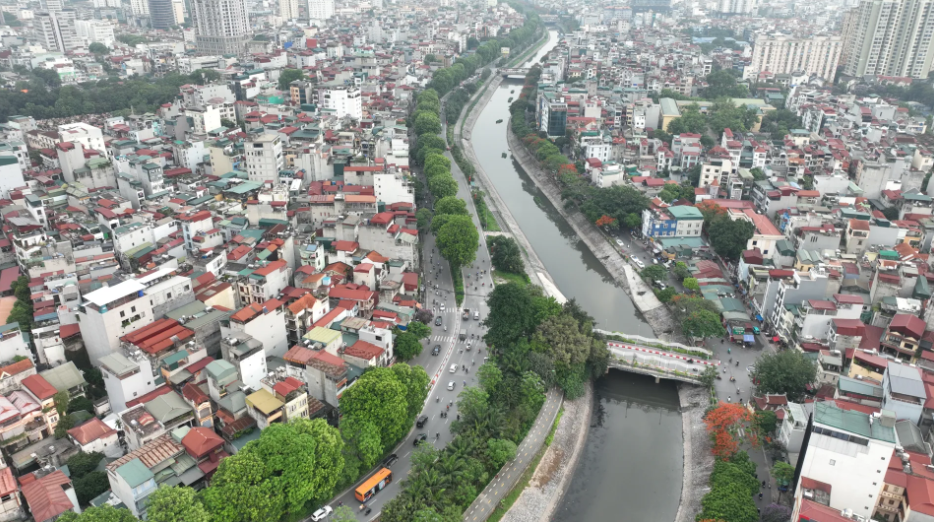
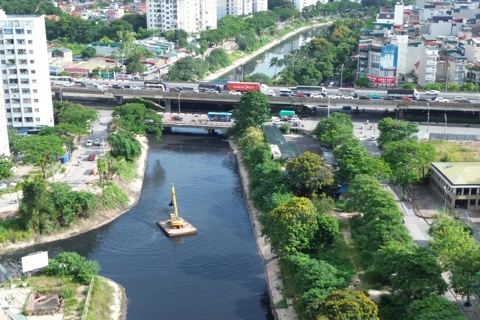
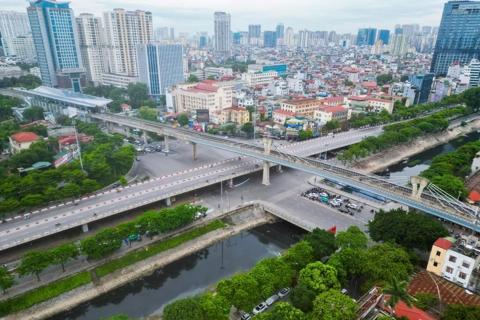
To Lich River from above. Photo: Pham Hung/The Hanoi Times
High expectation
The To Lich River holds a special place in Hanoi’s urban landscape, flowing through central districts and connecting residential areas with key transport routes.
Over the years, however, it has been heavily burdened by urbanization and wastewater, placing serious pressure on the city’s environment. Against this backdrop, the riverside park project is seen as an opportunity to reshape the waterfront and improve living conditions for surrounding communities.
The project has drawn wide public attention. Covering nearly 74 hectares across 12 wards, Ngoc Ha, Nghia Do, Lang, Giang Vo, Cau Giay, Yen Hoa, Thanh Xuan, Dong Da, Khuong Dinh, Dinh Cong, Thanh Liet and Hoang Liet, it will be developed under a build–transfer (BT) arrangement.
Plans include service facilities, architectural highlights, and supporting structures, along with green spaces and public amenities. Hanoi expects the park to serve as a green corridor that not only enhances the cityscape but also improves residents’ quality of life.
Architect Dao Ngoc Nghiem, Vice Chairman of the Vietnam Urban Development and Planning Association, welcomed the initiative while stressing “the need for careful urban design along both banks.”
Public opinion echoes that sentiment, emphasizing that the park should not only be visually appealing but also livable.
“If the park has more trees, water, and easy paths, people like us can enjoy nature right here in the city,” said Nguyen Van Nga, a resident in Cau Giay Ward.
According to architect Nghiem, if successful, the project would function as more than a park, it could become an inter-district green belt that helps lower urban temperatures, restore small ecosystems, and create a natural ventilation corridor for the capital.
“Beyond environmental and scenic value, it also carries potential to spur economic, cultural, and tourism activities along the river. With the right design, small exhibition spaces and outdoor cultural events could be included,” Nghiem continued.
At the same time, experts caution that commercial functions must be clearly defined to avoid overwhelming the park’s core role as an open public space.
Since early 2025, Hanoi has diverted water from West Lake to replenish the To Lich River, aiming to raise water levels, stimulate flow, and ease pollution. This indicates the city is not only focused on the park’s visual appeal but also addressing hydrological infrastructure as a foundation for long-term success.
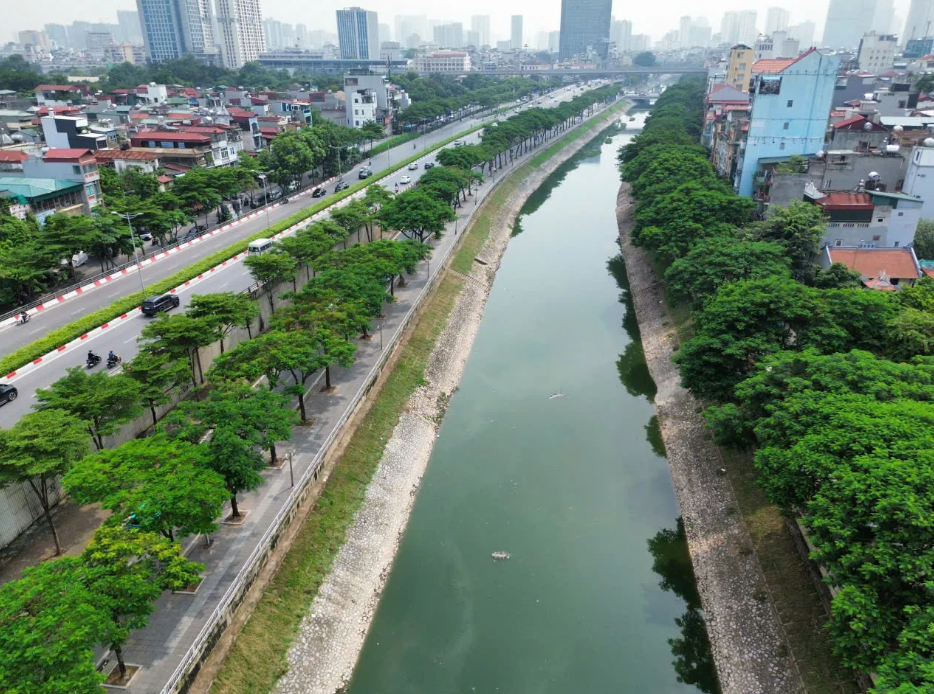
After a short period of water replenishment, the To Lich River has turned a refreshing shade of green.
Long-term vision
Experts stress that any large-scale landscape project must prioritize stability and sustainability.
For the To Lich park, that means technical infrastructure, management systems, and long-term maintenance plans must be worked out early rather than left until after construction is complete.
Recent weeks have seen water from both West Lake and the Yen Xa wastewater treatment plant flow into the river.
Reports suggested there have been clearer waters and reduced odor in many sections. Still, environmental specialists warn that unless water supplementation is maintained consistently, the river could revert to its previous condition.
Hydrologists underline that the park’s sustainability depends on keeping water levels stable, controlling discharges, and ensuring a complete drainage and collection system.
Without these, water quality could deteriorate quickly and undermine the park’s landscape. Architect Tran Ngoc Chinh, Chairman of the Vietnam Urban Planning and Development Association, noted that without synchronization with drainage networks, embankments, lighting, and riverside transport links, the park may end up attractive but impractical.
Another key factor is management after completion. A beautiful design alone is not enough; trees, lawns, embankments, walkways, lighting, and sanitation all require steady resources for upkeep.
“Without professional and transparent management, the park risks falling into decline, with rising maintenance costs and reduced public benefit,” Chinh added.
He also stressed the need to limit excessive service construction, preserve the park’s green space function, and involve the public in oversight.
Echoing Chinh’s view, Architect Nguyen Tieu Quoc Dat, co-founder of Think PlayGround, suggested that community participation is therefore seen as decisive.
If the park is designed and built without input from locals, it risks becoming underused. “From the design stage, people should be consulted on what they need, playgrounds for children, sports facilities, or the preservation of existing greenery and pathways,” said Dat.
Later, residents could help manage the space through self-organized groups working alongside authorities to maintain cleanliness, safety, and appropriate use. This approach has proven effective in past community playground projects. “When residents feel ownership, public spaces are preserved and integrated into daily life,” Dat added.