Hanoi urged to balance interests in gasoline motorbike ban
Hanoi is expected to develop comprehensive measures covering production, registration, inspection, and vehicle replacement to support residents in transitioning away from gasoline motorbikes.
THE HANOI TIMES — Hanoi must develop a clear roadmap and supportive policies for the transition to electric vehicles, ensuring a fair balance of interests among the government, the public and businesses.
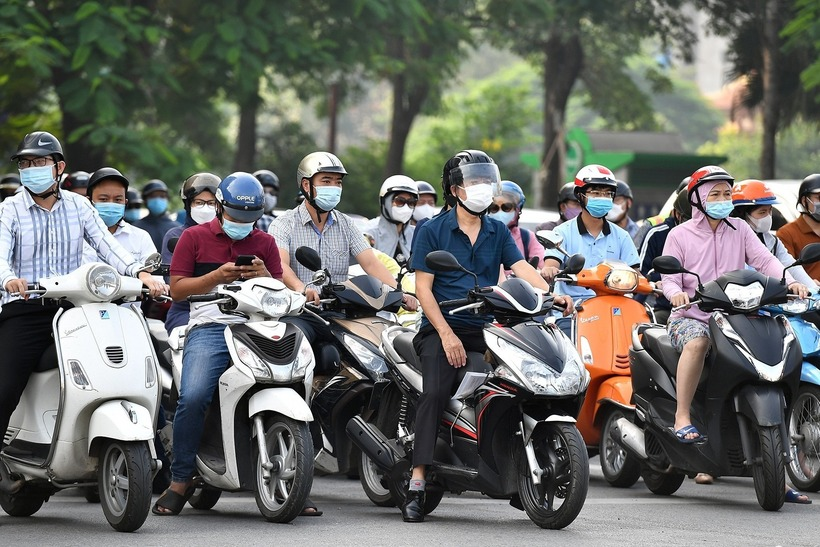
Hanoi needs a gradual approach toward a complete ban on gasoline motorbikes. Photo: The Hanoi Times
Vice Chairman of the National Assembly Vu Hong Thanh made the remark at the National Assembly Standing Committee’s meeting on August 11.
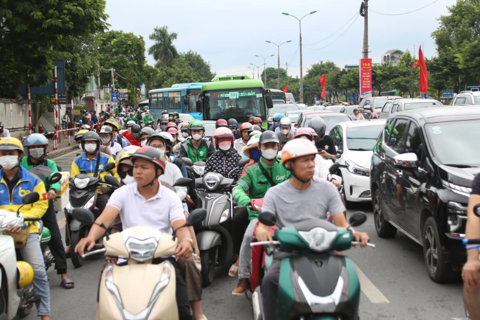
Thanh noted that in recent days, residents have shown particular concern about the plan to phase out and ban gasoline-powered motorbikes within Hanoi’s Ring Road No. 1. Under the plan, such vehicles will be prohibited starting mid-June 2026 in this area.
He observed that public communication on the policy has not been sufficiently clear, while widespread discussions on social media have fueled anxiety. Thanh urged the government to step up communication to ensure people fully understand the policy’s objectives and key points.
While supporting the goal of reducing emissions, he stressed the need for a gradual approach toward a complete ban on gasoline motorbikes. He called on the Hanoi People’s Committee to prepare comprehensive measures covering production, registration, inspection, and vehicle replacement.
“There must be practical solutions to balance environmental priorities with the interests of gasoline vehicle manufacturers and the public. Some residents have only recently purchased gasoline motorbikes, and under this policy, they will have less than a year to use them,” he said.
Meanwhile, Vice Chairman of the National Assembly Tran Quang Phuong added that although the policy currently applies only to Hanoi, its nationwide implications should be assessed. He emphasized that any restriction or ban must be accompanied by supportive measures to help people adapt during the transition.
Vice Chairman of the Hanoi People’s Committee Duong Duc Tuan stated that phasing out fuel-powered vehicles is an inevitable trend, requiring participation from businesses and citizens alongside the government.
“The city will encourage manufacturers to provide green vehicles with favorable pricing and operating costs,” said Tuan, adding it has also proposed continued exemption or reduction of registration and licensing fees for electric vehicles to encourage adoption.
For direct financial assistance, the Hanoi Department of Construction has proposed subsidies for residents in low-emission zones who replace gasoline or diesel motorbikes (registered before the resolution takes effect) with green vehicles valued at VND15 million (US$590) or more. The proposed support levels are VND3 million ($118) for most households, VND4 million ($157) for near-poor households, and VND5 million ($197) for poor households. Each individual would be eligible for support for one vehicle until the end of 2030.
The city also plans to waive 100% of registration and license plate fees for green vehicles from the resolution’s effective date until the end of 2030.
Prime Minister’s Directive No. 20, issued on July 12, outlines urgent tasks for Hanoi, requiring the city to ensure that by July 1, 2026, no fossil fuel-powered motorbikes remain in circulation within Ring Road No. 1.
From January 1, 2028, in addition to banning gasoline motorbikes, fossil fuel-powered private cars will be restricted within Ring Roads No. 1 and No. 2. By 2030, these restrictions will extend to all fossil fuel-powered private vehicles within Ring Road No. 3.
Ring Road No. 1 encompasses Tran Khat Chan, Dai Co Viet, De La Thanh, Buoi, Cau Giay, Vo Chi Cong, Nghi Tam, Yen Phu, and Tran Quang Khai streets, covering a total circumference of about 25 km and an area of roughly 31 km², including the 5.2 km² West Lake.
|
To implement the ban on gasoline-powered motorbikes within Ring Road No. 1 starting July 1, 2026, Hanoi aims to ensure that by the end of 2026, at least 10% of existing parking spaces are equipped with charging stations. For new projects, the target is 30%. The city also plans to prioritize installing chargers on sidewalks and encourage investment in hydrogen and other clean-fuel charging facilities. Hanoi Parking Facility Management Company has identified 40 potential sites for EV charging stations and proposed four locations that meet the necessary conditions and space requirements to integrate parking with electric vehicle charging. The four proposed sites are:
|