Hanoi weighs giant underground reservoir to tackle flooding
The reservoir is expected to have a capacity of around 125 million cubic meters and is proposed for construction during the 2036–2045 period.
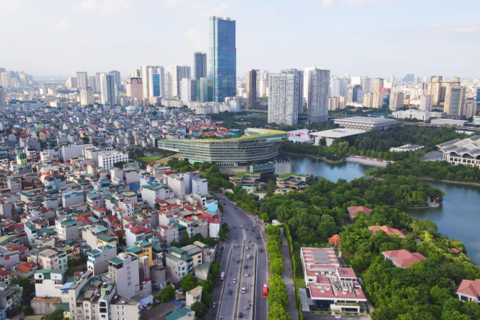
THE HANOI TIMES — Hanoi is considering the construction of a giant underground reservoir with a capacity of about 125 million cubic meters to address urban flooding during heavy rainfall.
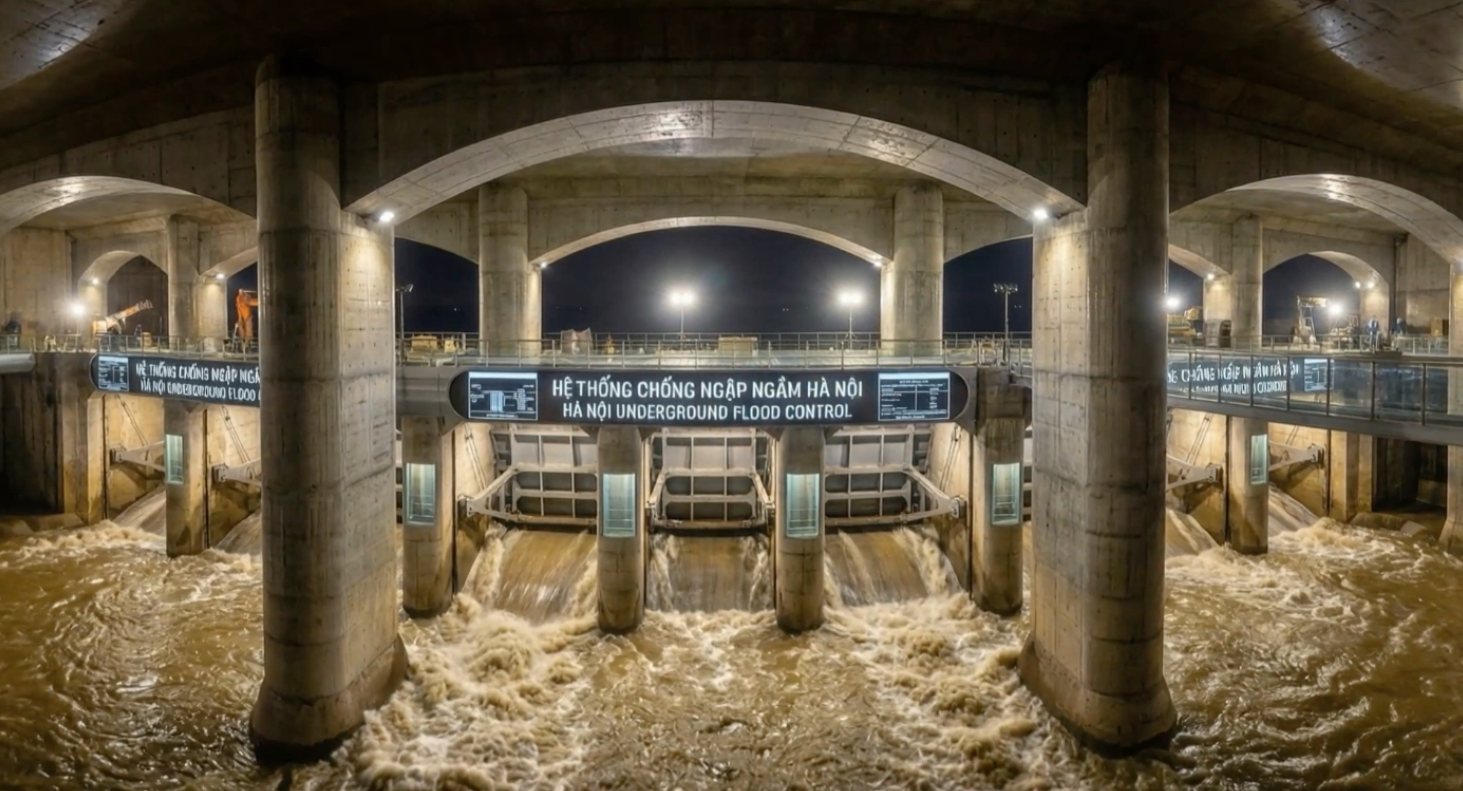
Design of the underground water storage reservoir under the Hanoi master plan.
The proposal is part of the Capital’s master plan with a 100-year vision. The updated plan is designed to tackle long-standing shortcomings in technical infrastructure. These include environmental pollution, wastewater and solid waste management, traffic congestion, gaps in urban order and civility and frequent street flooding during heavy rain.
To deal with flooding, the city is oriented toward developing underground infrastructure with underground transport systems aligned with ring roads and radial corridors. This approach would be combined with groundwater collection systems, underground flood-control reservoirs and pumping stations.
As part of urban restructuring, Hanoi is promoting underground infrastructure development through investment in underground public facilities, underground parking and especially underground transport integrated with large-scale underground water storage.
The plan proposes that more than 40% of inner-city urban construction land be undergrounded to fundamentally resolve flooding.
“Notably, the plan calls for research into building a giant underground system to store rainwater in combination with transport infrastructure to comprehensively address flooding,” the planning document states.
The reservoir is expected to have a capacity of around 125 million cubic meters and is proposed for construction during the 2036–2045 period. The plan also suggests additional regulation lakes for water storage and drainage in low-lying areas that are frequently flooded, along with afforestation and the excavation of large reservoirs for water reserves.
The city also plans to build large-capacity pumping stations. In emergency situations or in low-lying areas that are frequently inundated, these high-capacity pumps could be used to proactively drain floodwaters.
Hanoi has been considering underground rainwater storage since 2018. Hanoi Drainage Company proposed underground tunnels to regulate rainwater at three long-standing flood hotspots including Duong Thanh Street, the Phan Boi Chau–Ly Thuong Kiet intersection in Hoan Kiem District and Nguyen Khuyen Street.
So far, only the underground reservoir on Nguyen Khuyen Street has been built and put into operation since late 2021.
Located beneath the yard of Ly Thuong Kiet Secondary School, the reinforced concrete structure is 34 meters long, 9 meters wide and 6.6 meters deep with a capacity of 2,000 cubic meters. The base and wall thickness is 50 centimeters and the roof is 30 centimeters thick with a reinforced concrete column in the center to support the ceiling. Compared with the proposed giant reservoir capacity of about 125 million cubic meters in the master plan, the new structure would be roughly 62,500 times larger than the Nguyen Khuyen facility.
Hanoi’s rainy season typically lasts from May to October while the dry season runs from November to April of the following year. Rainfall during the rainy season accounts for about 80% to 85% of the annual total. The heaviest rainfall usually occurs in July, August and September with monthly totals of around 200 to 300 millimeters.
According to statistics from the Hanoi Department of Agriculture and Environment, total rainfall in 2020 ranged from more than 1,444 to 1,863 millimeters, which was 25 to 241 millimeters higher than the multi-year average. In 2021, with 15 rainfall events, total rainfall reached 1,953 to 2,304 millimeters, exceeding the multi-year average by 219 to 695 millimeters.
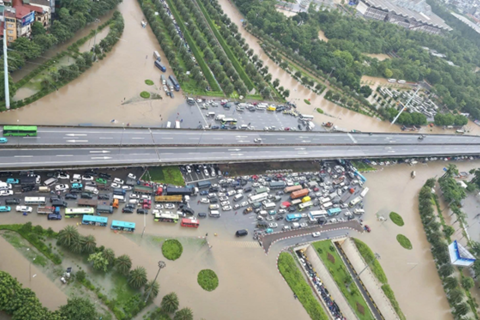
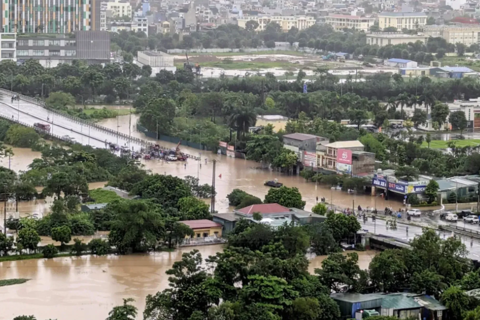
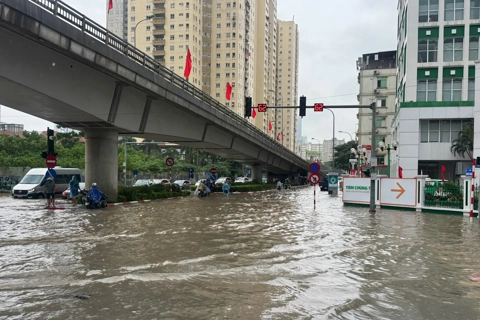
In 2024, Hanoi experienced seven episodes of moderate to very heavy rain and thunderstorms with total annual rainfall ranging from 1,945 to 2,733 millimeters, which was 300 to 1,124 millimeters above the multi-year average. While full data for 2025 are not yet available, from August to October, the city recorded multiple heavy rain events that exceeded the drainage system’s design capacity, leaving hundreds of streets and several suburban areas under prolonged flooding.
In response, the municipal Department of Construction has advised the municipal People’s Committee to issue 10 decisions authorizing emergency construction projects with a total estimated investment of nearly VND5.6 trillion (US$224 million).
The city has also directed that resources be prioritized and investment procedures streamlined to ensure the main components of all 10 projects are largely completed before the 2026 rainy and storm season.