Hanoi’s planning expected to revive culturally rich millennial capital
The goal is to make Hanoi a city of "culture, civilization, and modernity", where the cultural essence of both the nation and the world converge.
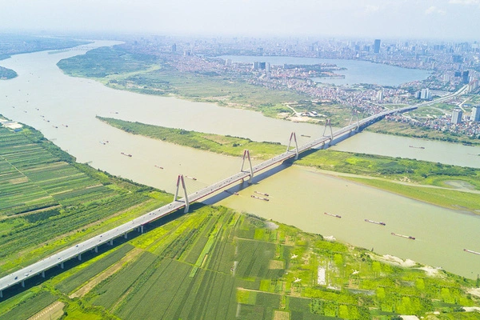
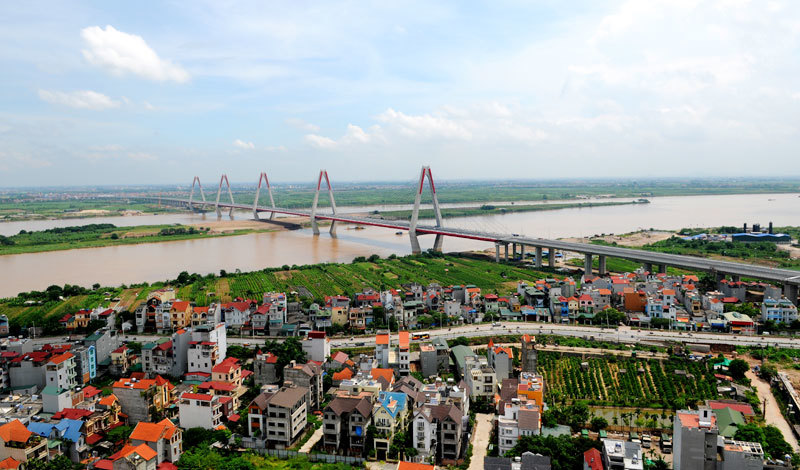
The city’s urban planning should be able to revive a culturally rich millennial Hanoi, closely associated with its rivers, especially the Red River, with its vibrant trading scenes along the banks and on the boats.
“From there, it sets out the requirement for renovation, rectification, and restoration of the rivers to their former functions, such as the provision of the water environment, drainage, flood prevention, and the promotion of eco-agriculture combined with tourism, recreation, and entertainment activities.”
| Overview of the meeting. Photos: MK |
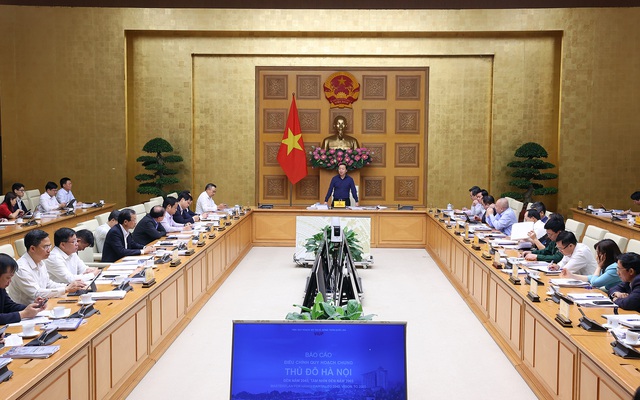
Deputy Prime Minister Tran Hong Ha said this at a Government meeting on April 9 to discuss the adjustment of Hanoi’s overall planning until 2030 held on April 9.
Ha emphasized that the master plan for Hanoi's development needs to be synchronized with the overall socio-economic development plan of the city up to 2020, with a vision towards 2030.
“This synchronization is crucial for effectively addressing the interrelation with specialized planning regarding land, transportation, greenery, agriculture, irrigation, culture, education, and other aspects, ensuring consistency in implementation without constraining development thinking,” Ha said.
Regarding the planning timeframe, Ha suggested that Hanoi should draw upon international experiences and practical considerations, accurately determine the planning timeframe, assess the extent to which the vision can be realized, and carefully consider and calculate every aspect.
Addressing issues such as traffic congestion, flooding, environmental pollution, overloaded cultural and social infrastructure, insufficient greenery, and water surfaces, Ha urged the Hanoi general plan to resolve these issues in the coming years, as failing to do so would hinder further advancement.
Regarding urban renovation, Hanoi needs to reorganize and plan, particularly in the central areas, to rectify the situation where administrative offices are mixed in with residential, commercial, and service areas, while also preserving the ancient streets, Ha said.
| Deputy Prime Minister Tran Hong Ha. |
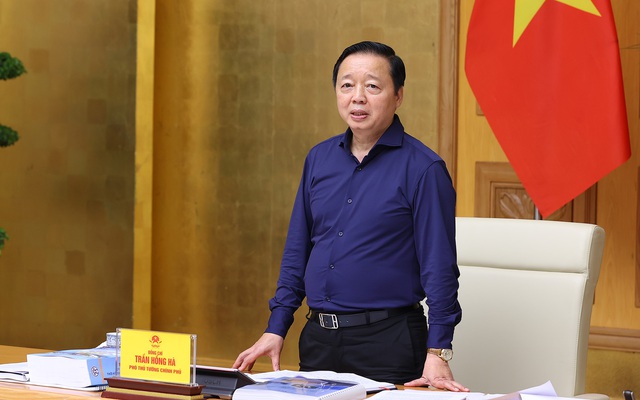
Given the vast rural areas, the Deputy Prime Minister believes that the planning should establish connections between rural and urban areas. Rural areas should form an ecological belt around the city, making it cleaner and greener and serving as reserves for development.
Deputy Prime Minister also emphasizes that the general plan for Hanoi is part of the planning for the Red River Delta region, serving as a starting point, connection, experience, and dissemination of the cultural space of the Red River, along with other localities in the region, as a narrative of cultural flow, history, heritage, identity, and documentation.
At the meeting, Deputy Chairman of the Hanoi People's Committee, Duong Duc Tuan, outlined Hanoi's development objectives and vision until 2030. The goal is to make Hanoi a city of "culture, civilization, and modernity," where the cultural essence of both the nation and the world converge.
The city aims to become a leading center for research, innovation, application, and technology transfer, driving the development of the Red River Delta region and the northern dynamic area, Tuan said.
“Hanoi is envisioned as a major financial and economic center, playing a key role in leading the national economy with regional influence. It adopts a model of sustainable development, circular economy, digital economy, and sharing economy,” said Tuan.
Moreover, Hanoi is set to be a prominent hub for high-quality education and healthcare services, with internationally recognized specialties. It will become a green, smart, modern urban area with eco-friendly rural areas, promoting a civilized and peaceful cityscape that is highly attractive to residents and visitors alike.
Hanoi aims to be a destination worth visiting, living, and contributing to, deeply integrated into the international community, highly competitive regionally and globally, and on par with the level of development of capital cities in developed countries in the region.
| Red River remains a key part of Hanoi's 2030 planning. Photo: Thanh Hai/The Hanoi Times |
The draft plan sets targets for 2030 with an estimated population of around 10.5 million and an average annual GRDP growth rate of 8.5-9.5%. The per capita GRDP is projected to reach $13,500-$14,000. The digital economy is expected to account for 40% of the GRDP. The Human Development Index (HDI) is targeted to be between 0.86-0.90. The average green area per capita is planned to be 10-12 m², while the urbanization rate is projected to be 65-70%.
Looking ahead to 2050, the permanent population is estimated to be between 13-13.5 million, with a per capita GRDP of approximately $45,000-$46,000. The urbanization rate is expected to reach 80-85% by 2050.
Key breakthroughs
Capital planning outlines several key tasks and breakthroughs in development. Specifically, regarding environmental protection, it aims to tackle pollution in urban rivers, implement comprehensive measures to handle urban environmental pollution, including air pollution, and solve localized flooding and inundation issues. Additionally, it emphasizes waste classification, collection, and transportation towards developing a circular economy, as well as expanding green corridors and increasing green spaces in urban areas.
In terms of transportation and urban-rural development, Hanoi will focus on developing public transportation infrastructure, addressing traffic congestion to a large extent, renovating old apartment buildings, and preserving and revitalizing ancient town areas to leverage their cultural and historical values for tourism development. It will also make use of underground spaces, accelerate project implementation, build rural areas according to the urban agriculture village model, create "streets within villages" preserve cultural spaces in rural areas with a distinctive Northern Delta cultural identity, and harness the potential of the Red River.
The plan emphasizes restructuring the economy with a focus on innovation-driven growth, prioritizing the development of semiconductor and artificial intelligence industries, logistics services, and distribution systems. It also aims to modernize the financial and banking services sector, and urban economic development by leveraging high spaces, cultural and creative spaces, underground spaces, digital spaces, and public spaces.
In terms of social aspects, the plan concentrates on addressing the shortage of schools, ensuring convenient access to education that is suitable for all ages and meets international standards, training globally competent citizens, developing advanced multi-disciplinary and specialized hospitals, promoting cultural industries and creative industries, identifying cultural spaces and heritage for UNESCO recognition, accelerating digital transformation, and applying technology in heritage management, conservation, and enhancement.
Key development breakthroughs focus on institutional and governance reforms, modern and interconnected infrastructure, high-quality human resources, scientific and technological innovation, urban environment, and landscape planning.
The planning for Hanoi's development identifies spatial development structures, including 5 development spaces, 5 economic corridors and belts, 5 dynamic axes, 5 economic and social zones, and 5 urban areas. Alongside Ho Chi Minh City, Hanoi plays a pivotal role as the growth engine of the nation, serving as a crucial node in the Red River Delta dynamic triangle (Hanoi - Hai Phong - Quang Ninh) and the Northern region's development quadrilateral (Hanoi - Hai Phong - Quang Ninh - Thanh Hoa). To effectively implement the plan, 7 core solution groups are proposed: mobilization and use of resources; development of human resources, environmental protection, science, technology, and innovation, linking mechanisms and policies for regional development, urban and rural development management and control, and plan implementation and monitoring. |