Increase community involvement in heritage conservation
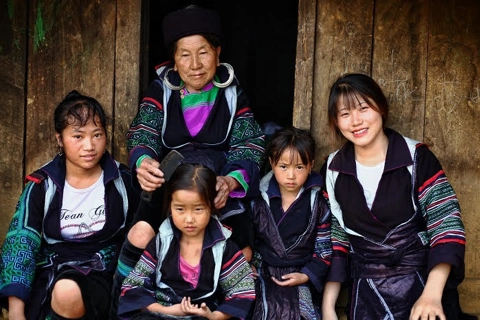
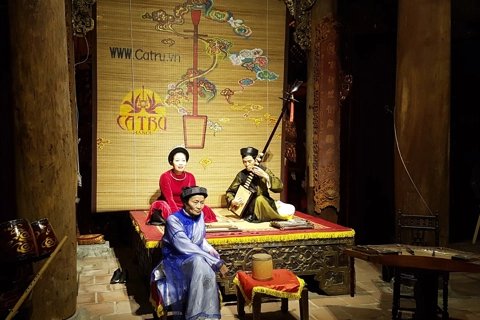
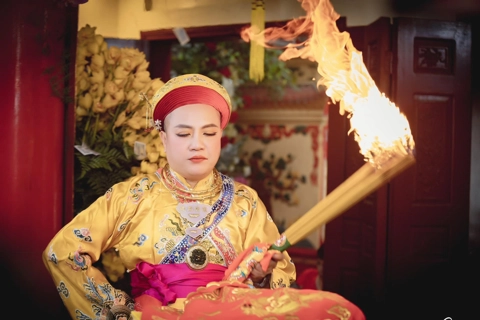
The community - the subject of heritage - must be a part of the process of practicing and teaching the intangible cultural heritage and, at the same time, benefit from it.
The role of the community needs to be further emphasized in protecting intangible cultural heritage and bringing it out of the state of emergency.
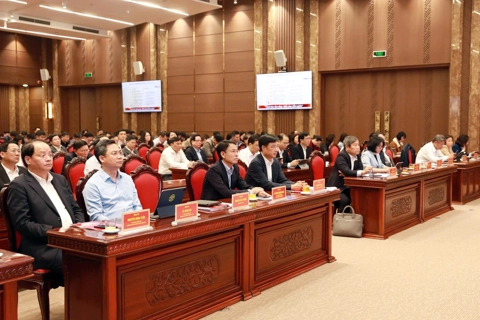
This is the opinion shared by many experts at the conference "20 Years of Protecting Intangible Cultural Heritage in Vietnam: From UNESCO to the Community" held at the Hanoi Museum this week.
Do Van Tru, Chairman of the Vietnam Cultural Heritage Association and member of the National Council for Cultural Heritage, said the 2003 UNESCO Convention for the Safeguarding of Intangible Cultural Heritage, which was issued 20 years ago, covers all aspects of intangible cultural heritage, including a particularly important content that affirms the role of the community and promotes the role of community cooperation in protecting intangible cultural heritage.
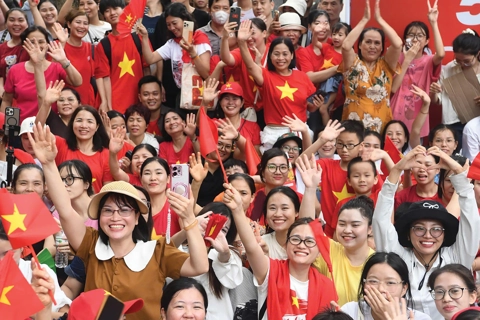
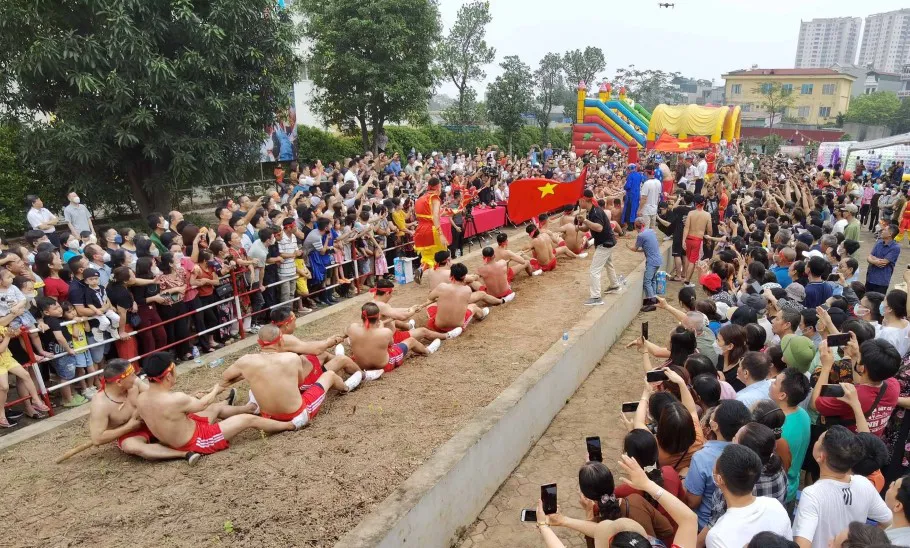
| Sitting tug-of-war game at Tran Vu Temple Festival, Long Bien District, Hanoi. Photo: The Hanoi Times |
The Convention provides that communities, particularly indigenous communities, groups, and individuals, play an important role in the production, protection, maintenance and recreation of intangible cultural heritage, contributing to the enrichment of cultural diversity and human creativity.
"In addition, the international community, together with the States Parties to this Convention, should contribute to protecting such heritage in a spirit of cooperation and mutual assistance. The Convention recognizes the invaluable role of intangible cultural heritage as a factor in bringing people closer together and ensuring exchange and understanding among them," Tru said.
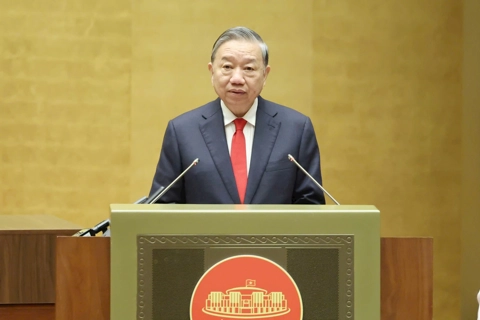
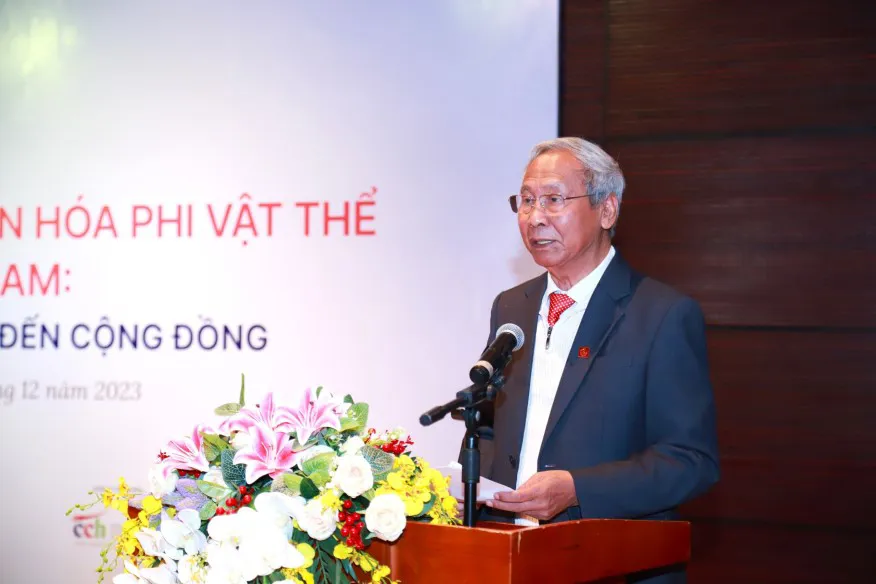
| Chairman of the Vietnam Cultural Heritage Association Do Van Tru delivers a speech at the conference. Photo: Dinh Trung/The Hanoi Times |
Sharing the same opinion, Dr. Le Thi Minh Ly, Vice President of the Vietnam Cultural Heritage Association, said that the 2003 Convention was born more than 30 years after the 1972 Convention (on the Protection of World Cultural and Natural Heritage), but its influence is expanding very fast and profoundly because this Convention focuses on "living heritage" and addresses issues related to community and respect for people with cultural themes.
Ly believed that the promotion of the role of the community needs to be legislated, for example, the Decree on Awarding the Title of People's Artist and Meritorious Artist in the Field of Intangible Cultural Heritage needs additional provisions. The clause takes into account cases of young artists with outstanding talents.
"This group needs to be encouraged because they can create, teach, and actively contribute to sustainable development," Ly said.
She said there should be additional provisions on the cancellation or revocation of titles in cases where individuals violate other laws and the Cultural Heritage Law. At the same time, additional forms of reward will be added for people with great achievements in protecting intangible cultural heritage, such as sponsors, researchers, designers, and creators.
According to Associate Professor and PhD Bui Hoai Son, a Standing Member of the Committee on Culture and Education of the National Assembly, the community must be involved in the discussion and planning of activities to this end and in organizing and evaluating their effectiveness. They should benefit from activities to preserve and promote the value of intangible cultural heritage.
Offering concrete solutions, Son suggested attaching traditional cultural activities to relics, where local people must actively participate.
"Traditional festivals should be preserved without any advocacy or support from the government, as there is not too much government intervention in organizing this kind of festival," Son said as an example.
Instead of intervening in people's cultural activities, local authorities must create a policy framework to promote intangible cultural heritage values.
"In the initial stage, the government needs to have policies that encourage people to preserve their heritage while guiding people to participate in the process," Son said.