Industrial property continues dominating Vietnam’s 2020 real estate sector
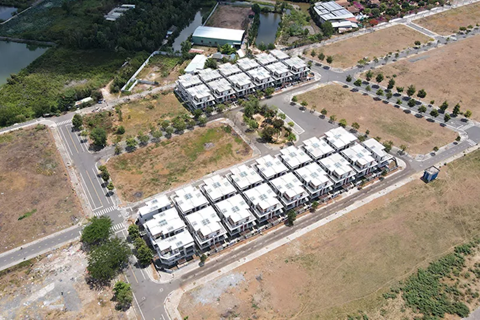
Industrial property continues dominating the market thanks to the fast growing manufacturing industry.
Foreign investors have rated Vietnam one of next manufacturing hubs in Southeast Asia over unprecedented changes in the global landscape caused by the Covid-19 pandemic.
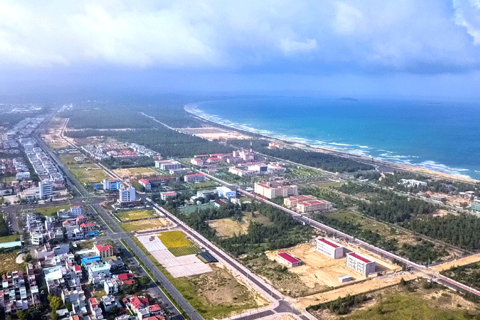
| Industrial property remains the leading segment in Vietnam's 2020 real estate market |
For that reason, the fast development of manufacturing has fueled industrial property market thanks to increasing foreign direct investment (FDI) that results from strong espiration for safe shelter.
Indeed, industrial property has appeared to be the leading market segment in Vietnam in 2020 with the support of continued FDI since the start of this year.
In the first three quarters 2020, manufacturing topped Vietnam's sectors in drawing FDI, accounting for 46.47% of the country’s total FDI commitments in the period, according to the Ministry of Planning and Investment.
Industrial property continues showing its dominance with rising market attention, proving it the most attractive sector in the market with demand growing strong as companies are still looking to relocate from China amidst political uncertainty. For the past few years, significant interest from foreign investors had sent land value and rental rate increasing.
In a latest move, the shift of manufacturing bases from China due to the Covid-19 pandemic has fueled the Vietnamese market, bringing both opportunities and difficulties that require the government of Vietnam to address and deal with in an effective way.
Accordingly, Vietnam has emerged as one of the top locations in Southeast Asia for foreign investors, especially those from the US, looking to relocate or supplement their China operations, according to global real estate services firm JLL.
As manufacturing is the sector with the most significant investment in the past 10 years, it will continue to dominate the market in the next few years. In the coming time,the market expects to see a growth in medium to long-term investors in the industrial sectors, backed by government support, free trade agreements and movement from China.
In addition, logistics is expected to be the future of the industrial market. In recent years, increasing demand from both traditional retails and continuous growth from e-commerce sectors has put great pressure on existing supply chains, facilities and warehouses. JLL predicts that the growth of retail will contribute to investment activities for the current shortfalls of the industry.
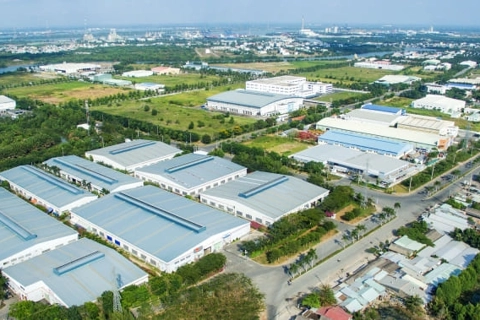
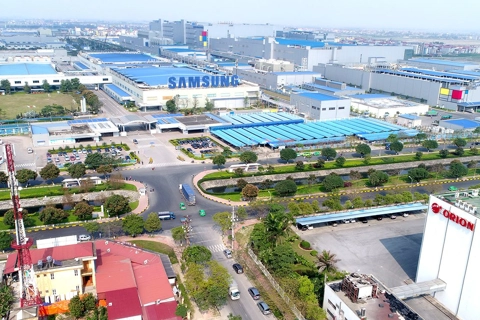
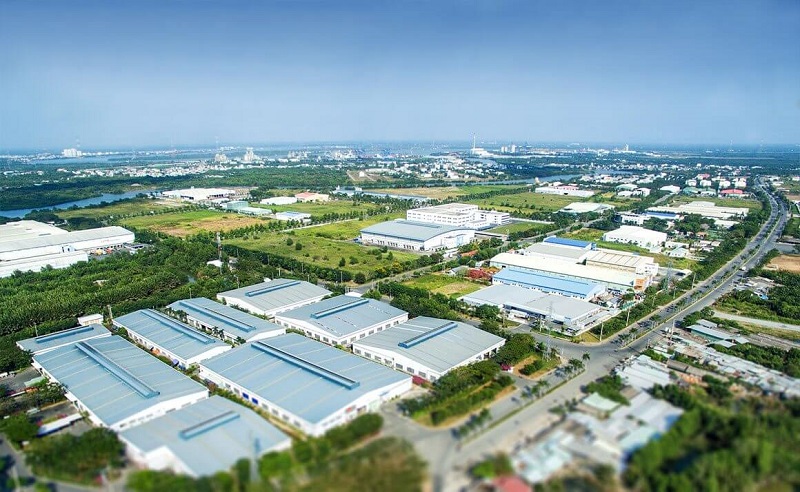
| Industrial property fueled by significant growth of manufacturing industry. Photo: Citypassguide |

Given rising demand for safe shelter amid the global health crisis, international real estate service providers have pointed out some key trends of Vietnam’s real estate market in 2020 with an aim to help investors have an overview of the sector that normally ranks high in the list of industries receiving foreign capital inflows.
JLL has named several major trends for the market in 2020 as a way to help foreign investors navigate their money flows in Vietnam.
Offices set in more connectivity
Office space remains a hot commodity as rents soar past the recent peak to reach a decade high. Rental rates in Grades A & B increase was supported by strong demand and higher rental rates in newer office developments. Tenants are struggling to find bigger space as in the current market, only one Grade A building and ten Grade B buildings can provide a contiguous space larger than 1,000 square meter (sq.m).
The demand for large office space will accelerate in the next few years as co-working operators grow in numbers and companies look to upgrade their office to retain talents and expand business. Larger and more flexible space means better chance of collaboration plus energy and space utilization.
Overall, macroeconomics like urbanization, growth in smart phone and Internet usage and the portion of aging population will fuel demand for alternative investment choices. Apart from the aforementioned trends, alternative real estate such as senior and student housing, data center and cloud kitchen will be popular to investors in the next few years.
Retail market: prospect ahead
Given rising role in the market, both retailers and mall developers are re-inventing themselves with focus on food and beverage (F&B) and experiential retailers, providing better customer services and applying technology, consumer analytics to enhance their popularity and increase foot traffic.
With increasingly shopping online habit, buying decisions often rest on how quickly and efficiently retailers can get goods out of the warehouse and into their hands. Yet it comes at a financial cost; pressure from e-commerce competitors only adds to the squeeze on retailer margins.
As consumer expectations around delivery increase, supply chain and logistics management will be crucial differentiators for retailers.
However, limited new supply continues as approval process prolongs
According to JLL, about 30,000-35,000 apartments are expected to be launched in Ho Chi Minh City and 40,000-45,000 units in Hanoi in 2020. It should be noted that the number is subject to a great deal of uncertainty given the government’s tight control in granting land use rights and construction licenses.
Strong demand is set to carry on and will boost the price further across all sectors. However, the demand in high-end segment, especially from investors, is likely to slow down in long term as their already-high price level and low rental yield make it a less attractive investment.
Technology-supported sustainability
The green movement got a tremendous boost when ‘fine dust’ and ‘virus’ become the buzzwords. As people rush to buy mask, landlords race to upgrade their buildings to protect workers and enhance profits as investments in indoor air quality and hygiene help to differentiate office buildings from competitors.
Supporting factors
Vietnam is expected to be one of the most favorite destinations for property investors thanks to its export-driven economy and stronger journey of international integration.
Before naming the key trends of Vietnam’s property market in 2020 and in the next five years, a number of factors that make Vietnam a promising investment destination has been listed.
Securing a large number of free trade agreements has set Vietnam up for a partnership with 60 countries worldwide and support Vietnam on its path to become the new global manufacturing hub, the real estate and investment management service provider said.
In addition, the Southeast Asian country will enter the golden age while its employment in manufacturing and services has increased while Generation Y will be the main driver of the economy in the next few years.
Notably, in the fast-changing retail sector, success has never been more dependent on the supply chain.