Japanese firms eye Vietnam’s high-speed railway project
The Japan Bank for International Cooperation (JBIC) said that Japanese investors are keen on Vietnam's infrastructure and transport projects, especially the high-speed railway one.
THE HANOI TIMES ─ JBIC Chairman Maeda Tadashi on June 29 said experienced Japanese companies want to join Vietnam’s high-speed railway project.
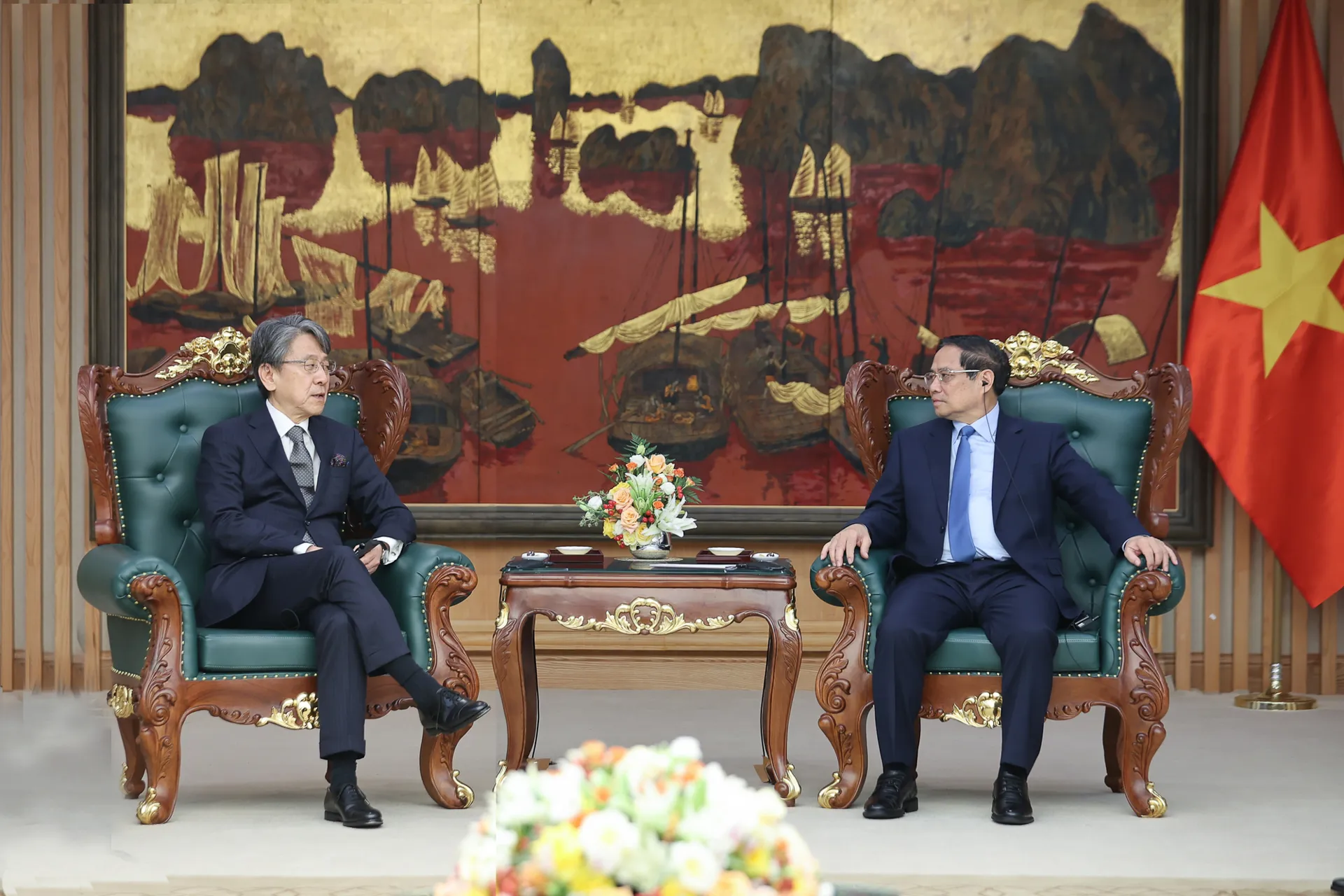
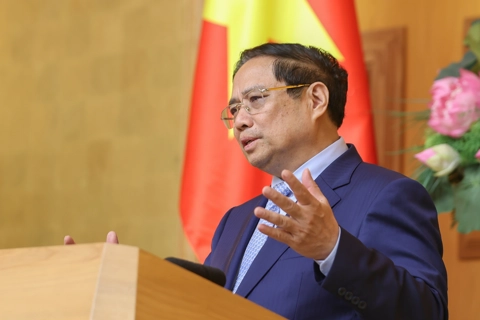
JBIC Chairman Maeda Tadashi (left) and Prime Minister Pham Minh Chinh in Hanoi on June 29. Photo: VGP
In addition, JBIC and Japanese enterprises are willing to partner with Vietnam in infrastructure and urban development projects following the transit-oriented development (TOD) model, Maeda said at a meeting with Prime Minister Pham Minh Chinh in Hanoi.
The Japanese financial institution also plans to provide loans for Japanese companies implementing green transition projects in Vietnam under the Asia Zero Emission Community (AZEC) initiative, he added.
Addressing challenges at the Nghi Son Refinery and Petrochemical Complex, a joint venture between Vietnam, Kuwait, and Japan, Maeda said JBIC is actively working with all parties involved.
He pledged to make every effort to help find the most appropriate solution based on the principle of “harmonized interests and shared risks.”
The JBIC chairman commended Vietnam’s remarkable socio-economic progress and growing international reputation.
He praised recent strategic policy directions issued by the Communist Party of Vietnam, including those promoting the private sector and sustainable energy transition.
Chairman Maeda also spoke highly of the strong and trusting bilateral relationship between Japan and Vietnam, supported by the political will of both countries' top leaders.
For his part, Prime Minister Pham Minh Chinh appreciated JBIC for supporting key Japanese-invested infrastructure, energy and green transition projects in Vietnam.
He specifically highlighted JBIC’s more than US$800 million loan for the Block B – O Mon gas project, which helped restart the project after years of delay.
The prime minister called on JBIC to promptly finance a list of 15 green transition projects worth over $20 billion in Vietnam, which was unveiled during the official visit of Japanese Prime Minister Shigeru Ishiba in April 2025.
Chinh also thanked JBIC for assisting with the Nghi Son refinery’s restructuring, as the Vietnamese investor has faced losses while others profited.
He noted that the joint venture had taken significant steps to address the imbalance. These included restructuring governance, input materials, electricity sources, and cutting costs.
"JBIC, as the project’s largest lender, and Chairman Maeda personally, should remain engaged and proactive in working with stakeholders on financial restructuring and improved operational efficiency, and prepare for the project’s second phase," he added.
According to Prime Minister Chinh, Vietnam is on its way to achieving administrative and institutional reforms to streamline local governance and remove regulatory bottlenecks.
The government is boosting private sector development and targeting 8% economic growth this year and double-digit growth ahead while pursuing three strategic breakthroughs to achieve its twin 2030 and 2045 centennial goals.
Vietnam is accelerating the development of major infrastructure projects, including expressways, seaports, airports, and especially urban railways, high-speed rail, and nuclear power.
Thus, the Vietnamese government leader expected JBIC and Japanese companies to support these projects with funding, technology, and human resource training.
Prime Minister Chinh expressed confidence that each meeting with JBIC would further strengthen Vietnam and Japan’s bilateral relations through sincerity, trust, and mutual benefit.
“Since being upgraded nearly two years ago, the Vietnam-Japan Comprehensive Strategic Partnership has developed strongly and is now at its best,” he said.