Lack of legal framework on condotels has chilling effect on developers, buyers
It is also unclear as to how the construction of these kind of property was authorized, given the lack of legal framework governing it.
A lack of a legal framework for development, sale, and issuance of residential titles continues to have a chilling effect on both developers and buyers of condotels, local and foreign experts have said.
Indeed, developers are waiting for official regulations in order to refine their marketing and business operation plans while buyers are also waiting to have clearer guidance on how and when to proceed with making a purchase in the condotel market, according to Kevin Hawkins, Co-executive partner Zico Law Vietnam.
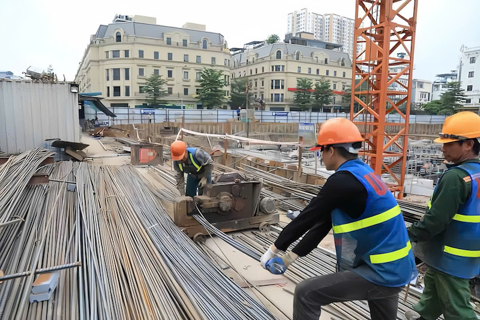
| A condotel project in coastal area |
.jpg)
In April, Prime Minister Nguyen Xuan Phuc issued Directive 11 requiring, among other things, that the Ministry of Construction (MOC), the Ministry of Natural Resources and Environment, and the Ministry of Culture, Sports and Tourism develop regulations and standards to improve the legal framework for condotel sales.
The MOC has been waiting for other ministries to complete their tasks before issuing such regulations publicly.
“We can only hope that the announcement from the MOC regarding the progress of its scope will put pressure on the other ministries to complete their drafting soon so that condotel standards and regulations can be issued as soon as possible within this year,” Kevin Hawkins told the Vietnam Investment Review.
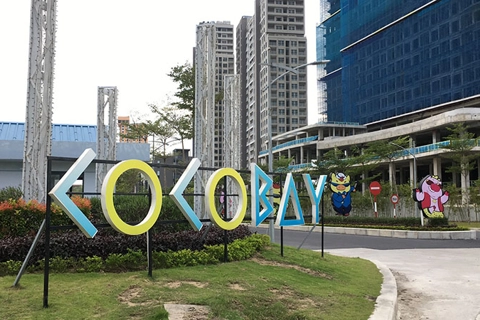
Regarding the regulatory framework for this kind of property, local experts have discussed the issues for the operations of condotel after the investor of giant project Cocobay announced that they are unable to pay profits for secondary investors.
Officials and experts from the MOC, Vietnam National Real Estate Association (VNREA), and Vietnam Chamber of Commerce and Industry (VCCI) named two challenges for this segment at a conference held earlier this month.
Firstly, secondary investors are usually trapped with unreasonably high profits promised by investors, featuring an unreal picture of the condotel segment, local media reported.
Secondly, no regulations on the investment and operations of condotel are in place so far. It means that the government has not legalized the operations of this segment. Therefore, there remain problems in licensing the ownership certificate, duration of ownership, and land use policies.
It means that unclear regulations on the condotel segment have troubled the operations of this kind and hindered clients from buying it, according to local experts.
For that reason, authorized agencies will soon complete documents to create legal framework for condotels, Deputy Minister of Construction Le Quang Hung said at a governmental meeting in early December.
According to Hung, condotels appeared in 2015 and were at the center of attention in 2016 and 2017 and fell into regression in 2018 and 2019.
Statistics by the MOC showed that 148 condotel projects have been launched along coastal areas, providing approximately 29,000 apartments, located mainly in the central cities and provinces of Danang, Khanh Hoa, and Binh Thuan and the southern province of Ba Ria-Vung Tau and Phu Quoc Island.
To tackle the problems, local officials and experts have urged the release of regulations for the condotel segment.
The Vietnam Investment Review quoted Minister of Construction Pham Hong Ha as saying that local authorities cannot manage thousands of condotels without a legal framework, adding that the MOC has worked with the Ministry of Natural Resources and Environment to review regulations on land use in order to consider granting ownership for this type of property, since it has not been included in any regulations so far.
Meanwhile, lawyer Truong Anh Tu said the concept of a condotel must be reviewed. Condotels are hotel rooms built under the design of a condominium unit and used for tourism leasing.
He highlighted that when this concept is fixed and recognized by policymakers and developers, its legal framework then can be built accordingly. There will not be any risk for the society, and the rights of buyers will also be protected when they put their condotels into business.