M&A in Vietnam’s hospitality industry lures foreign investors post-Covid
M&A in hotels and resorts is expected to thrive as the social distancing orders have left devastating affects on low-end hotels and budget accommodations.
Low or no occupancy at all are leaving many hospitality businesses in Vietnam on the verge of bankruptcy. However, this situation provides significant merger and acquisition (M&A) opportunities.
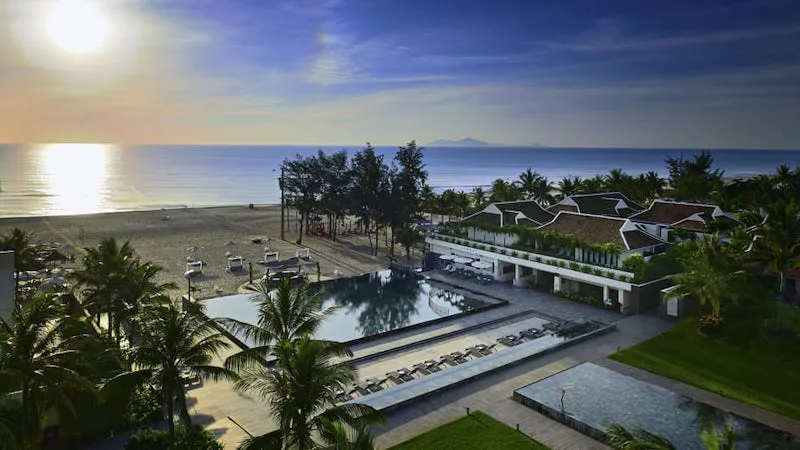
| Pullman Danang Beach Resort. Photo: CNN |
More affordable hospitality real estate than ever
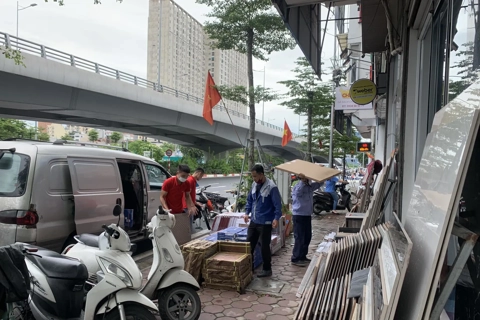
Information about deals on hotels sales and transfer has flooded internet news websites. Low occupancy rate has heavily impacted the hotels' cash flows.
Hanoian broker Nong Van Thai said that before the pandemic, the 10-storey Phu Nhuan Hotel in Tran Duy Hung street was valued at VND35 billion (US$1.5 million) but the price has dropped to only VND32 billion (US$1.37 million).
A 27-room Saigon Palace Hotel on Tran Quoc Hoan street, Cau Giay district was transferred to a new owner at VND800 million (US$34,274), of which VND420 million (US$17,994) is the deposit for the 10-year lease. A series of 10 – 15 room guest houses in Hanoi have been offered at prices of VND80-100 million (US$3,427-US$4,284).
Located near Big C supermarket in Hai Phong city, a three-star hotel is currently listed for sale at VND115 billion (US$6.4 million) while before the pandemic, it was offered at VND180 billion (US$7.7 million).
A budget accommodation facility on Phan Dang Luu street, Ho Chi Minh City, is offered at VND10-20 billion (US$428,433-US$856,867). Local insiders said that the hotels in the area could yield a profit of VND200-300 million (US$8.57-12.86 million) per month before the pandemic outbreak.
Nguyen Hoang Ha, manager of Coffee House Hotel in Dalat, told Dau Tu newspaper that a new shareholder has participated in the hotel’s business management to add more the capital in the context of customer shortages during the social distancing period.
According to Tony Ryan, managing director of M&A global Hotels and Hospitality, JLL Group, investors now prefer operating hotels rather than owning them which is a trend to save costs and minimize risks.
M&A deals of hotels and tourist accommodations will become buoyant in the upcoming time as the majority of large-scale deals were completed in the past time. Local economist Ngo Tri Long commented that the opportunity for hotel investment is there for businesses who are strong financially and sound in business governance.
Phan Xuan Can, chairman of Sohovietnam, a property consulting company, said that M&A deals in hotels and resorts are diverse and in all different segments, especially for four-five-star city hotels near tourist destinations and beaches. Many investors with disposable funds of VND500-600 billion (US$21.4-25.7 million) are aggressively looking for four- to five-star hotels which are much more affordable than the period before Covid-19.
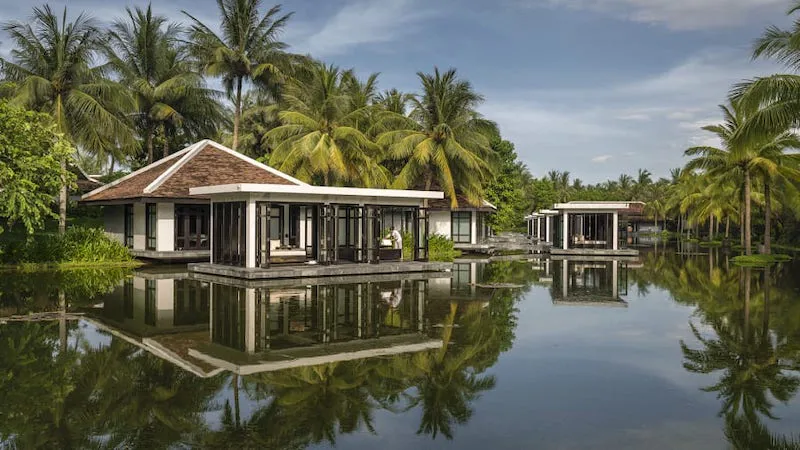
| Four Seasons Resort The Nam Hai, Hoi An, Quang Nam province. Photo: CNN |
Hospitality property to quickly recover
Do Thi Thu Giang, senior valuation manager at Savills Vietnam, told VIR that the tourism and hotel industry Vietnam is able to recover quickly after the outbreak.
Firstly, Vietnam has basically controlled the disease while the tourism industry depends on domestic tourists (82.5% of arrivals in 2019). Secondly, the two largest tourist markets of Vietnam including China and South Korea have also well controlled the disease, Giang emphasized, expected to be some of the first people to travel again.
When the pandemic is put off, hotel and hospitality valuation would be more active, due to investors' request for restructuring the portfolio, Giang said, or requirements of financial institutions to re-value assets, or of buyers and sellers wishing to conduct transactions.
When Covid-19 is under control in Vietnam and around the world, the hotel and resort property market will recover, the scale and quantity of hotel transactions are expected to become vibrant again. In addition, in mid-February, condotel and resort villas were officially recognized and could be granted a property ownership certificate. It will be a leverage to help this product develop in the future, according to Savills.
Short-term difficulties and market fluctuations will help screen out investors, who are capable of real management experience and strong finance to succeed in the hospitality industry as a potential market for both domestic and foreign investors around the world, according to Mauro Gasparotti, director of Savills Hotels Asia-Pacific.
Vietnam’s tourism achieved remarkable growth in 2019 with more than 18 million international visitors, up by 16.2% compared to the previous year.