Master urban planning to lift Hanoi into new era: Expert
Hanoi’s new planning frameworks will serve as a critical foundation for developing policies, action plans, and investment projects that drive economic and social progress.
Urban planning in Hanoi has always been a priority and is recognized as the foundation for progress, especially the latest major plans reflecting a new approach and growth in the next phase.
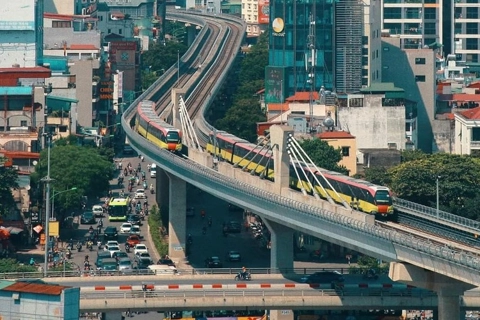
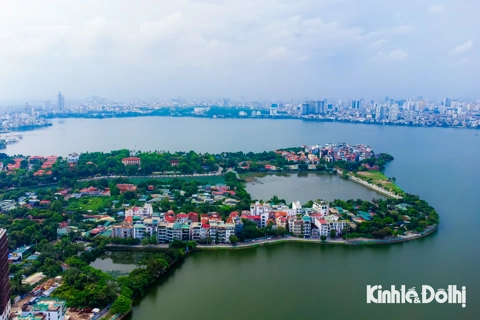
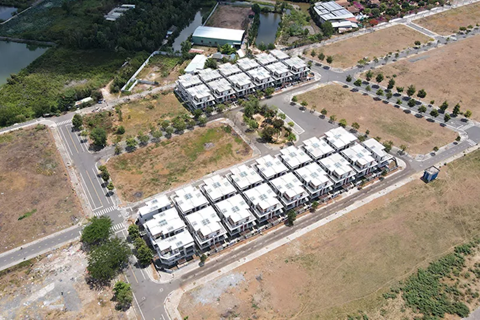
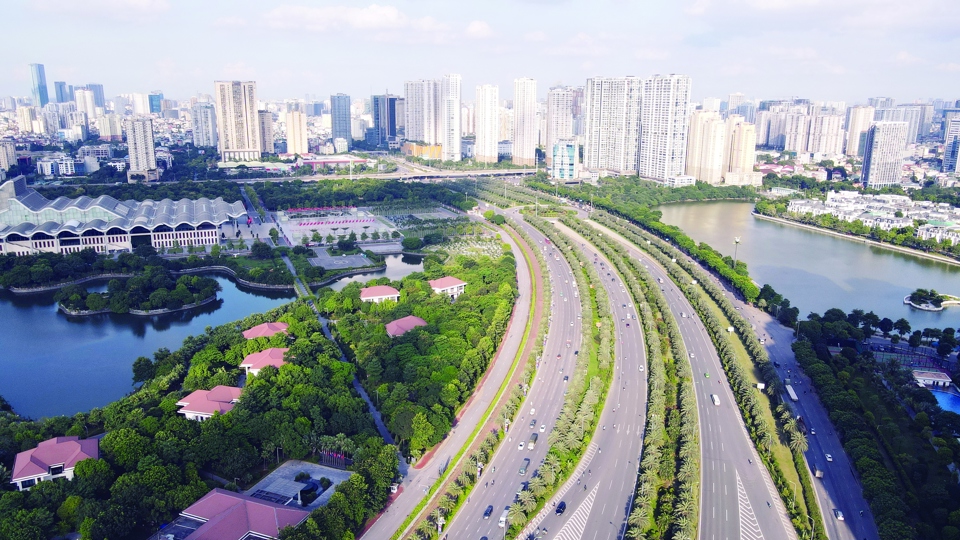
| Hanoi from above. Photos: Pham Hung/The Hanoi Times |
Focusing on three major tasks
Building on the lessons of the past and adapting to new challenges, Hanoi took decisive and flexible steps to realize three key breakthroughs: the amended Capital Law, the Capital Planning for 2021–2030 with a vision to 2050, and the Adjustment of the General Planning for the Capital until 2045 with a vision to 2065.
These strategic plans set the institutional and policy framework for Hanoi’s development, paving the way for a bold transformation as the city steps into a new era.
Since 1954, Hanoi has undergone seven major urban planning revisions, each tailored to Vietnam’s socio-economic development goals. The latest plans preserve the essence of previous ones while incorporating a forward-thinking vision that embraces new opportunities and values. These efforts aim to shape Hanoi into a city that is culturally rich, modern, and sustainable.
With approval from the prime minister, Hanoi’s new planning frameworks will serve as a critical foundation for government agencies to develop policies, action plans, and investment projects that drive economic and social progress. Recognizing the innovative aspects of these plans will be key to ensuring their successful implementation.
Three breakthroughs
The first is the development perspective of the capital, with a high level of consensus on the consciousness to create a fundamental advance in mobilizing comprehensive strength. The plan identifies culture and people as foundational goals, driving forces, and particularly important resources in the overall development perspective. For many years, in Hanoi, culture and people have always been identified as special resources with immense potential.
The Capital Plan identifies five key tasks, including environmental landscape protection, urban and rural development, economic development, cultural-social development, and scientific-technological development with innovation. These five groups of tasks integrate sectors and fields, inherit from previous plans, and incorporate new content from relevant legal documents, especially the Capital Law and Resolution 15/NQ-TW. At the same time, the National Assembly also specified four breakthrough areas: governance institutions, modern and synchronized infrastructure connectivity, high-quality human resource development, and urban environmental landscapes. A key point of focus is the comprehensive, synchronized, unified, and feasible institutional improvement with special mechanisms.
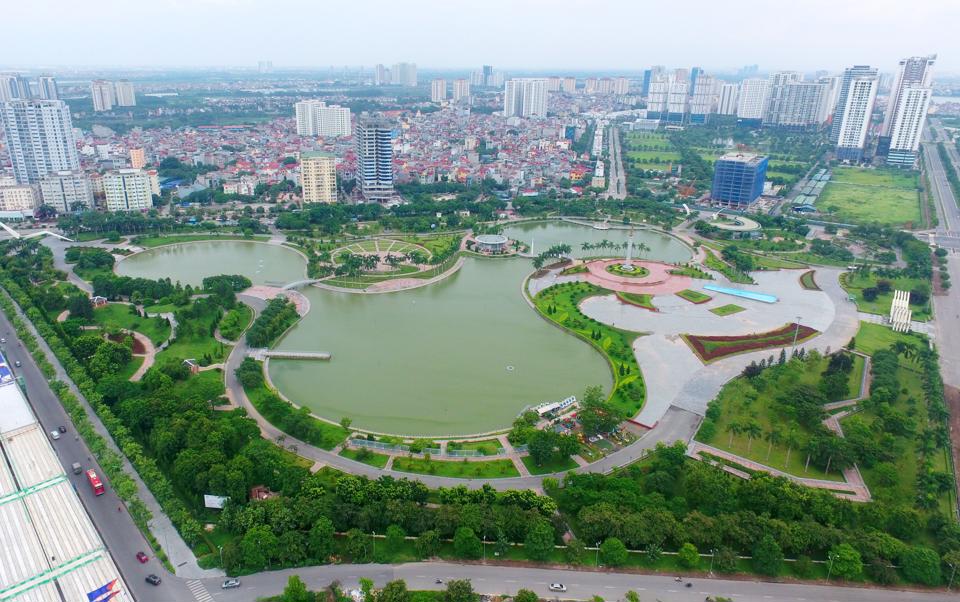
| Hoa Binh Park in Bac Tu Liem District, Hanoi. |
The second breakthrough is the spatial organization perspective. In this planning round, while inheriting the results of the previous orientation implementations, greater emphasis has been placed on the development requirements and the effective, harmonious, and synchronized exploitation of five spaces: public space, aerial space, underground space, cultural-creative space, and digital space.
Regarding urban space, the plan continues to envision the urban cluster model while emphasizing the development of the Red River as a green axis, a central landscape axis, and development oriented towards transit-oriented development. The Red River axis has been a subject of interest and research for several decades.
Additionally, developing the city according to the transit-oriented development model is not just about learning lessons from global experience but also about enhancing the efficiency of the technical infrastructure and the transportation system, particularly the urban railway system, which Hanoi sees as a breakthrough task. However, as Hanoi has thousands of years of historical development with traditional culture and a rich heritage, its implementation requires thorough and synchronized scientific research, closely linked to the unique urban development of each locality and specific area.
Particularly, the planning of underground space exploitation is not only for technical infrastructure but also for the expansion of commercial and service activities.
Notably, a new model for organizing cities under the jurisdiction of the capital poses significant challenges in terms of mindset, vision, and institutional frameworks, requiring a strong focus on multi-sectoral coordination and mobilization of comprehensive social resources.
Moving into 2025, the Capital Plan and the Adjustment of Master Plan for the Capital have been approved. Moreover, the Capital Law 2024 has come into effect, serving as a breakthrough and a driving force for Hanoi to enter a new era.