Metro ridership target rises as Hanoi pushes safer, smarter urban rail operations
As Hanoi accelerates public transport reform, the city’s metro operator is setting higher ridership goals while focusing on safety, digital governance and service quality to support long-term urban mobility growth.
THE HANOI TIMES — Hanoi Metro plans to lift ridership by 11% year-on-year to 23.3 million passengers in 2026, up from a record 21 million in 2025, as public transport now becomes more important to urban residents.
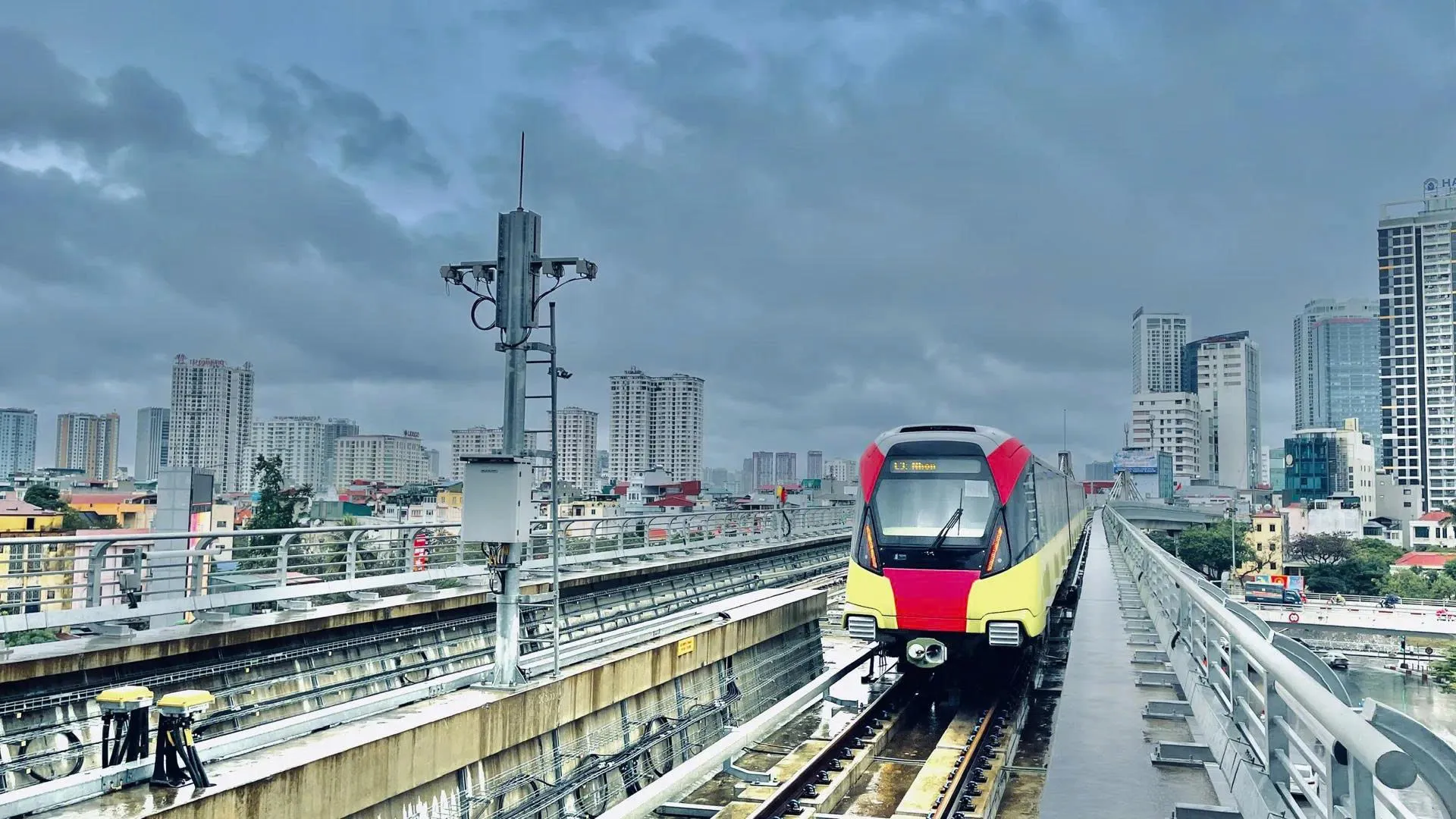
A Hanoi Metro train operates on an elevated section of the Nhon-Hanoi Railway Station route. Photo: Pham Cong/The Hanoi Times
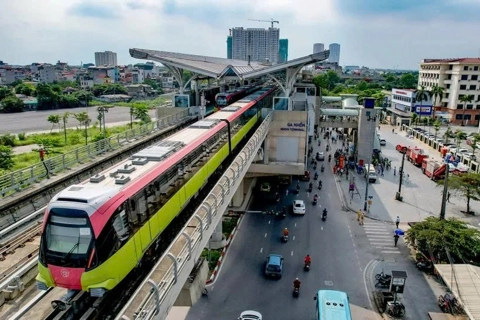
To reach this target, the operator has identified efficient network operations as its top priority, with particular attention on Line 2A Cat Linh-Ha Dong and Line 3.1 Nhon-Hanoi Station.
It is also working to master operation and maintenance technologies to strengthen autonomy, reduce external dependence and ensure stable, long-term performance.
Alongside technical upgrades, Hanoi Metro is restructuring toward a leaner and more effective organizational model closely aligned with digital transformation.
The company will continue to optimize the use of existing infrastructure while preparing organizational, human resource and technical capacity to receive and operate new urban railway lines assigned by the city.
Commending the operator’s 2026 plans, Duong Duc Tuan, Standing Vice Chairman of the Hanoi People’s Committee, urged Hanoi Metro to maintain absolute safety across the entire system.
He also called for a stronger passenger-centered approach, better intermodal connectivity among public transport modes and higher ridership and revenue compared with 2025.
Tuan asked the company to complete its organizational restructuring for the 2026-2030 period, prioritizing train maintenance and repair capacity and ensuring sufficient skilled staff and technical readiness for upcoming lines.
He added that the city administration will support Hanoi Metro in rolling out digital corporate governance and expanding software-based management and operations.
The operator is also encouraged to deepen cooperation with domestic and international partners to research, pilot and apply urban railway industrial products, with the aim of gradually mastering core technologies at home.
Hanoi Metro posted solid operational and financial results in 2025. According to General Director Le Bang An, the system carried nearly 21 million passengers, exceeding the annual plan by 7%.
Ticket revenue surpassed VND143 billion (US$5.4 million), beating the target by 29% and helping cut city budget subsidies by more than VND31 billion ($1.2 million).
Line 2A Cat Linh-Ha Dong route remained the backbone of the network, serving more than 13.7 million passengers and recording strong year-on-year growth.
Revenue from the line reached nearly VND98 billion ($3.7 million), exceeding the plan by 26.6% and rising almost 29% from 2024.
Operations throughout the year maintained absolute safety, with 161,600 train trips completed and a total operating distance of more than 1.75 million kilometers.
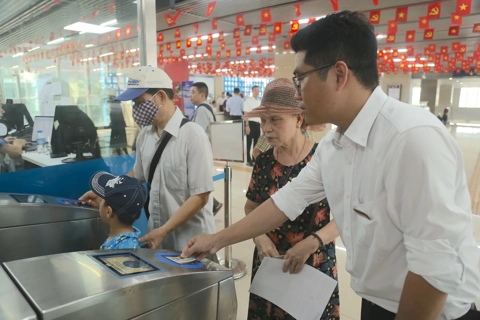
In a key step toward modernization, Hanoi Metro introduced an electronic identification and authentication system with biometric integration on Line 2A from December 5, 2025 and launched pilot operations on Line 3.1 from January 1, 2026.
The two lines are scheduled to operate in an interconnected manner from February 1, 2026, laying a stronger foundation for service quality and passenger experience.