New apartment buildings must have life span: Hanoi Party Chief
The amended Housing Act lacks provisions on the life span of condominiums, which may cause problems for the authorities when it comes to renovating the buildings.
The secretary of the Hanoi Party Committee, Dinh Tien Dung, suggested on May 5 that there should be an expiration date for the ownership of apartments.
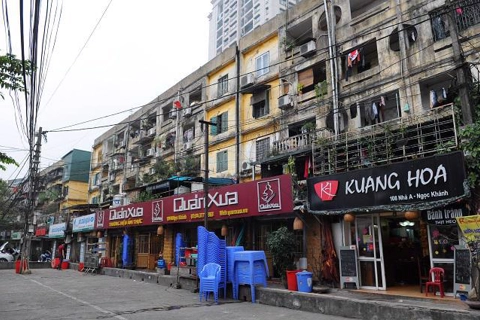
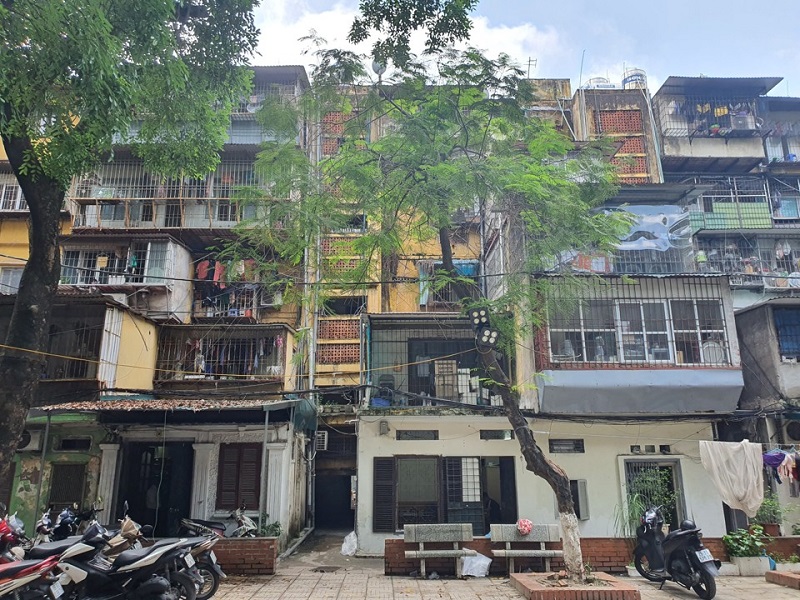
| An old apartment building in Thanh Xuan Bac Ward of Thanh Xuan District. Photo: Thai San/The Hanoi Times |
Commenting on the amended Housing Law, he said the expiration date would make the Government responsible for maintaining and repairing deteriorating apartment buildings in time.
"The Government is responsible for protecting people, and moving them out of dilapidated buildings is for their good," said Dung, who heads Hanoi's delegation to the National Assembly.
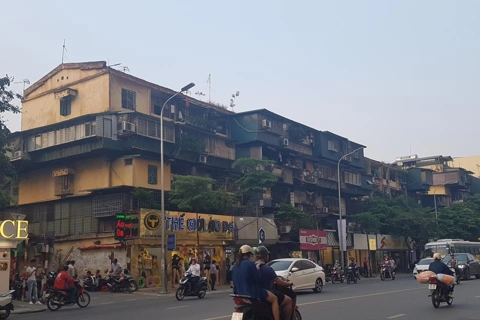
Many people in Hanoi now live in degraded apartment buildings. There is a lot of pressure on the capital to relocate these people so that authorities can renovate the buildings and ensure safety.
Dung's comments were made during a group discussion on the amended Housing Law.
Minister of Construction Nguyen Thanh Nghi told the National Assembly that the amended law consists of 13 chapters with a total of 196 articles, 13 more than the last version issued in 2014.
The amended law has not covered the expiration date of ownership on apartments, considering that such a provision may violate the rights and interests of house buyers and conflict with other regulations.
However, the amended law has not resolved the issue of who has jurisdiction over the relocation of housing and the renovation and reconstruction of dilapidated buildings, which, according to the Standing Committee of the National Assembly, is delaying the reconstruction of these infrastructures.
Public services needed
Taking into account the situation of old apartment buildings in Khuong Thuong, Kim Lien, and Trung Tu districts, which occupy substantial space but lack community services and commercial establishments, the Hanoi Party chief emphasized the need for property developers to assume responsibility for the development of public services.
"Within the same neighborhood, there is an abundance of four to five-story blocks, whereas it is preferable to have only one or two high-rise condominiums to allocate more space for essential amenities, such as shopping areas, parking facilities, and additional services, both above and below ground level," he said.
Such development will provide more living space for people and benefit investors," Dung said.
"It will attract people to stay in their neighborhoods instead of accepting compensation and moving to other areas, putting pressure on the city's infrastructure."
In addition, Dung noted developers must ensure sufficient community facilities such as schools and medical centers, adding that the city can confiscate land from those who refuse to invest in social services.