New impetus for Vietnam’s real estate market
The real estate market is expected to gradually stabilize and shift towards positive changes, as 2024 could be the last year in the process of overcoming obstacles.
The year 2023 concluded with numerous negative fluctuations in the real estate market, and challenges are set to persist in 2024. However, it is anticipated that this will be a pivotal year for the market to continue its filtering process and address lingering issues in preparation for a new era of sustainable, secure, and transparent development.
The amended Land Law is anticipated to provide a new impetus for the market.
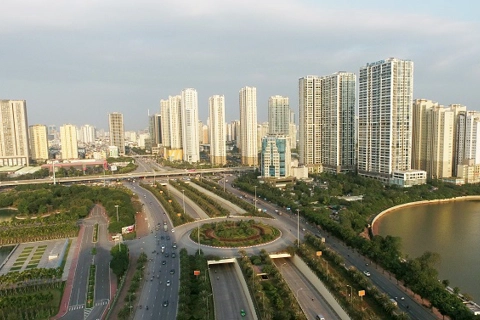
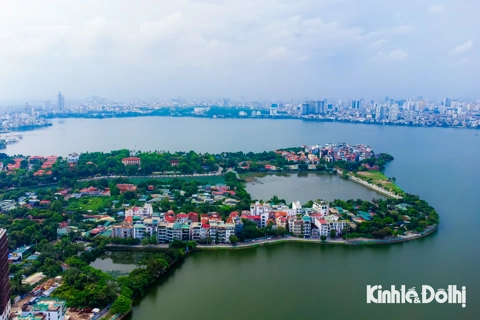
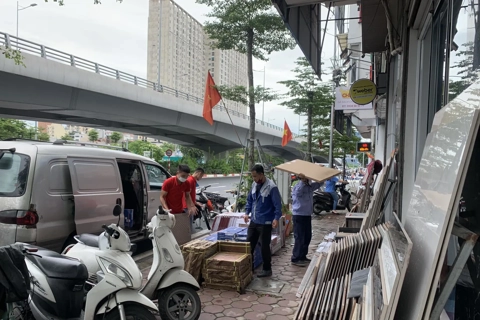
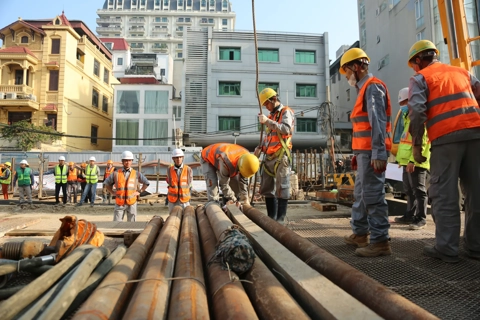
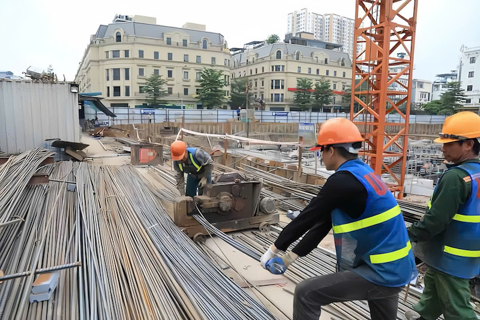
| The outlook for Vietnam's real estate market in 2024 remains bright. Photos: Pham Hung/The Hanoi Times |
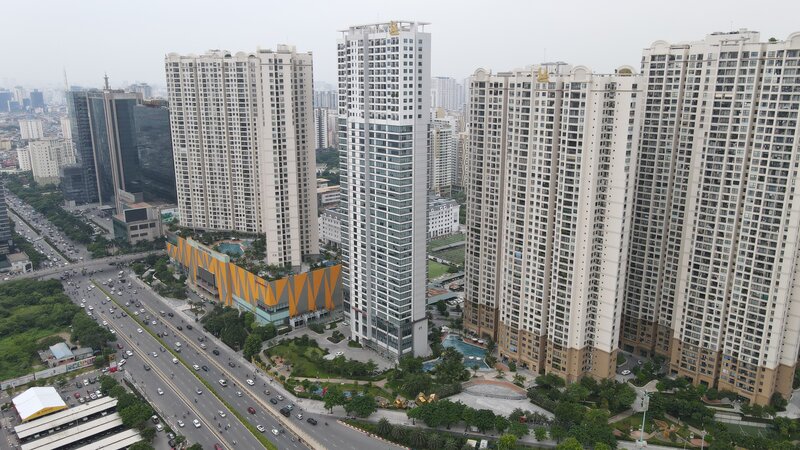
Challenges remain
The year 2023 proved to be a challenging period for the real estate market in Vietnam, with the emergence of new difficulties alongside persistent issues that further exacerbated market uncertainties. This phase can be attributed to prolonged periods of uncontrolled, non-transparent, and uncertain market development. Most segments experienced a slow recovery.
Specifically, the apartment sector, although improving over time, still faced deficiencies and a lack of supply. The total supply throughout the year reached 55,329 units, a 14% increase compared to 2022 but only 32% compared to 2018. The absorption rate was the same as in 2022 (18,900 units), but it remained at only 17% compared to 2018.
Few new projects were approved, with 67 newly licensed projects totaling around 24,993 units, 71 completed projects with a size of 29,612 units, and 197 projects meeting the conditions for future residential sales. Currently, 854 projects are under execution with an approximate size of 402,570 units, mainly concentrated in the northern region with 394 projects and around 237,993 units.
Notably, there are thousands of projects stalled due to legal complications, with a significant number halted due to lack of funds, contributing to the aforementioned situation. Social housing, in particular, has only recorded 46 completed projects with 20,210 units, achieving 4.7% of the plan for the period 2021-2025.
In the tourism and resort real estate sector, the supply showed signs of gradual improvement during the year but remained at only 30% compared to the same period last year. Legal issues caused several large-scale projects to temporarily suspend sales, and the primary supply consists of beachfront apartment products scattered across the northern, central, and southern regions. Phu Quoc (Kien Giang) recorded the highest number of projects, with 16 developments currently constructing shophouses.
Prices vary from VND50 - 120 million/m2 (US$2,000 – 4,900), depending on the location, and some developers are willing to sell at a loss of 10-20% from previously purchased contracts, but transactions are still limited.
Regarding commercial space, rental capacity in major cities such as Hanoi, Danang, and Ho Chi Minh City remains relatively stable with the influx of new brands and expansion plans of existing major brands, especially in the fashion sector.
Rental rates for Grade B and C spaces average from US$16 to US$49 per square meter per month, while Grade A spaces range from US$50 to US$80 per square meter per month. Meanwhile, rental yields for commercial properties on major roads in Ho Chi Minh City, Hanoi, and Danang saw a significant increase in 2023 but will tend to decline by 9-22% in the second half of the year.
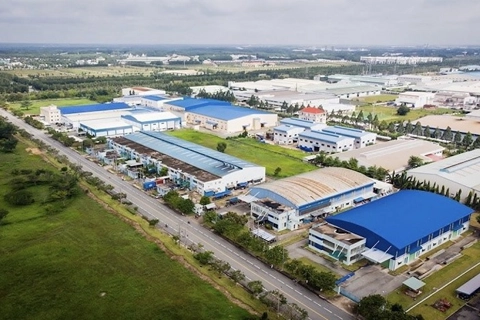
The most noteworthy highlight of the market in 2023 is the industrial real estate segment, where Vietnam continues to be chosen by many large international corporations as an investment destination, especially in the high-tech sector.
In 2023, seven industrial zones became operational, and 13 are under construction. To date, 413 industrial zones have been established, covering an area of approximately 87,700 hectares, with an average occupancy rate of 73%. Rental prices remain on an upward trend, with rates such as VND65,000/m² ($2,67) in Quang Minh Industrial Zone (Hanoi), VND50,000/m² ($2,05) in Dinh Tram, Song Khe, Noi Hoang, Quang Chau, Van Trung, Chau Minh Industrial Zones (Bac Giang), and VND133,000 /m² ($5,46) in Song Than Industrial Zone (Binh Duong) and Tien Thanh Industrial Zone (Dong Xoai City) respectively.
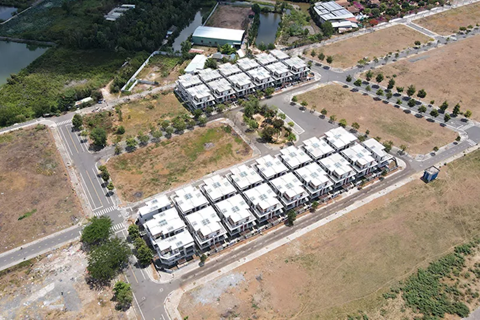
| Buyers look at a real estate project in Hanoi. |

Positive impact of new legislation
In the face of the crisis in the real estate market, the Government and various ministries have taken practical actions, demonstrating a shared commitment to helping businesses overcome difficulties. Besides establishing the Special Task Force by the Prime Minister, in 2023, the Government issued 22 directives and guidelines to support and implement solutions to address challenges in the real estate sector, a precedent not seen before.
Additionally, 2023 witnessed the approval of several legislative amendments and the National Assembly. Most recently, the amended Land Law was passed during the extraordinary session of the National Assembly in early 2024.
"When the amended Land Law is officially approved, along with the prompt issuance of implementation guidelines, it will inject new momentum into the market. Removing legal barriers will encourage developers to actively participate, leading to a true revival. I believe that 2024 will mark the intersection of a new cycle for the real estate market," stated Nguyen Duc Lap, the Director of the Real Estate Research and Training Institute.
Sharing a similar perspective, real estate expert Tran Khanh Quang emphasized that while government policies aim to alleviate market difficulties, real estate businesses still need to adhere to the market laws of supply and demand.
"The government's commitment to resolving issues and challenges in the real estate market demonstrates a balanced distribution of benefits and risk-sharing among the state, citizens, and businesses. Like ten years ago, during a market crisis, the government always has timely solutions to steer the market in the right direction. However, the speed and nature of recovery and development depend on the agility and efforts of businesses," analyzed Quang.
Meanwhile, Vice Chairman of the Vietnam Real Estate Association, Dr. Nguyen Van Dinh, predicted that 2024 could be the last year in the process of overcoming obstacles for the Vietnamese real estate market. The market is expected to gradually stabilize and shift towards positive changes.
“This will serve as a foundation for preparing a new cycle of development that is stable, sustainable, and more efficient,” said Dinh.
"Through the “purification” process, internal resilience, and the ability to adapt to difficulties and challenges, existing market entities will be elevated. Although the new laws are not yet in effect, they will be a positive signal for entities to regain confidence and rejuvenate their spirits for the upcoming preparation period. Alongside the solutions to legal challenges and capital sources for the real estate market, customer and investor confidence will continue to be a focus, with measures to alleviate concerns in 2024," stated Dinh.
According to assessments, the current real estate market faces the most challenging issues related to legal matters, administrative procedures, and investment processes for housing projects. Capital sources are limited due to the tightening of lending conditions by banking institutions. Some real estate businesses also face legal issues regarding improper issuance of stocks and bonds and raising capital before breaking ground on a project, causing investors to lose confidence and resulting in a lack of funds for real estate investment. With the new laws set to take effect in 2025, addressing legal issues is crucial, and real estate businesses must now formulate a secure strategy for attracting investment.
“In 2024, products catering to actual housing needs such as apartments and private houses will be given priority in the investors' portfolios due to their potential to generate regular cash flow and maintain a stable price level. Particularly, the year 2024 promises more opportunities for the housing segment priced below VND2.5 billion ($102,000) per unit. This is due to their low entry costs, rapid deployment, and diverse accessibility for different target demographics,” Vice Director of batdongsan.com.vn Nguyen Quoc Anh “As the Government has been implementing numerous essential measures to boost the market, developers must also reduce their reliance on bank financing. They can achieve this by exploring alternative channels such as investment partnerships, optimizing investment portfolios, and adjusting payment schedules to alleviate cash flow pressure on buyers. This approach aims to stimulate investment decisions and ensure excellence across all stages of the development process,” Economist Dinh The Hien |