Not some ordinary day, the Vietnam Culture Day reframes development through cultural identity and values
The Politburo’s Resolution 80, selecting November 24 as Vietnam Cultural Day, reflects a shift in development thinking that places culture at the heart of national progress. In today's Words on the Street, The Hanoi Times explores the renewed significance of Vietnam Cultural Day and why it matters.
THE HANOI TIMES — The Politburo’s decision to designate November 24 as the Vietnam Cultural Day marks a clear statement: culture is no longer a background value but a strategic pillar shaping the country’s development path.
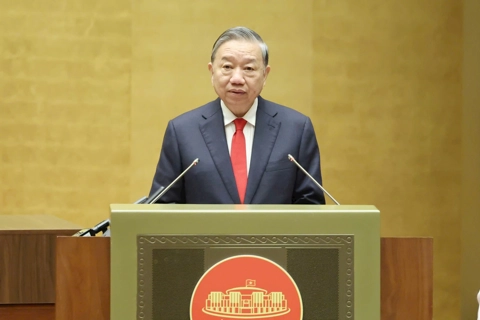
This shift was formalized when Party General Secretary To Lam, on behalf of the Politburo, signed Resolution No. 80-NQ/TW on January 7 on “Developing Vietnamese culture.” The resolution moves culture from abstraction to action, recognizing it as a concrete force that guides policy, behavior and long-term national priorities.

An AI-generated photo shows a dragon-dancing group in front of a Vietnamese traditional temple.
Under the resolution, November 24 becomes a paid public holiday, designed to expand people’s access to culture, encourage creativity among artists and cultural workers and promote a more civilized, culturally grounded way of life across society. The choice of date is deliberate and deeply symbolic.
On November 24, 1946, Vietnam convened its first National Cultural Conference at the Hanoi Opera House. At that historic gathering, President Ho Chi Minh delivered a message that continues to resonate: culture must light the way for the nation.
In his address, President Ho Chi Minh argued that Vietnam should absorb the finest cultural values of both East and West to build a distinctly Vietnamese foundation. He viewed culture as a moral compass, capable of curbing corruption, wastefulness and harmful practices, while nurturing patriotism rooted in genuine love for the country.
That philosophy has echoed across generations. At the National Cultural Conference in late 2021, Party General Secretary Nguyen Phu Trong reaffirmed this view by recalling a timeless observation: culture defines a nation’s identity; when culture endures, the nation endures.
He stressed that culture is a broad and multi-layered concept, yet regardless of how it is defined, it always represents what is most refined and humane. Culture, in this sense, is less about spectacle and more about the ethical core of society, distilled into progressive, compassionate and distinctive values.
History supports this perspective. Periods of strong national progress in Vietnam have often coincided with cultural vitality. As the country enters a new development phase, culture increasingly appears as a driver of long-term growth and social cohesion, rather than a decorative addition to economic success.
Since the launch of the Doi Moi (Renewal) process in 1986, thinking on cultural development has gradually matured. Investment has increased, creative industries have gained traction and international cultural engagement has expanded. Together, these efforts have strengthened Vietnam’s soft power and enhanced its global image.
Vietnam’s active role at UNESCO illustrates this progress. The country now serves as a vice president of UNESCO’s General Conference, participates in all five of its key mechanisms and holds 67 UNESCO-recognized heritage titles, surpassing its original target for 2030.
Tourism has reflected the same momentum. At the World Travel Awards 2024, Vietnam earned recognition as Asia’s Leading Destination, Asia’s Leading Heritage Destination and Asia’s Leading Nature Destination. The Lowy Institute’s Asia Power Index 2024 also recorded a rise in Vietnam’s overall influence, driven largely by diplomacy and culture.
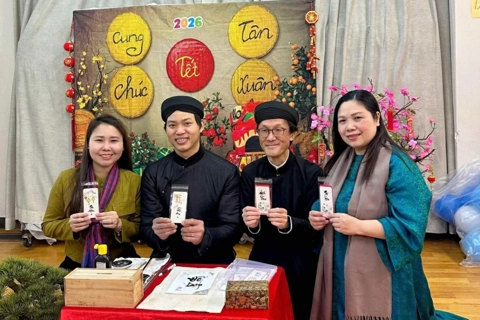
Cultural outreach abroad has become more confident and imaginative. Through the “Vietnam Day Overseas” program, Brazilian children encountered traditional water puppetry, while visitors in Saudi Arabia explored Vietnamese craftsmanship adapted to local settings. These exchanges created emotional connections that numbers alone cannot capture.
Seen in this light, the Vietnam Cultural Day is far more than an extra day off. It reflects a recalibration of development priorities, one that treats culture as a guiding force for growth, identity and international standing.
This shift appears clearly in draft documents for the 14th National Party Congress, according to Associate Professor Dr. Bui Hoai Son, a full-time member of the National Assembly’s Committee on Culture and Social Affairs.
“For the first time, culture stands on equal footing with economics, politics and society,” Son noted, rather than being confined to the role of a spiritual backdrop.
That repositioning carries real implications. By establishing the Vietnam Cultural Day, the Party signals that culture has moved from the margins to the center of national strategy.
Yet recognition alone does not resolve deeper challenges. Experts argue that cultural industries must do more than produce cultural goods; they must help shape Vietnam’s image in a world where influence flows through experience, emotion and shared values.
Son acknowledged that Vietnam possesses globally recognized cultural strengths, but its national cultural brand remains fragmented. Building that brand, he argued, requires the State to act as both architect and mentor, opening pathways for pioneering projects and protecting copyright to sustain a healthy creative ecosystem.
A national cultural brand, Son said, emerges from an ecosystem in which the State lays the foundation, enterprises and creative communities elevate it and society values and spreads the results.
Public response suggests broad support for this direction. Shortly after Resolution 80 took effect, the Vietnam General Confederation of Labor gathered feedback from workers nationwide.
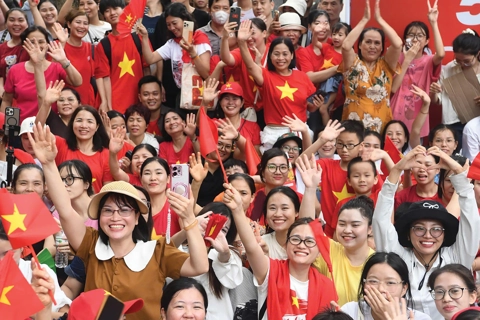
According to Vice President Ngo Duy Hieu, surveys of more than 95,000 workers showed overwhelming support for the Vietnam Cultural Day as a paid holiday. Many viewed it as an opportunity to participate in cultural and sports activities, visit historical sites, or reconnect with family values.
Ultimately, honoring culture through a national day affirms its special place in Vietnam’s development path. More importantly, it reinforces a simple but powerful idea: a nation’s strength lies in what it builds and in the values that guide how it builds.
The establishment of the Vietnam Cultural Day is overdue and necessary. For years, culture has received praise while remaining secondary in practical decision-making. By creating a national day for culture, Vietnam makes a clear statement that development must rest on values, identity and social cohesion, not growth figures alone.
The Vietnam Cultural Day provides space for culture to be practiced, renewed and passed on in daily life. It places responsibility on the State and society to protect cultural integrity while encouraging creativity. In an era shaped by influence and values, this decision gives Vietnam’s development a clear moral direction.