Nuclear power to play central role in Vietnam’s future: Party Chief
Vietnam’s development could be hindered by power shortages if nuclear energy is not adopted.
THE HANOI TIMES — Nuclear power will play a vital role in Vietnam’s future growth, requiring absolute safety and strict compliance with international standards, said Party General Secretary To Lam.
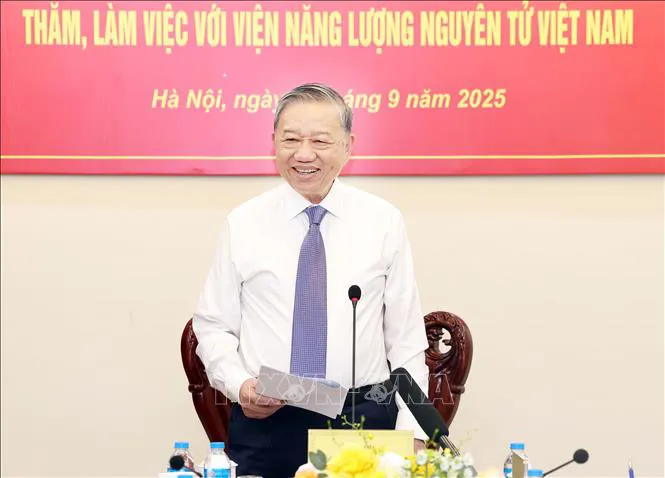
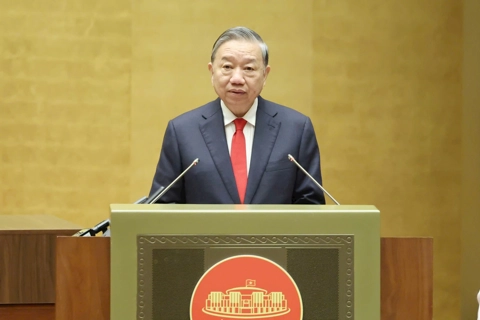
General Secretary To Lam during the meeting. Photos: Vietnam News Agency
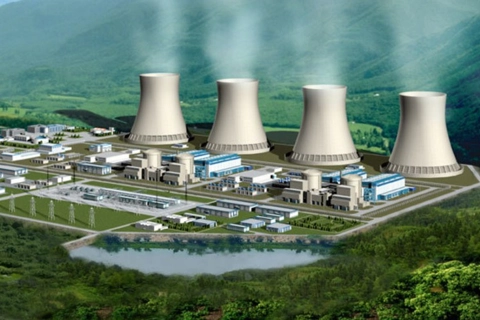
He outlined this direction during a working session with the Vietnam Atomic Energy Institute this week, as the country moves to revive two nuclear power projects in Ninh Thuan Province.
The plants are expected to begin operation between 2030 and 2035, following the National Assembly’s approval of the Atomic Energy Law in June.
General Secretary To Lam stressed that safety must never be sacrificed for speed and scale, urging the institute to embed a culture of safety as the foundation for all activities.
He called on leaders and experts to build domestic capacity to master core components and pursue international cooperation in design, construction, operation and management.
“Developing nuclear energy, particularly nuclear power, is an urgent mission to secure energy security, meet Vietnam’s carbon neutrality commitments and drive industrialization and modernization,” he said.
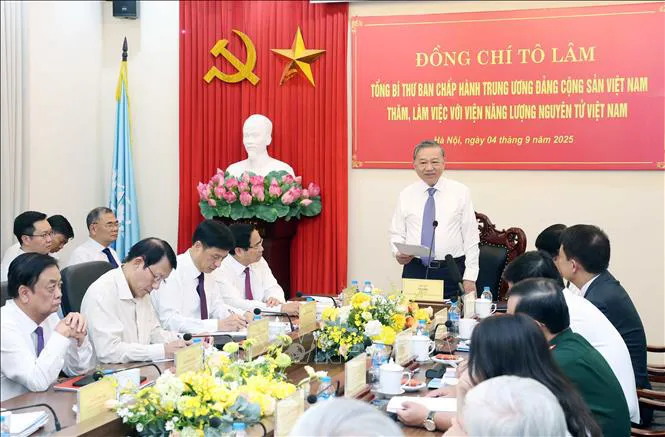
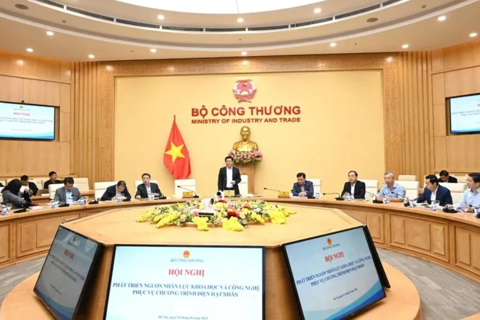
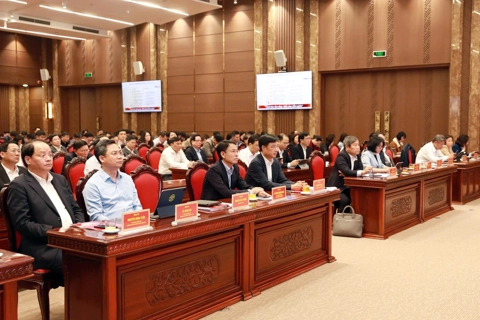
Overview of the meeting.
The Party Chief praised the institute’s contributions over nearly five decades, including safe operation of research facilities, applications of radiation and isotopes in medicine, agriculture and industry and training human resources.
However, he also pointed out shortcomings. Those include the infrastructure that does not yet fully meet International Atomic Energy Agency (IAEA) standards, a shrinking pool of qualified experts, limited policies to attract and retain talents and low research efficiency despite strong potential.
“Nuclear energy applications require long-term vision, persistence and a comprehensive approach from institutions and infrastructure to technology and human resources,” he said, calling for progress across all areas to ensure safety and avoid delays.
To Lam set out nine directions. First, nuclear development must be defined as a strategic national goal that contributes to the economy, society, defense and security, while enhancing Vietnam’s international standing.
As such, absolute safety for people, the environment and society must be guaranteed in full compliance with IAEA standards.
He urged improvements in policies to facilitate nuclear development, creation of a national program on nuclear technology and safety and building scientific and technological capacity to implement nuclear power sustainably.
He also suggested restructuring the Atomic Energy Institute into an “independent technical brain” providing expertise, analysis and policy advice to the state.
The Party Chief stressed the importance of expanding research infrastructure, including swift implementation of the National Center for Nuclear Science and Technology in Dong Nai, targeted to begin operation by 2030.
Other priorities include managing strategic resources such as rare earths and uranium, accelerating digital transformation and risk management in nuclear safety and ensuring transparency to build public trust.
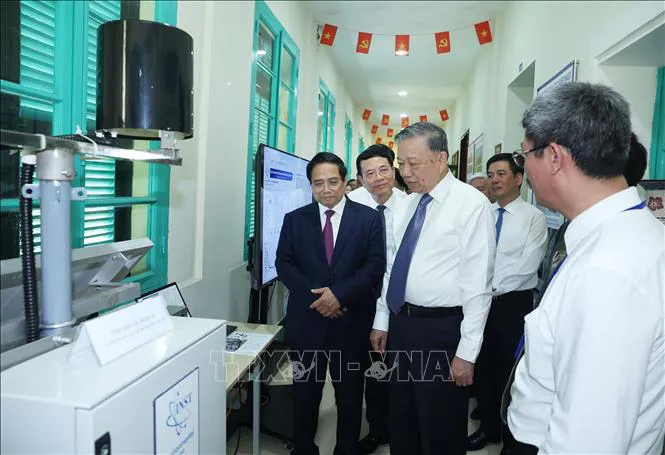
Party General Secretary To Lam and Prime Minister Pham Minh Chinh view a presentation on peaceful applications of nuclear energy
Human resources were another key issue.
Lam emphasized the need to train highly qualified personnel through specialized programs, practical work at research reactors and localized testing standards. He also called for better salaries and benefits to attract and retain talent.
He urged research to gradually master advanced nuclear technologies, stronger cooperation with the IAEA and partner countries and proactive assessment of potential environmental and safety risks from regional nuclear projects.
Prime Minister Pham Minh Chinh reaffirmed the government’s commitment to implementing Resolution 70 on energy security through 2030, with a vision to 2045 that includes nuclear power targets.
Minister of Science and Technology Nguyen Manh Hung outlined the ministry’s approach around four principles, which are safety, autonomy, cooperation and sustainability.
“Without safety, there can be no nuclear power,” he said.
Hung proposed allowing private sector participation, developing both large reactors over 1 GW and smaller ones under 300 kW and making nuclear power a national strategy that by 2045–2050 would supply 10%–15% of Vietnam’s electricity, with 15–20 large reactors and 20–30 smaller ones.
He stressed the importance of mastering nuclear technologies, especially small modular reactors (SMRs), which offer new opportunities for Vietnam.
Hung also highlighted the availability of Vietnamese experts abroad who could be encouraged to return.
The minister called for greater investment in infrastructure and research budgets, assigning his ministry to lead rare earth and titanium processing and rapidly developing nuclear safety infrastructure as a prerequisite for the sector.
“With strong political will, sound policies, adequate investment and a chief nuclear engineer, Vietnam can master these technologies within 10 to 15 years,” said Hung.
Founded in 1979 as the successor of the Da Lat Nuclear Research Institute, the Vietnam Atomic Energy Institute now manages 12 affiliated units across Hanoi, Da Lat, Ho Chi Minh City and Danang.
The units include the Da Lat nuclear reactor and an electron beam accelerator in Hanoi, two of the country’s most important research facilities.