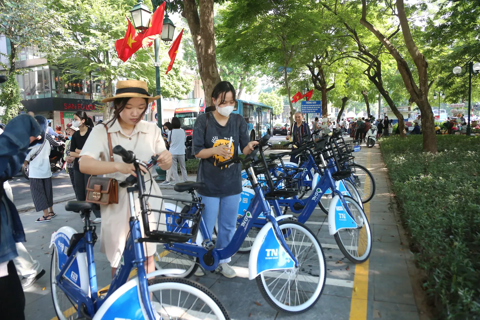
One day, Hanoi will be even greener…
Hanoi is striving to become a modern, environmentally conscious city that stands alongside other forward-thinking cities in Southeast Asia.
THE HANOI TIMES — With Capital Liberation Day approaching on October 10, Hanoi is preparing to break ground on two major metro lines, marking meaningful steps forward in Hanoi’s journey toward greener, more modern, and more sustainable transportation.
The first, Line 2 (Nam Thang Long to Tran Hung Dao), will officially break ground on October 10. Just weeks later, on December 19, work will begin on Line 5 (Van Cao to Hoa Lac).
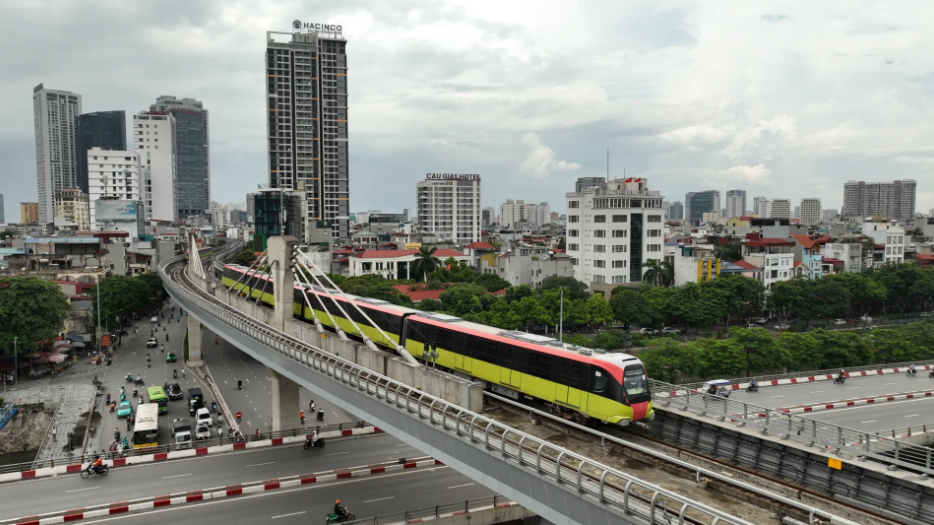
Nhon–Hanoi Station metro line. Photo: Pham Hung/The Hanoi Times
The city has long expressed its commitment to developing a metro system, though progress has not always come easily. Regulatory obstacles, funding challenges, and land clearance issues have slowed progress. However, a noticeable shift occurred in 2025. By setting specific construction dates for these two lines, Hanoi is taking a stronger, more practical approach, reflecting determination and momentum.
Hanoians are already familiar with Line 2, which stretches 11.5 kilometers from Nam Thang Long to the heart of the city. Once completed, Line 2 is expected to ease traffic along the north–south axis and connect smoothly with Line 3, which is partly operational (Nhon to Hanoi Station).
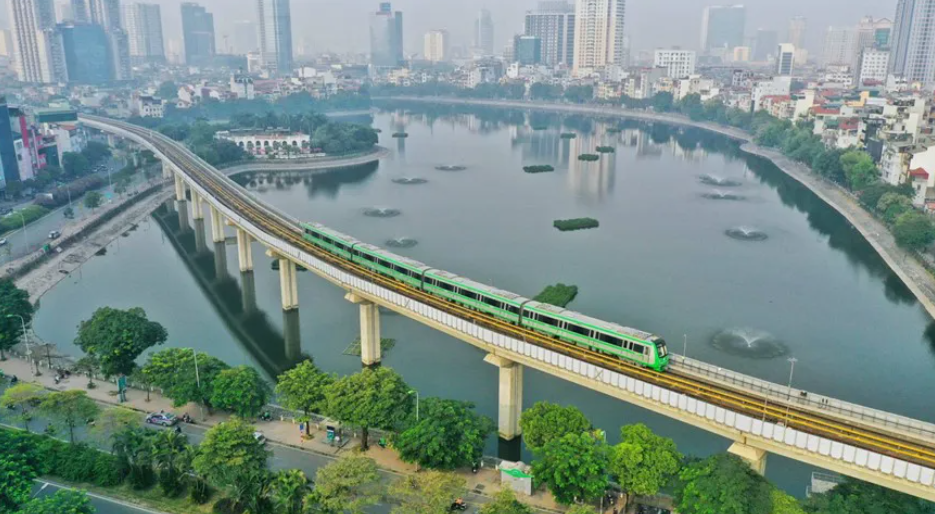
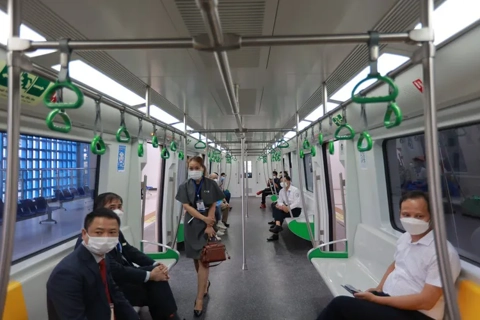
The Cat Linh - Ha Dong metro line. Photo: Pham Hung/The Hanoi Times
Meanwhile, Line 5, which covers about 38.4 kilometers, will serve as a backbone, linking central Hanoi with western satellite towns, such as Hoa Lac, a growing center for high-tech zones and universities. These projects are vital links that can help ease congestion and better connect communities.
Although metro systems already in operation, such as the Cat Linh to Ha Dong line and the Nhon to Hanoi Station line, may still have room for improvement, they have quickly become the go-to choice for many commuters during peak hours. This transition from planning to implementation is finally taking shape in Hanoi. Setting firm start dates reinforces the city’s commitment, creates urgency among stakeholders, and ensures the projects are prepared and delivered on schedule.
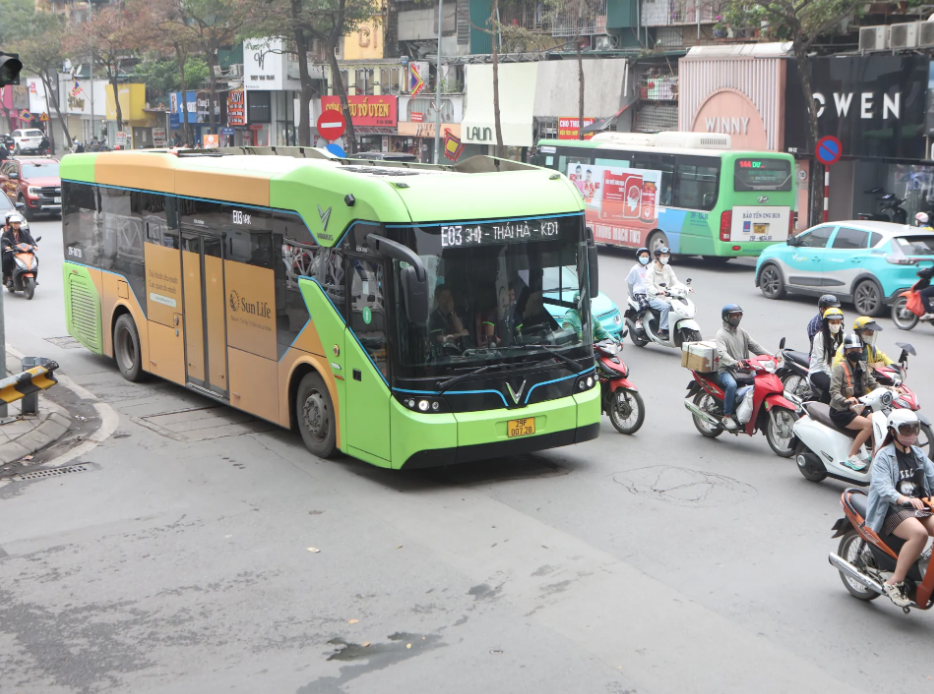
Electronics bus on Hanoi street. Photo: Thanh Hai/The Hanoi Times
The other day, a close friend of mine, an architect, shared his thoughts: "Hanoi faces serious challenges: high numbers of private vehicles, frequent traffic jams, rising air pollution, and limited public space. In this context, a metro system isn’t just an option; it’s essential. Reducing private transportation depends on having a public system that is convenient, fast, and reliable. The metro can meet that need.”
Indeed, a metro system transforms urban life by freeing ground space, promoting green mobility, and playing a vital role in Hanoi’s climate strategy through clean, low-emission travel that enhances public health and livability.
Over a decade ago, Hanoi began planning to build eight metro lines by 2030. So far, only Line 2A (Cat Linh to Ha Dong) is fully operational, and Line 3 is still under construction. This slow pace has led to doubts about the city’s green transport vision.
However, the precise timelines for Lines 2 and 5 reflect a renewed sense of direction and political will, demonstrating a commitment to action. Hanoi is striving to become a modern, environmentally conscious city that stands alongside other forward-thinking cities in the region. However, achieving this goal will require more than infrastructure. It takes strong investment, efficient land clearance, sound project management, and, importantly, the support and trust of the public.
In this sense, the launch of Hanoi’s metro lines marks not just a transport upgrade, but a symbolic step toward a transparent, shared vision of a greener, smarter future for the city and its people.
As that journey unfolds, it brings the hope of a Hanoi that is not only livable but also thriving, sustainable, and green.
|
Hanoi aims to complete the development of 15 urban railway lines with a total length of approximately 600 kilometers by 2045. The city is currently expediting the necessary procedures to begin construction on two urban railway lines in 2025. These include Line 2, from Nam Thang Long to Tran Hung Dao, stretching 11.5 kilometers, and Line 5, from Van Cao to Hoa Lac, covering 38.43 kilometers. Between 2024 and 2030, Hanoi plans to complete around 96.8 kilometers of track, including segments of Lines 2, 3, and 5. At the same time, the city will prepare investment plans for about 301 kilometers of additional routes, including Line 1, the extension of Line 2A to Xuan Mai, and Lines 4, 6, 7, 8, as well as connections to satellite urban areas. The total estimated capital requirement for this phase is about US$14.6 billion. During the 2031-2035 period, the city plans to complete construction on these 301 kilometers, with projected investment needs of approximately $22.57 billion. Once in operation, the urban rail network is expected to serve 35% to 40% of public transport passengers. From 2036 to 2045, Hanoi will finalize the remaining 200.7 kilometers of adjusted and additional lines, as outlined in the Capital Master Plan and the Revised General Master Plan. This phase is expected to require around $18.25 billion in funding. Developing the urban rail system will not only ease traffic congestion in the capital but also promote sustainable and modern urban growth. Once completed, the rail network will form the backbone of the public transport system, driving development in both the central city and its satellite towns. |