Overseas Vietnamese excited about opportunities to buy local property
When the amended Land Law comes into effect in January 2025, more overseas Vietnamese will be able to own local property.
Overseas Vietnamese, including those who have returned to and resided in Vietnam, are reportedly pleased to be able to buy real estate in the country.
| A part of Nha Trang City in Khanh Hoa Province. Photo: Trung Nhan/The Hanoi Times |
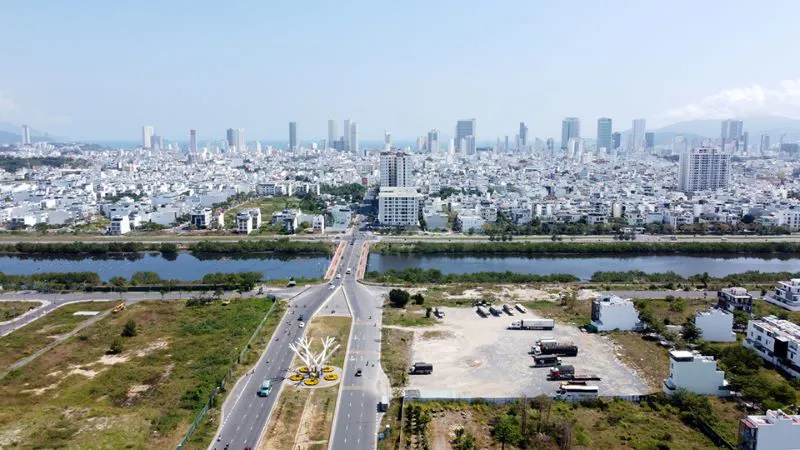
The amended Land Law, which comes into effect on January 1, 2025, is expected to boost Vietnam's property market by allowing overseas Vietnamese to buy local properties.
According to Article 4 of the revised Land Law, overseas Vietnamese are those who have resided in other countries with or without Vietnamese nationality. They will have full rights and obligations as Vietnamese citizens when buying a house in Vietnam.
They can buy, rent and lease land as part of their property rights. Overseas Vietnamese can use their land as collateral in business contracts.
According to business insiders and experts, the revised land law will allow overseas Vietnamese to conduct land transactions in Vietnam directly. Previously, they had to be represented by local relatives or acquaintances to handle the transactions on their behalf, which led to legal disputes when it came to reclaiming property rights.
The revised law will have a positive impact on the domestic real estate industry and create new opportunities for economic growth, said Nguyen Lieu, Global Ambassador for Cambodia, Indonesia and Vietnam for the National Association of Realtors.
Overseas Vietnamese and other foreign investors will be able to buy land in the country without fear of disputes, she told the Vietnam News Agency.
The American-Vietnamese, who has 20 years of experience in the property sector, believes the revised land law will boost the country's property market.
Many American-Vietnamese residents want to return to Vietnam when they retire and hope to settle in the country, she said, noting that it is common for US retirees to buy homes in other countries.
With the amended Land Law, Vietnam can build new residential areas full of services and facilities, not only for elderly overseas Vietnamese but also for people of other nationalities, she said.
She argued that if the overseas elderly move to Vietnam, it will boost other industries, including tourism, transportation, interior design and home repair.
In the US, for every house purchased, the buyer contributes about US$62,000-90,000 to the economy, Lieu said.
Speaking from Hungary, Vietnamese Ambassador Nguyen Thi Bich Thao said that Vietnamese expatriates in that country are very excited about the amended Land Law because they will not face any restrictions in buying a house.
She said that the revised Land Law has ensured the obligations and interests of overseas Vietnamese. Thao expected that by the time the law comes into effect, Vietnamese lawmakers will have issued specific documents to guide its implementation.
According to Phan Bich Thien, President of the Vietnamese Women's Union in Hungary, the government needs to ensure that overseas Vietnamese are eligible for some kind of ID card in Vietnam to participate in economic activities and generate benefits for Vietnam without having to submit other documents.
"All Vietnamese businesses in Europe are excited about the amended land law as it removes the unfair treatment between local and foreign businesses and individuals," said Pham Ngoc Chu, President of the Vietnam Hungary Business Association and Vice President of the Vietnam Global Business Association.
It will motivate Vietnamese companies and individuals operating in other countries to come back and invest their money in Vietnam, opening new factories and shops and boosting the country's economic performance, he said.
According to Peter Hong, President of the Overseas Vietnamese Businessmen Association, there are now about 6.5 million overseas Vietnamese and their descendants, of whom more than 20% are interested in buying property and living in Vietnam.
Data from the Ministry of Construction shows that around four million foreigners and overseas Vietnamese are interested in buying Vietnamese homes in the future. The ministry also believes that a greater inflow of FDI capital into Vietnam will make the country's housing market more attractive to potential foreign buyers.
Vietnamese remittances increased by 16% to $16 billion in 2023 compared to 2022, according to data from the General Statistics Office. It is estimated that around $2 billion was injected into the Vietnamese property market, which is equivalent to the purchase of 10,000-15,000 mid-range apartments.