PM orders completion of 500kV transmission line in June
With the onset of the peak summer months, especially in June and July, electricity demand is expected to rise significantly.
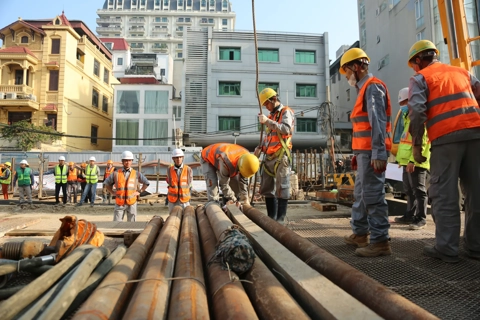
Government agencies and localities are responsible for the completion of the 500kV ultra-high voltage transmission line – Circuit 3 section Pho Noi (Hung Yen Province) to Quang Trach (Quang Binh) before June 30, 2024.
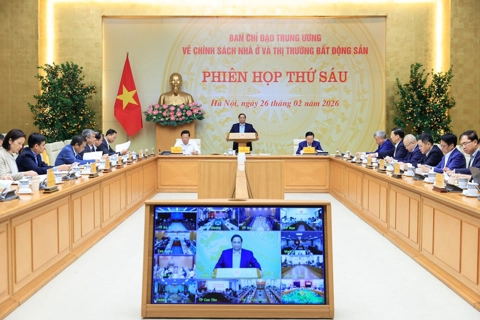
| Overview of the meeting. Photos: Nhat Bac/VGP |
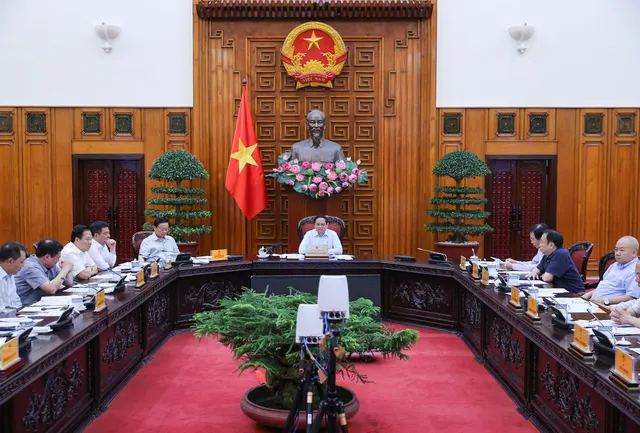
Prime Minister Pham Minh Chinh made this request at a meeting with relevant parties on May 23 to discuss progress in implementing Power Development Plan VIII and electricity supply for the peak months of 2024-2025.
Prime Minister Pham Minh Chinh stated that in the early months of 2024, Vietnam's economy is recovering and developing positively. With this growth, the demand for raw materials and fuels, including electricity consumption, has also increased. Electricity demand is forecast to grow by 9% in 2024; in the first quarter alone, demand grew by 3%, and at times surged by 17% compared to the same period last year.
With the onset of the peak summer months, especially in June and July, electricity demand is expected to rise significantly for production, business, and consumption.
“The completion and operation of the 500kV Pho Noi - Quang Trach transmission line is therefore crucial,” Chinh said.
In terms of electricity supply during the upcoming peak months, the Ministry of Industry and Trade (MoIT) and Vietnam Electricity (EVN) reported that the cumulative electricity output for the first five months of 2024 was approximately 124.1 billion kWh, an increase of 12.1% over the same period last year. Notably, at the end of April 2024, a prolonged heatwave across all three regions led to record-high electricity consumption, with a national peak capacity of 47,670 MW, a 13.2% increase, and daily output reaching 987.39 million kWh, 6.87% higher than the same period in 2023.
The forecast indicates that electricity demand will continue to rise due to increased consumption for manufacturing, business, and domestic use, especially during the hot season. Therefore, alongside maximizing electricity generation and organizing efficient inter-regional power transmission, it is necessary to encourage nationwide electricity conservation and efficient use.
Leaders from the Ministry of Agriculture and Rural Development and the Ministry of Natural Resources and Environment predicted that this year’s weather could be less hot than last year, potentially stabilizing electricity demand. Improved water levels in hydropower reservoirs could also boost electricity power generation.
Additionally, sectors and units are preparing to supply fuel for electricity generation, particularly coal and gas. The national power system is expected to meet the electricity demand for socio-economic development and residential use for most of 2024.
Pushing for diversification of power sources
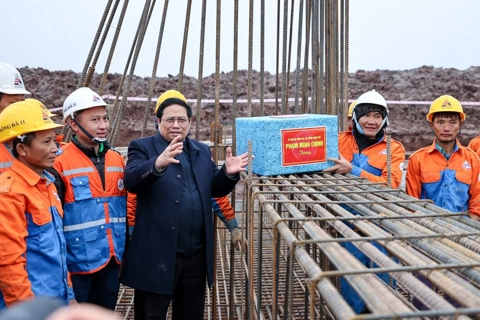
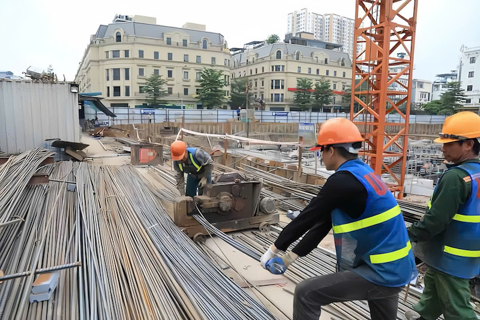
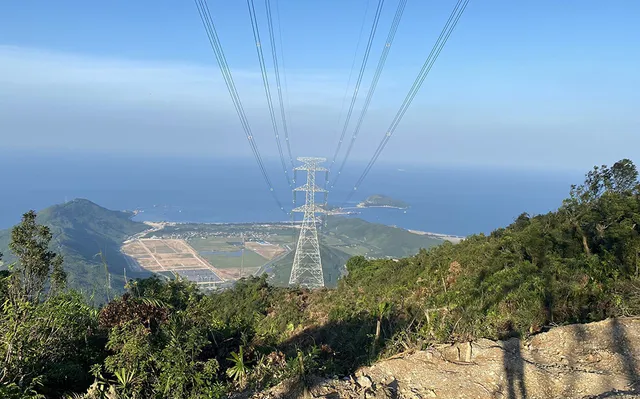
| The 500kV line is set to be completed in June. Photo: Toan Thang |
Regarding the implementation of PDP VIII, the MoIT reported that the Prime Minister has approved the plan, including the renewable energy source lists for 46 out of 63 provinces and cities. Efforts are underway to build renewable energy project lists, address issues related to overlapping projects, and integrate renewable energy, waste heat, and by-products into the national grid.
Prime Minister Chinh reiterated that the national power system has met and will continue to meet the demand for electricity for economic and social development. However, it is crucial to review and prepare for potential scenarios.
Chinh called for diversification of power sources by ensuring adequate fuel supplies, particularly domestic coal and gas, to save foreign exchange and create domestic jobs while combating illegal imports and mining. Hydropower reservoirs should be managed to support both electricity generation and agricultural production, and flood control. Regulations should be promptly established to maximize wind and solar power generation, as well as self-generated electricity, should be put in place immediately, with an emphasis on fair benefits, risk sharing, and anti-corruption measures, Chinh noted.
He also emphasized the need for mechanisms to mobilize social resources for power transmission projects and to encourage public-private partnerships to balance state, public, and business interests. Effective coordination of domestic and imported power sources is essential, as is setting appropriate electricity prices to attract investment while ensuring affordability for consumers and businesses. Additionally, public information campaigns should promote electricity saving and safe, efficient usage.
The 500kV Line-Circuit 3 Extension Project consists of four component projects, with a total length of nearly 520 km and 1,179 tower foundations. The total investment is approximately VND22 trillion (US$863.5 million). The project spans 211 communes and wards across 43 districts and towns in nine provinces: Quang Binh, Ha Tinh, Nghe An, Thanh Hoa, Ninh Binh, Nam Dinh, Thai Binh, Hai Duong, and Hung Yen. This project is crucial for connecting inter-regional power grids and boosting electricity supply to the northern region. The 500kV Quang Trach-Pho Noi transmission line will increase capacity from 2,200 MW to approximately 5,000 MW, facilitating the transfer of power from thermal and renewable energy sources in the North Central region to the national grid. It will also alleviate the load and prevent overloading of existing 500kV lines. |