14TH NATIONAL CONGRESS OF THE COMMUNIST PARTY OF VIETNAM
Log in
Property

PM sets up task forces to accelerate public investment in 2022

The responsibilities of the task force groups are to identify bottlenecks and difficulties facing ministries, central agencies, and provinces during the implementation of public investment.

Prime Minister Pham Minh Chinh has signed off decision No.548 to set up six task force groups specialized in urging Government agencies and localities to accelerate public investment in 2022.

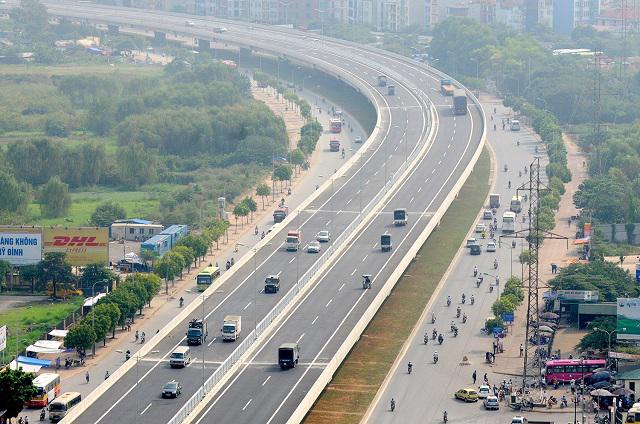
 Ring road No.3 in Hanoi. Photo: Hai Linh

The six task force groups comprise senior officials from ministries and agencies, with each led by the Deputy Prime Ministers  Pham Binh Minh, Le Minh Khai, Vu Duc Dam, Le Van Thanh, Minister of Planning, and Investment Nguyen Chi Dung, and Minister of Finance Ho Duc Phoc.

The responsibilities of the task force groups are to identify bottlenecks and difficulties facing ministries, central agencies, and provinces during the implementation of public investment, especially those financed by ODA and concessional loans; propose measures to ensure greater efficiency in state capital management.

The task force groups would also assess the performance of ministries and provinces/cities in realizing the public investment plan in 2022, including the responsibilities of leaders of provinces/cities and Government agencies.

In the first four months of 2022, the disbursement of public investment funds stood at 18.48% of the Government’s target, a slight decrease compared to the same period in 2021. Of the total, the disbursed rate of domestic capital stood at 19.57%, and that of foreign sources at 3.25%.

The Government’s report noted seven ministries and eight localities posted a disbursement rate of over 25%, 43 out of 51 ministries and 28 from 63 provinces/cities have a rate of less than 17%, and 17 ministries have not disbursed the allocated fund.

Among the reasons for the slow disbursement rate, there was the lack of commitments from Government agencies, difficulties in site clearance, and a lengthy bidding process.

The Ministry of Finance proposed the Government transfer funds from localities with low disbursement rates to those with higher paces.

This year, Hanoi targets to fully disburse the public investment plan for 2022. The city is expected to allocate VND51.07 trillion (US$2.2 billion) for public investment in 2022, of which VND510 billion ($22.1 million) would be used for the payment of debts and interest rates.

An estimate of VND10.2 trillion ($443.2 million) would be allocated to rural and urban districts for developing their respective infrastructure projects, including the construction of new schools, upgrading healthcare facilities, and preserving historical sites, which reflects the city’s attention to supporting the growth at grass-roots levels.

For the 2021-2025 period, the city sets to earmark VND650 trillion ($28.4 billion) for the 2021-2025 public investment plan.

Reactions:
Share:
Trending
Most Viewed
Related news
Hanoi aims for greater efficiency in public investment

Hanoi aims for greater efficiency in public investment

18 Apr, 20:57

Hanoi would continue to speed up construction progress and public investment, identified as a major solution to spur economic growth and further attract investment capital to the city, said the city’s mayor.

Revised housing roadmap doubles social housing targets for Hanoi

Revised housing roadmap doubles social housing targets for Hanoi

Vietnam’s push to accelerate affordable housing has significantly raised expectations for major cities, with Hanoi now tasked with delivering a far larger volume of social homes as part of the national goal to build more than one million units by 2030.

Social housing supply exceeds targets in 2025 as Vietnam tackles property imbalances

Social housing supply exceeds targets in 2025 as Vietnam tackles property imbalances

Vietnam surpassed its social housing construction target in 2025, marking progress in housing policy, but supply mismatches, high prices and legal bottlenecks continue to weigh on the real estate market.

Online building permits promise faster approvals and transparency in Vietnam

Online building permits promise faster approvals and transparency in Vietnam

Lengthy and complex construction procedures may soon be replaced by faster online approvals as Vietnam rolls out reforms to ease housing pressures and improve transparency in land management.

Hanoi apartment market set for steady growth as suburban supply reshapes demand

Hanoi apartment market set for steady growth as suburban supply reshapes demand

Hanoi’s primary apartment market is entering a more measured expansion phase, driven by growing supply in outlying areas and softer price movements, with infrastructure upgrades and end-user demand expected to anchor the primary apartment market through 2026.

Hanoi plans 39 social housing projects to meet 2030 affordable housing target

Hanoi plans 39 social housing projects to meet 2030 affordable housing target

Hanoi is accelerating its social housing program to expand affordable supply for workers and low- to middle-income residents while managing rising costs and price pressures.

Vietnam real estate market poised for new growth cycle in 2026

Vietnam real estate market poised for new growth cycle in 2026

With more open institutions and stronger trust, real estate will remain a key sector supporting double-digit GDP growth from 2026.

Affordable housing to boost Vietnam’s real estate market

Affordable housing to boost Vietnam’s real estate market

Affordable housing should be viewed as a long-term socioeconomic policy rather than a short-term support measure.

Van Cao – Hoa Lac metro line opens prospects for Hanoi’s urban development

Van Cao – Hoa Lac metro line opens prospects for Hanoi’s urban development

The line is a strategic infrastructure project that plays a key role in shaping urban development and sustainable transport in the new phase.