Prime Minister approves Hanoi’s 2050 planning
The Hanoi Capital Planning for 2021–2030, with a vision to 2050, serves as the foundation for developing urban, rural, technical, and specialized planning initiatives across Hanoi.
Prime Minister Pham Minh Chinh on December 13 signed Decision No. 1569/QĐ-TTg, approving the Hanoi Capital Planning for the period 2021-2030, with a vision to 2050.
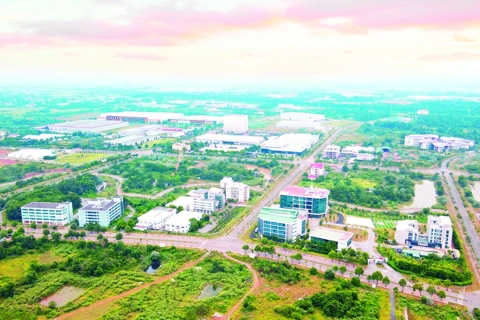
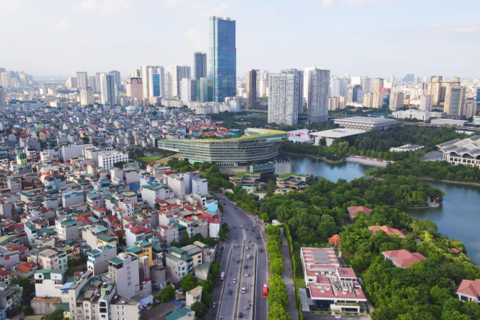
| Hanoi from above. Photo: Viet Thanh |
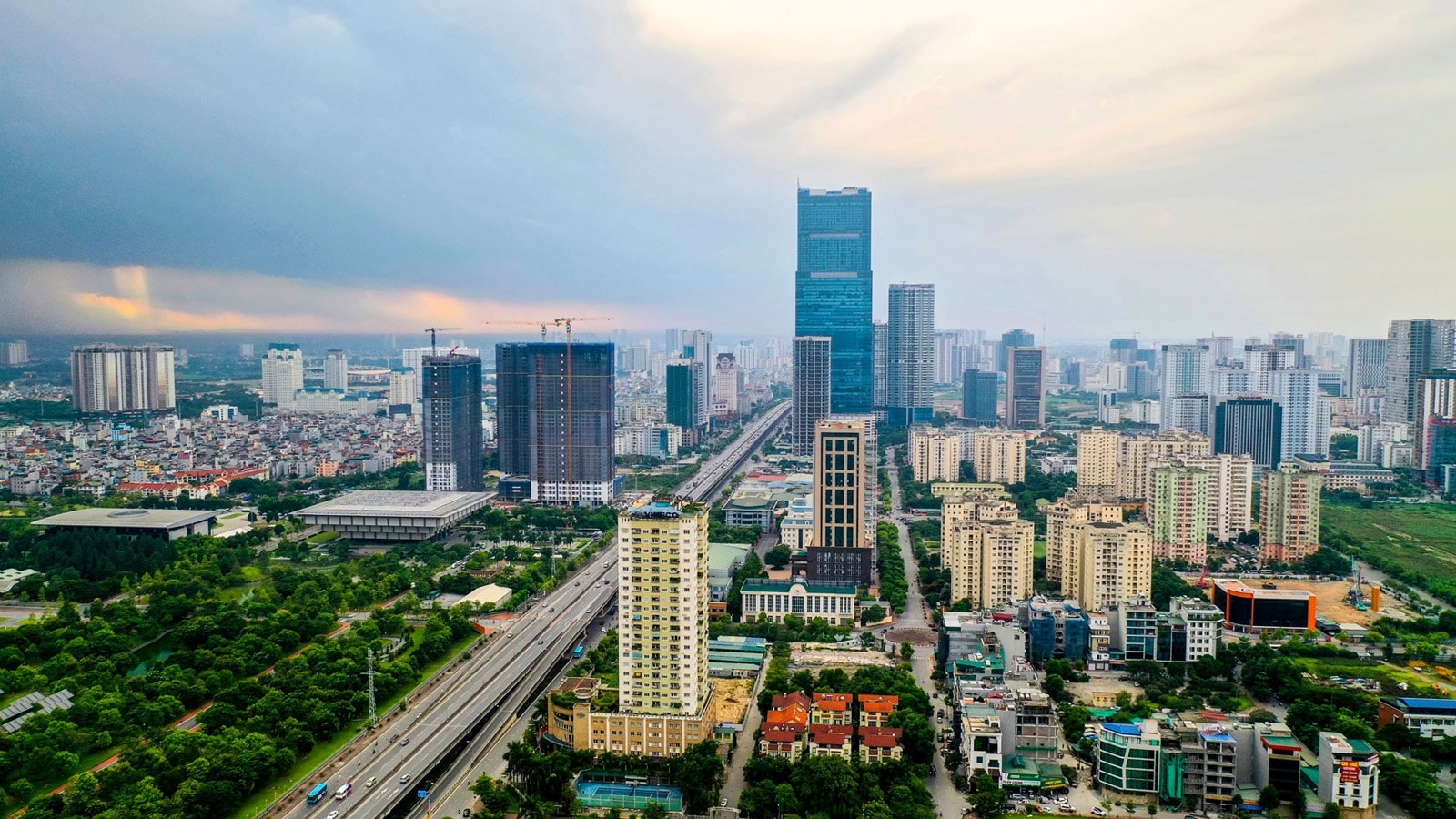
The planned area of Hanoi covers a total natural extension of 3,359.84 km². The Hanoi Capital Planning is being developed with a "new vision – new global thinking, capital-oriented mindset, and Hanoi-focused actions" to create “new opportunities and new values” for the development of a “Civilized - Cultured - Modern” capital city in both the short and long term. This initiative aims to position Vietnam in a new era of growth and advancement.
Key development perspective
The core principle of this planning effort is to "put people at the center of development,” envisioning Hanoi as a “Capital of culture and heritage – globally connected, elegant and harmonious, peaceful and prosperous, with a people-serving government, contributing enterprises, a trustworthy society, and happy citizens.” The planning sets out five overarching development perspectives, aligning Hanoi’s development with the national socio-economic strategy, the national master plan, and the Red River Delta regional plan. It emphasizes awakening the aspiration to build a “Civilized - Cultured - Modern” capital that is green, smart, and comparable to capital cities of developed countries around the world.
In terms of spatial organization, Hanoi’s economic and social development is arranged around core nodes, corridors, and economic belts, integrated with a synchronized transportation system to foster regional, national, and international connectivity. This approach links industrialization, modernization, and urbanization while harmonizing the development of urban and rural areas. The plan focuses on the effective use of five key spaces: public spaces, elevated spaces, underground spaces, cultural-creative spaces, and digital spaces.
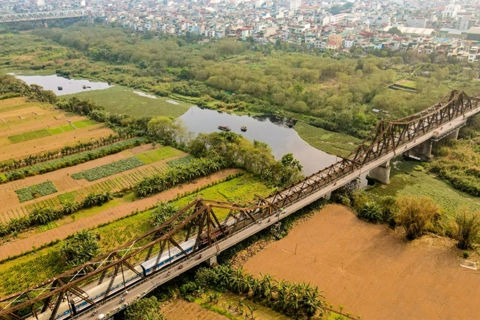
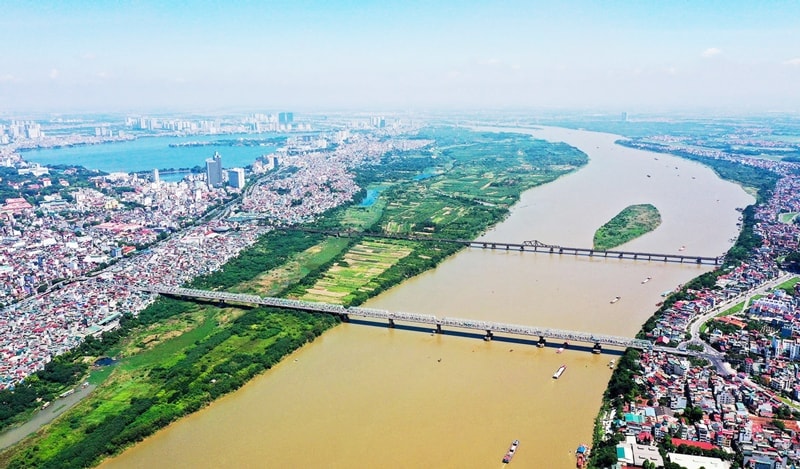
The Red River serves as a green axis and central scenic landscape for Hanoi, functioning as a cultural, heritage, tourism, and service hub that connects the Capital Region and the Red River Delta. Urban spaces are designed following a central city model integrated with satellite towns, eco-towns, and new urban areas tailored to specific functions, such as transit-oriented development (TOD), technology hubs, airport cities, and tourism destinations. Rural spaces will be developed to balance urbanization, economic growth, cultural preservation, and environmental protection, ensuring modern living conditions while preserving traditional cultural identities.
2030 and 2050 visions
By 2030, Hanoi aspires to become a "Civilized - Cultured - Modern" capital—green, smart, and globally integrated—serving as a hub of cultural heritage and competitive growth with a development level on par with other capitals in the region. Hanoi will act as a central force driving the development of the Red River Delta and the nation, with regional influence as a major financial and economic center. It will be a leader in education, healthcare, science, technology, and innovation, ensuring a peaceful and happy life for its citizens. Looking ahead to 2050, Hanoi is envisioned as a global city—green, smart, peaceful, and prosperous—symbolizing a powerful and thriving Vietnam. The capital will exemplify comprehensive economic, cultural, and social development and serve as a premier destination for living, working, and innovation. Citizens will enjoy a high standard of living and quality of life, with a projected per capita GRDP of US$45,000–$46,000 and an urbanization rate of 80–85%.
The plan identifies five focal tasks: environmental and landscape preservation, urban and rural development, economic growth, cultural and social development, and advances in science, technology, and innovation. It highlights four key breakthroughs: strengthening institutional frameworks and governance, modernizing and connecting infrastructure, fostering high-quality human resources and technological capabilities, and improving urban and environmental landscapes.
| Red River. Photo: Nhat Nam |
Economic development will focus on vital sectors such as trade, tourism, finance, banking, insurance, logistics, industry, construction, agriculture, forestry, fisheries, and the digital economy. Social sectors like culture, healthcare, education, sports, labor, social welfare, and science and technology will also be prioritized. Economic and social activities will be organized into five key spaces, supported by five economic corridors and belts, five dynamic development axes, and five socio-economic and urban regions.
Spatial planning
The five economic spaces include elevated spaces, underground spaces, public spaces, cultural-creative spaces, and digital spaces. Economic corridors and belts align with the national master plan, while dynamic development axes include the Red River corridor, West Lake - Co Loa, Nhat Tan - Noi Bai, West Lake - Ba Vi, and the Southern Axis. The socio-economic regions are defined as the central region (comprising historic inner-city areas and expanded central urban zones south of the Red River), the eastern region, the southern region, the western region, and the northern region. Urban regions include the central urban area, the western city region, the northern city region, the southern urban region, and the Son Tay-Ba Vi urban region.
The plan ensures that urban development integrates underground space utilization for efficient land use while protecting the environment and ensuring national security and defense. Historic downtown areas, the ancient citadel of Son Tay, old streets, and architectural landmarks will be preserved, renovated, and utilized to promote sustainable cultural tourism and services. Old apartment complexes and low-rise self-built residential areas in inner-city zones will be upgraded into modern urban zones with comprehensive services and civilized living environments.
Transit-oriented development (TOD) models will expand urban spaces, creating convenient, modern living environments with synchronized infrastructure. The concept of cities within the capital will produce new growth hubs, fostering balanced development between urban and rural areas. This approach includes special institutional frameworks to leverage the unique potential of each area. The capital’s urban system will be organized as an urban cluster consisting of a central city, radial urban corridors, and cities within the capital.
Rural areas will adopt three exemplary models: traditional rural zones outside urbanized areas, rural zones inside urbanized areas, and traditional rural villages and craft villages. The plan also includes strategies for functional zones, technical infrastructure development, land use distribution, environmental protection, resource management, biodiversity conservation, disaster prevention, and climate change adaptation.
Solutions for implementation include mobilizing investment capital, developing human resources, protecting the environment, advancing science and technology, fostering policy mechanisms for regional collaboration, and enhancing urban and rural management and development. The Hanoi Capital Planning for 2021–2030, with a vision to 2050, serves as the foundation for developing urban, rural, technical, and specialized planning initiatives throughout Hanoi.