Prime Minister sets vision for a humane ASEAN digital future
Vietnam is hosting a series of ASEAN digital cooperation meetings and activities from January 12 to 16, aimed at reviewing the implementation of ASEAN digital frameworks and shaping future priorities to build a safe, trusted, inclusive and resilient ASEAN digital space.
THE HANOI TIMES — Prime Minister Pham Minh Chinh on January 15 called on ASEAN to accelerate the development of a human-centric and humane digital ecosystem, stressing that trust, ethics and inclusiveness must guide the region’s digital transformation as technology advances rapidly.
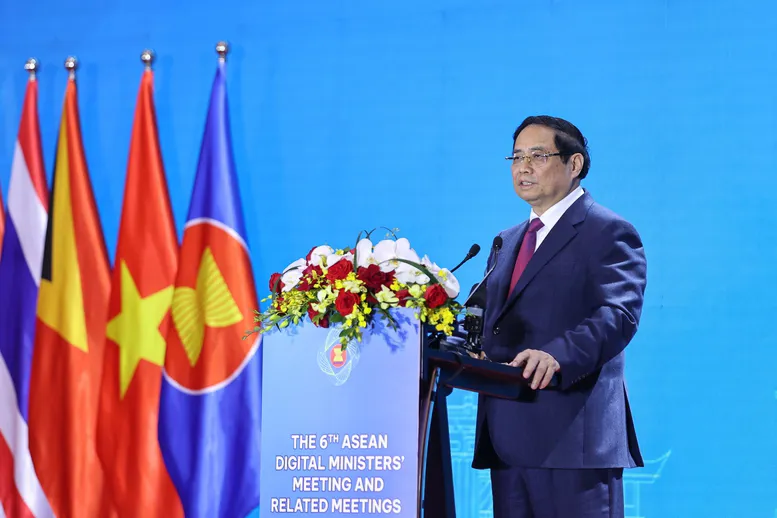
Prime Minister Pham Minh Chinh speaks at the meeting. Photos: baochinhphu.vn
Speaking at the opening of the 6th ASEAN Digital Ministers’ Meeting (ADGMIN) in Hanoi, hosted by Vietnam under the theme “Adaptive ASEAN: From connectivity to connected intelligence,” Chinh said ASEAN needs to move beyond physical and technical links to deeper connections of intelligence, trust and solidarity.
The meeting brought together UN Under-Secretary-General and Special Envoy for Digital and Emerging Technologies Amandeep Singh Gill, ASEAN Secretary General Kao Kim Hourn, ASEAN digital ministers, and representatives of dialogue partners and international organizations.
As ASEAN’s key ministerial cooperation mechanism in the digital sector, ADGMIN 6 focuses on digital transformation, economy and infrastructure and platforms, data governance, artificial intelligence and cyber safety and security, alongside stronger cooperation with partners.
Vietnam is hosting a series of ASEAN digital cooperation meetings and activities from January 12 to 16, aimed at reviewing the implementation of ASEAN digital frameworks and shaping future priorities to build a safe, trusted, inclusive and resilient ASEAN digital space.
Highlighting Vietnam’s experience, Prime Minister Chinh said the country has made digital transformation a strategic breakthrough, backed by resolutions of the Party, National Assembly and Government that identify science, technology, innovation and digital transformation as new drivers of fast and sustainable growth, with strong emphasis on international cooperation.
Vietnam’s digital infrastructure has expanded rapidly, with 5G coverage reaching 91.2 percent of the population, mobile internet speed ranking among the world’s top 20 in 2025 and a 3,900 km terrestrial fiber optic network connecting Vietnam with five ASEAN countries.
The digital government drive is accelerating, with online public services moving toward a paperless, borderless administration. The digital economy has emerged as a new growth engine, with e commerce growing at about 25 percent annually and reaching an estimated US$36 billion in 2025, triple the 2020 level.
Cybersecurity has also been strengthened, with Vietnam successfully hosting the signing ceremony of the UN Convention against Cybercrime, known as the Hanoi Convention, and ranking 16th globally and third in ASEAN in the Global Cybersecurity Index.
Despite progress, the Prime Minister warned that Vietnam and ASEAN face mounting challenges, including strategic competition over technology and data, widening digital divides, regulatory gaps, uneven infrastructure, shortages of high-quality digital talent and increasingly complex cyber threats.
To address these challenges and realize the ASEAN Community Vision 2045, he proposed three broad directions.
First, ASEAN should strengthen digital trust and adaptive institutions by building a humane digital ecosystem that puts people at the center, guided by ethical standards and balanced interests.
This includes effective implementation of ASEAN guidelines on AI governance and ethics and gradual operation of a regional AI safety network, alongside stronger legal frameworks for shared data and responsible AI development.
Second, ASEAN should develop modern, resilient digital infrastructure and smart, sustainable connectivity, particularly fiber optic systems, both undersea and on land and data centers.
“It’s needed to push up early cooperation on satellite development for disaster monitoring, resource management and internet access in remote and island areas, as well as research on a green, secure ASEAN Power Grid to support digital infrastructure,” said Chinh.
He also called for seamless cross border digital connectivity in areas such as digital payments, e commerce, digital signatures and digital identity.
Third, ASEAN must ensure cybersecurity and develop digital human resources by enhancing information sharing, joint exercises and trust building to respond effectively to cyberattacks, while intensifying cooperation against online fraud and cybercrime.
He also emphasized investment in high quality digital talent in fields such as big data, AI and cloud computing, and the promotion of universal digital skills through initiatives similar to Vietnam’s “digital literacy campaign,” guided by the principle that no one should be left behind.
On the basis of shared benefits and shared risks, Prime Minister Chinh reaffirmed Vietnam’s commitment to being a proactive, responsible member of ASEAN’s digital cooperation.
“Vietnam stands ready to share experience and support countries facing greater difficulties in narrowing the digital divide and seeks deeper, transparent and trust-based cooperation to build a united, resilient and prosperous ASEAN digital community,” said Chinh.
He expressed confidence that ADGMIN 6 would mark a shift from infrastructure connectivity to intelligence and trust connectivity, helping lay the foundation for integrated institutions, interconnected digital infrastructure and a safe digital space, thereby enhancing ASEAN’s competitiveness and role in regional and global digital value chains.
Quoting President Ho Chi Minh on the power of unity, the Prime Minister said ASEAN’s strength lies in unity in diversity, consensus amid differences and cooperation for mutual benefit, as the bloc works toward a peaceful, prosperous and sustainable digital future.
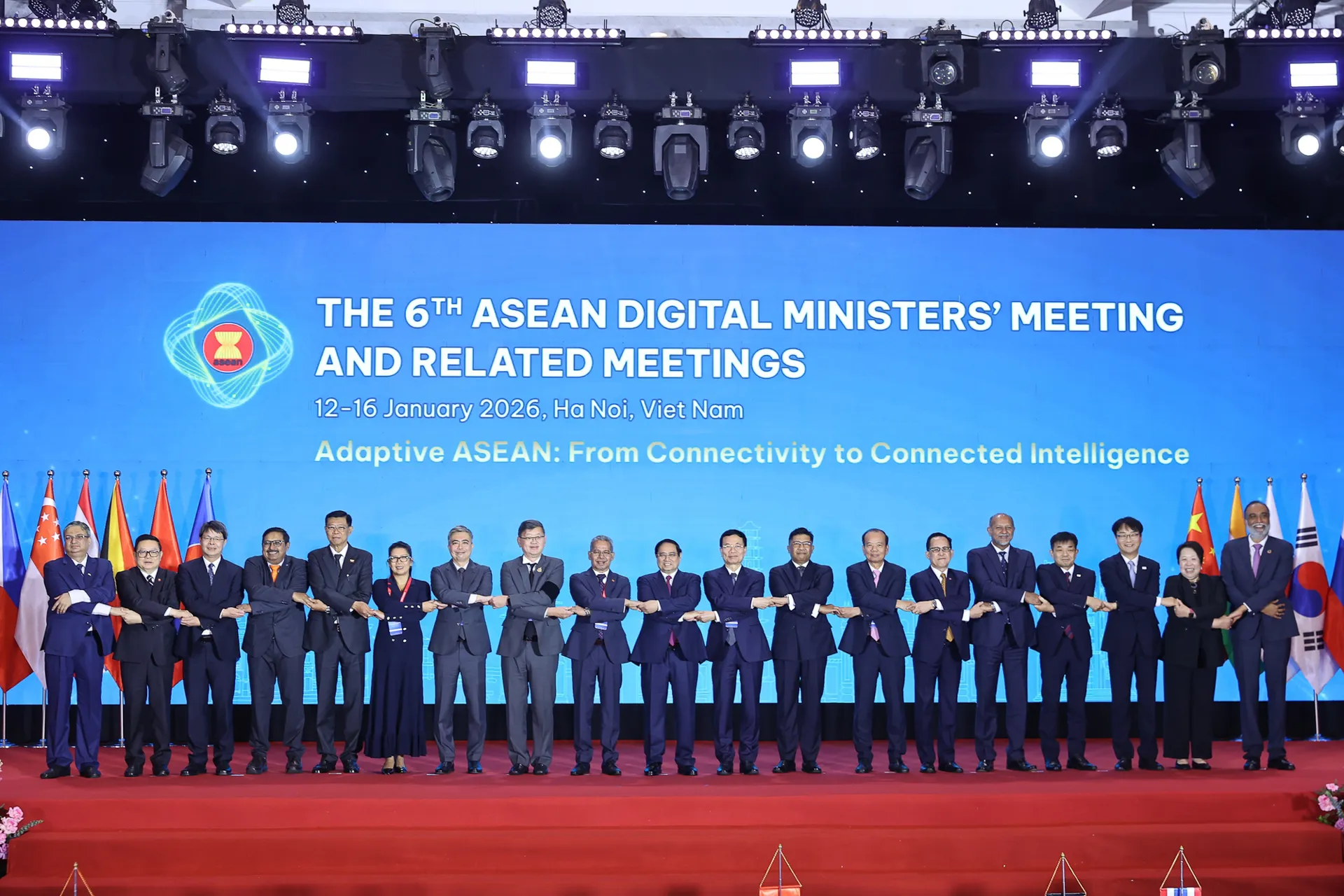
Prime Minister Pham Minh Chinh and delegates attend the opening ceremony of the sixth ASEAN Digital Ministers’ Meeting (ADGMIN).
|
Minister of Science and Technology Nguyen Manh Hung stressed that this year’s theme highlights an era defining shift in ASEAN’s digital development thinking, from prioritizing the expansion of connectivity infrastructure to harnessing intelligence, data and the added value generated by those very connections. ASEAN Secretary General Kao Kim Hourn reaffirmed the bloc’s commitment to advancing comprehensive digital cooperation, narrowing the digital divide among member states, and building a safe, trusted and inclusive digital space. He underscored the role of the ADGMIN mechanism in translating ASEAN’s strategic directions on digital transformation into concrete programs, initiatives and substantive cooperation. Amandeep Singh Gill, United Nations Deputy Secretary General and Special Envoy on Technology, an invited guest of host Vietnam, shared insights into global trends in digital transformation and artificial intelligence, and offered recommendations for ASEAN to continue pursuing a balanced, people centered approach to ensure that digital technologies make tangible contributions to sustainable development. |