Property
Protech expands in Vietnam: JLL
Despite inherent barriers arising from a traditional mindset and the high requirement for trust in the real estate industry, the prospects for proptech in Vietnam are still positive.
Proptech in Vietnam is developing and expanding on the back of strong momentum in Vietnam real estate market, due to its benefits in improving accuracy and speed, cost savings and convenience,' said Trang Bui, head of markets at JLL Vietnam.
In Vietnam, the development of proptech is more prominent in the active market segments of residential and office. These two sectors witness high levels of interest from both developers and buyers and are served by more than 50% of proptech players in the market.
According to Finrei’s list of Vietnam proptech ecosystem, the most notable segments of proptech is related to residential market in listing and marketplaces, tech-enabled brokerage, leasing and renting and property management.
The second most active proptech segment is in co-working which is now strongly growing in line with the booming office market in Vietnam. As more companies embrace flexible workspace, smart technology has a major role in helping landlords and companies understand – and optimize – how various spaces are being used. All signs point to growth for the smart building market, with almost new builds involving at least one aspect of smart technology such as smart lighting or heating.
Currently, about 80% of players in the market are foreign startups or startups funded by foreign investors. However, there are several locally founded proptech companies that are well-known in the market and are growing strongly. Batdongsan.com, a listing website, is the biggest player in the market with about 7 million visitors per month on average, much higher than its competitors.
Besides proptech segments directly serving residential and office sectors, there are those developed to serve related industries such as hotel, property analysis, construction, fund raising, etc. According to Jeriel Tan, marketing manager at Technode.com, “These proptech segments do not solely serve consumers in the near term, but given the fast changing natural and built environment, also affect long-term government planning, sustainability and climate change.”
Besides, proptech companies in Vietnam have started to collaborate with fintech players. The residential sector, given the level of investment and consumer engagement, is expected to be the first to connect proptech and fintech, according to JLL. For example, property management companies are trying to connect and embed e-wallet into their property management apps in order to improve services and experience for their users. Listing real estate websites have announced collaborations with e-wallet providers for easier collection of service fees from their users. However, as Vietnam is still predominantly a cash economy and credit card penetration is still low, this integration may take some time.
Despite inherent barriers arising from a traditional mindset and the high requirement for trust in the real estate industry, the prospects for proptech in Vietnam are still positive, in our view, due to the young demographics, tech savvy population and available funding and incentives for technological startups in Vietnam, according to JLL.
More support from the government is much needed to foster the start-up culture, making it easier for companies to enter the smart tech market. As more competition enters the market, price will decrease and proptech will become more accessible. In the future, for the growth of proptech, there is a need for wider and better-quality network connectivity in Vietnam.
While there is only a very small number of proptech being built at present, it is a good way for smaller or newer developers to compete, JLL concluded.

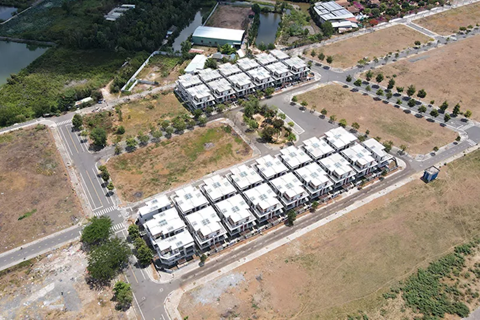
Illustrative photo
|
According to Finrei’s list of Vietnam proptech ecosystem, the most notable segments of proptech is related to residential market in listing and marketplaces, tech-enabled brokerage, leasing and renting and property management.
The second most active proptech segment is in co-working which is now strongly growing in line with the booming office market in Vietnam. As more companies embrace flexible workspace, smart technology has a major role in helping landlords and companies understand – and optimize – how various spaces are being used. All signs point to growth for the smart building market, with almost new builds involving at least one aspect of smart technology such as smart lighting or heating.
Currently, about 80% of players in the market are foreign startups or startups funded by foreign investors. However, there are several locally founded proptech companies that are well-known in the market and are growing strongly. Batdongsan.com, a listing website, is the biggest player in the market with about 7 million visitors per month on average, much higher than its competitors.
Besides proptech segments directly serving residential and office sectors, there are those developed to serve related industries such as hotel, property analysis, construction, fund raising, etc. According to Jeriel Tan, marketing manager at Technode.com, “These proptech segments do not solely serve consumers in the near term, but given the fast changing natural and built environment, also affect long-term government planning, sustainability and climate change.”
Besides, proptech companies in Vietnam have started to collaborate with fintech players. The residential sector, given the level of investment and consumer engagement, is expected to be the first to connect proptech and fintech, according to JLL. For example, property management companies are trying to connect and embed e-wallet into their property management apps in order to improve services and experience for their users. Listing real estate websites have announced collaborations with e-wallet providers for easier collection of service fees from their users. However, as Vietnam is still predominantly a cash economy and credit card penetration is still low, this integration may take some time.
Despite inherent barriers arising from a traditional mindset and the high requirement for trust in the real estate industry, the prospects for proptech in Vietnam are still positive, in our view, due to the young demographics, tech savvy population and available funding and incentives for technological startups in Vietnam, according to JLL.
More support from the government is much needed to foster the start-up culture, making it easier for companies to enter the smart tech market. As more competition enters the market, price will decrease and proptech will become more accessible. In the future, for the growth of proptech, there is a need for wider and better-quality network connectivity in Vietnam.
While there is only a very small number of proptech being built at present, it is a good way for smaller or newer developers to compete, JLL concluded.