Real estate firms long for support policies
The majority of real estate firms are now in a dire financial situation after two years of fighting the pandemic.
As at least 30% of real estate companies may not survive this fourth Covid-19 outbreak, so timely and drastic measures specialized for the property market are significant.
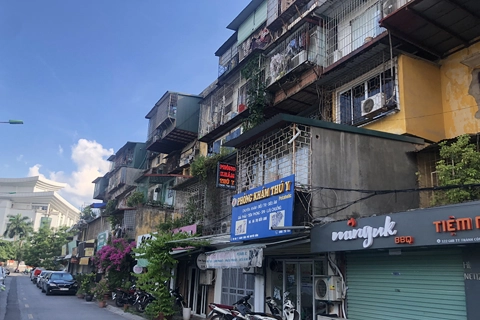
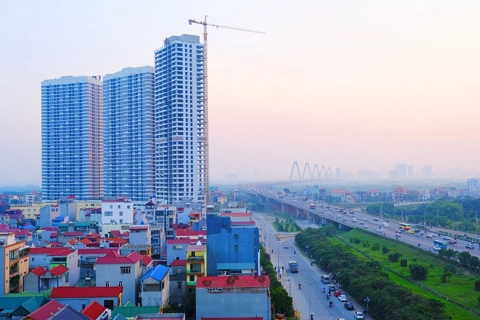
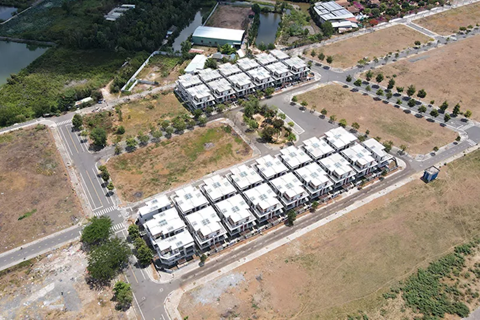
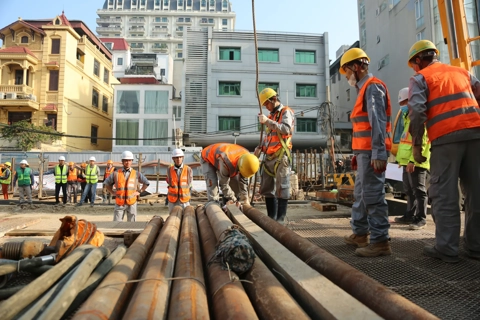
| The real estate market has been frozen due to the current pandemic impact. Photo: Pham Dong |
“Only with support can we overcome this difficult period, prepare for a speedy recovery, and eventually contribute to the overall growth,” General Director of Dai Phuc Lan Nguyen Thi Lan Huong told The Hanoi Times while saying the pandemic has taken its toll on the sector.
Statistics from the Vietnam National Real Estate Association (VNREA) revealed as of the present, 70% of real estate firms had had no source of income as a result of a market freeze, and thus, were forced to suspend operation.
“Around 10% have revenue, but such amounts are only of 10% of the year’s target. These firms have to scale down operation and are on the brink of bankruptcy,” it added.
VNREA said 20% are still generating a steady stream of revenue, but a prolonged pandemic would put their future into uncertainty.
Such a devastating consequence from the pandemic is also felt by individual investors.
Nguyen Thuy Duong from Hoang Mai District, Hanoi, said in late 2019, her family borrowed VND500 million (US$22,000) from the bank to purchase an apartment with a lending rate of 7.5% per annum in the first year.
“The original plan was to receive the apartment by the first quarter of this year, but the pandemic has pushed back the date,” Duong told The Hanoi Times.
While the pandemic has also caused a significant decline in her family’s income, she was informed the lending rate from the 13th month would rise by 3.5 percentage points.
“Unfortunately, we are not qualified for the debt rescheduling program from the central bank, which is only applicable to debts incurred before June 10, 2020,” Duong added, saying she hopes to receive more support from the banks.
So far, the Government has been offering more supporting programs for businesses and people affected by the pandemic, with the latest move being a 30% cut in corporate tax for businesses with revenue below VND200 billion ($8.8 million) per year; waiving payment of agricultural land rental fees from January 1, 2021, to 2025, with an estimated total of VND7.5 trillion ($330 million) per year.
“These programs show the attention from the Government for businesses and people, but the issue would be how to implement these policies in an effective manner, as the majority are now in a dire financial situation after two years fighting the pandemic,” Vice Chairman of the Hanoi Real Estate Club Nguyen The Diep told The Hanoi Times.
Director of real estate service company DKRA Vietnam Pham Lam said the pandemic has disrupted every company’s business plan.
Lam called for the Government to continue waiving and freezing payment of value-added tax, corporate income tax, and personal income tax for six months after firms are allowed to resume operation.